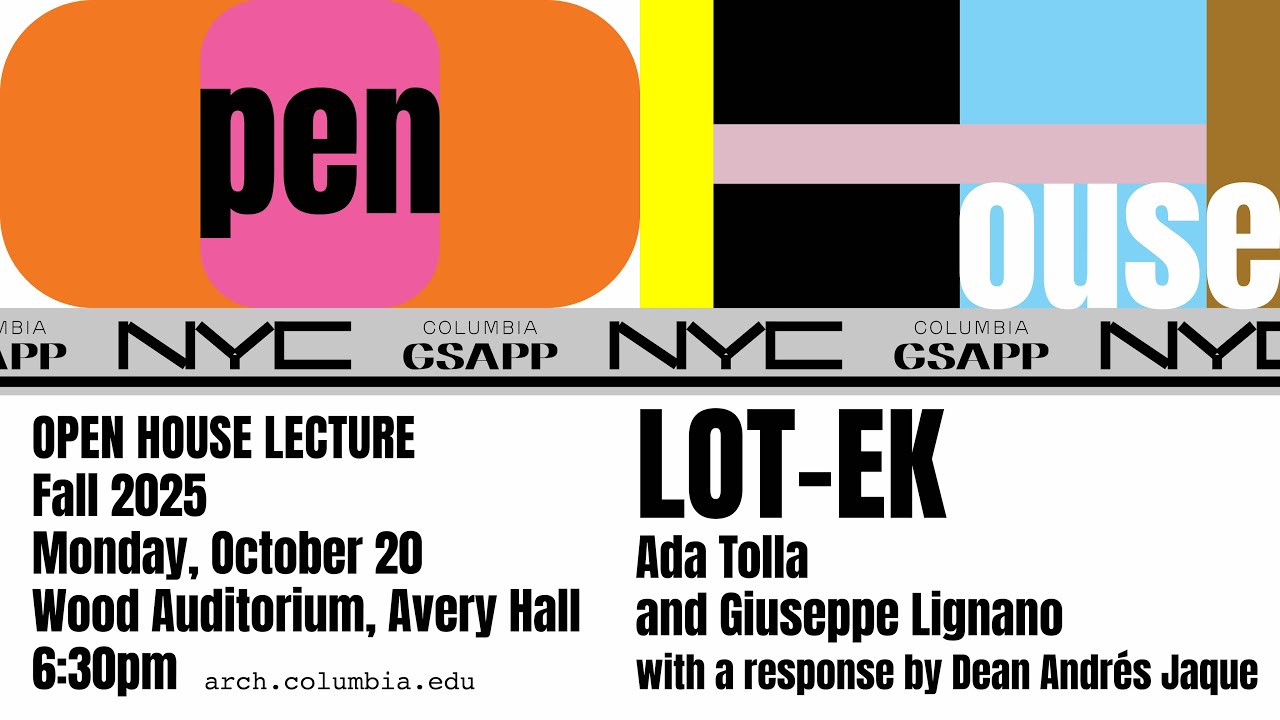
Open House Lecture: LOT-EK
Keywords
Summary
112 words
Critical Evaluation
Value of the Information & Strength of the Argument
The lecture provides valuable insights into LOT-EK’s design philosophy and methodology. The architects present a coherent argument for using shipping containers and other found objects as a sustainable and creative approach to architecture. They support their ideas with numerous project examples, illustrating the practical and aesthetic potential of upcycling. The argumentation is solid, grounded in decades of practice and a clear theoretical framework. They effectively communicate the value of observation and embracing the inherent qualities of materials. The discussion of logistics and adaptability adds depth to their approach. Overall, the lecture offers a compelling case for their unconventional methods.
Scientific Rigor, Source Quality, Title Accuracy
The lecture is presented by the architects themselves, making it a primary source. They reference their own projects and publications, but do not cite external academic sources. The institutional setting (Columbia GSAPP) adds credibility. The title accurately reflects the content. The architects demonstrate a rigorous design process, but the lecture is more of a presentation of their work than a scientific analysis. The lack of external citations is typical for a lecture format. The content is consistent with their published work and public reputation.
198 words
Title / Content Match
The title accurately reflects the content: a lecture by LOT-EK as part of Columbia GSAPP's Open House series.
Quality & Reliability
8/10
Lecture by established architects with extensive portfolio, presented at a reputable institution (Columbia GSAPP). Content is based on their own work and experience, providing primary source material. No external sources cited, but the architects' credibility and the institutional context support reliability.
Key Moments
Markers derived by PSI from the transcript: the creator did not define chapters.
- Introduction by Dean Andrés Jaque, highlighting LOT-EK's achievements and teaching.
- LOT-EK begins lecture, introducing their observation-based approach and 'Urban Scan'.
- Discussion of The Cubes at Socrates Sculpture Park, a community center made from shipping containers.
- Presentation of Bal Harbour Shops, a movable retail space with container gardens.
- Exploration of 'artificial nature' and fire escapes as inspiration.
- Discussion of Driveline Studios in Johannesburg, a student housing project using 140 containers.
- Presentation of the Cuttle House in Brooklyn, a single-family home made from 18 containers.
- Explanation of their 'Foldables' series, cardboard box drawings.
- Discussion of Puma City, a movable retail and event space for the Volvo Ocean Race.
- Presentation of the Black Schoolhouse in New Orleans, a community center for art and design.
Cited Sources
- LOT-EK: Objects + Operations — Mentioned as their latest monograph, published by Monacelli in 2017.
- Urbanscan — Mentioned as a book published in 2002, and also as their ongoing documentation project.
- LOT-EK Mixer — Mentioned as a book published in 2000.
- MDU Mobile Dwelling Unit — Mentioned as a book published in 2003.
Concurring Sources
- LOT-EK official website — Official portfolio and information about the firm.
Contribution & Novelties
The lecture provides an in-depth look at LOT-EK’s unique approach to architecture, emphasizing the upcycling of shipping containers and other industrial objects. Their work challenges traditional notions of building materials and construction methods, offering a sustainable and creative alternative. The presentation of their ‘Urban Scan’ project highlights a systematic documentation of the built environment, which informs their design process. The lecture also underscores the importance of observation and embracing the inherent qualities of found objects.
Pour aller plus loin :
- Shipping container architecture — Overview of the use of shipping containers in architecture.
- Adaptive reuse — Concept of repurposing old buildings for new uses.
- Upcycling — Definition and examples of upcycling in design.
113 words
Radar Profile
The radar profile shows high scores in quantity and quality of information, reflecting the detailed presentation of numerous projects. The technical level is moderate, suitable for a general audience. Reliability is high due to the primary source nature. The overall balance indicates a well-rounded and informative lecture.