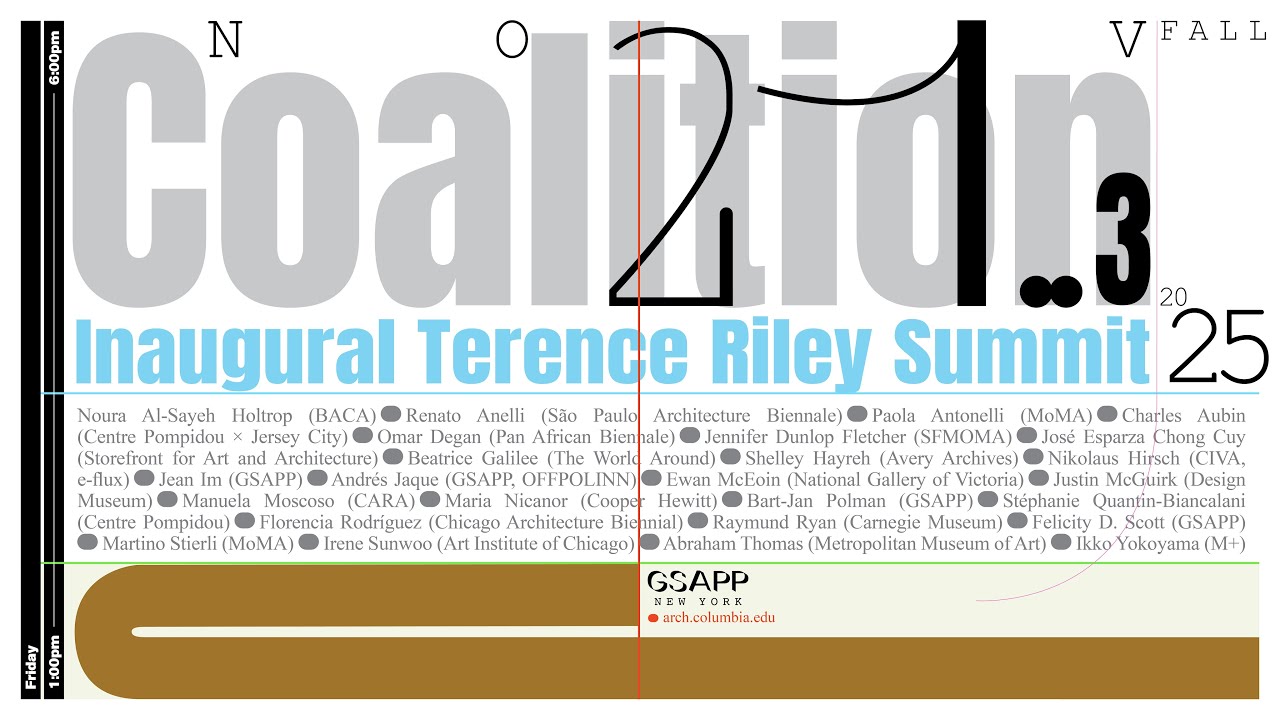
Coalition 3: Coalition of Curators. The Inaugural Terence Riley Summit. Panel 3
Keywords
Summary
131 words
Critical Evaluation
Value of the Information & Strength of the Argument
The value of the information lies in the concrete examples of curatorial practice that address pressing social and political issues. The speakers argue for a process-oriented approach, where curation is not just about displaying objects but about engaging with communities and temporalities. The argumentation is persuasive, grounded in personal experience and specific projects, though it lacks systematic evidence. The speakers effectively demonstrate how curation can be a tool for social change, but the arguments are more anecdotal than analytical.
Scientific Rigor, Source Quality, Title Accuracy
The scientific rigor is moderate. The speakers reference historical events and data (e.g., colonization years, climate statistics) but do not provide detailed sources. The quality of sources is mixed: some are institutional (e.g., Venice Biennale), others are personal projects. The title accurately reflects the content, as it is a panel discussion among curators. No comments were provided for analysis.
153 words
Title / Content Match
The title accurately reflects the content: a panel discussion among curators, part of a summit honoring Terence Riley.
Quality & Reliability
7/10
The panel features experienced curators and practitioners discussing their projects and methodologies. The content is largely anecdotal and experience-based, with some references to historical events and data. The reliability is moderate, as claims are not systematically sourced, but the speakers are credible professionals.
Key Moments
Markers derived by PSI from the transcript: the creator did not define chapters.
- Introduction and first speaker begins on Bahrain projects.
- Discussion of land reclamation exhibition and fishermen huts.
- Live-streaming installation during Arab Spring.
- Public competition for roundabout and temporary pavilion.
- Friday sermon exhibition and Venice Biennale as platform.
- Pearling Path rehabilitation project and public spaces.
- Second speaker begins on African time and colonial history.
- Announcement of Pan-African Biennale and its concept.
- Third speaker introduces The World Around and Young Climate Prize.
- Details of mentorship program and success stories.
Cited Sources
- Venice Architecture Biennale — Mentioned as the venue for several exhibitions discussed.
- The World Around — Organization founded by Beatrice Galilee, mentioned as a global platform.
Concurring Sources
- The World Around — The organization's website aligns with the description of its activities and programs.
Contribution & Novelties
The panel offers a unique perspective on curation as a temporal and process-oriented practice, highlighting the role of curators in addressing social and political issues. The introduction of the Pan-African Biennale is a novel initiative to reframe African narratives. The Young Climate Prize demonstrates a concrete model for engaging youth in climate action through mentorship.
Pour aller plus loin :
- The World Around — Official website of the organization, providing access to their programs and archive.
- Venice Biennale — Official page for the Architecture Biennale, relevant to the exhibitions discussed.
- Pan-African Biennale — Note: This URL is speculative and may not be accurate; the initiative was announced in the video but no official website was provided.
- Young Climate Prize — Note: This URL is speculative; the prize is part of The World Around, and no separate website was mentioned.
139 words
Radar Profile
The radar profile shows high scores in quantity and quality of information, moderate technical level, and high reliability. This suggests a content-rich discussion with credible speakers, though not highly technical. The balance indicates a well-rounded presentation suitable for a general audience interested in curation and social issues.