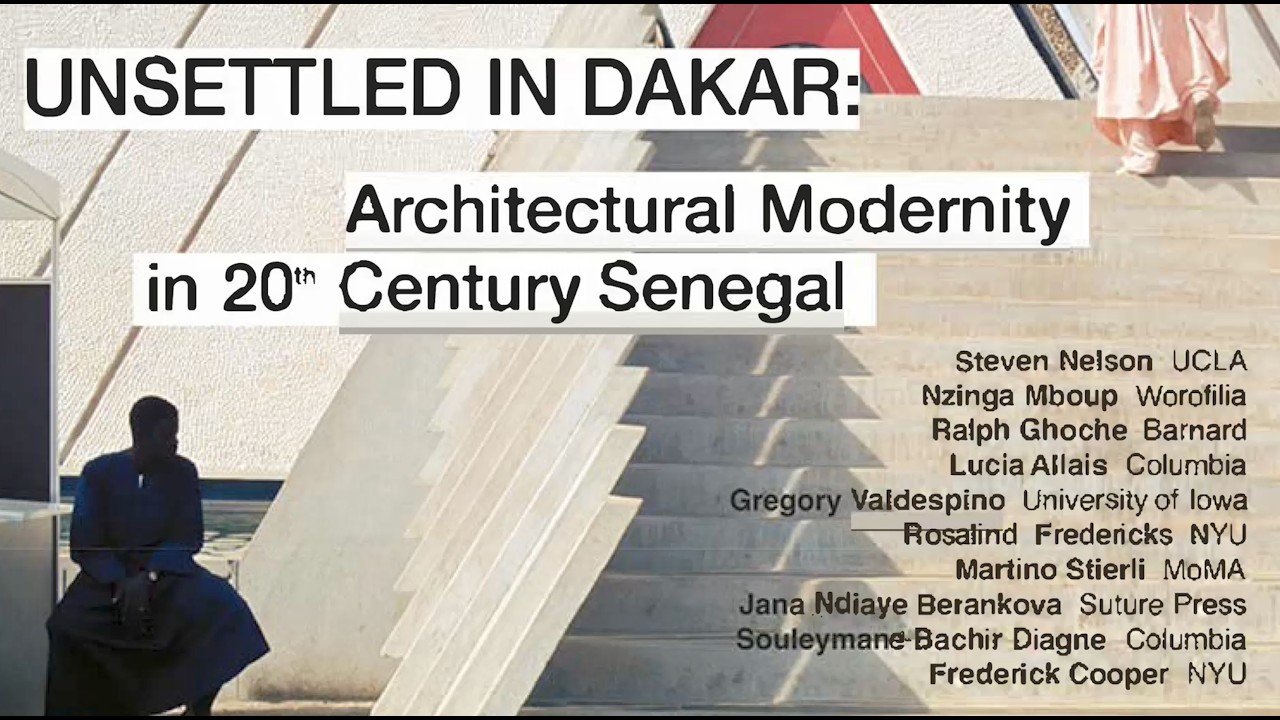
Unsettled in Dakar: Architectural Modernity in 20th Century Senegal (University Seminar)
Keywords
Summary
142 words
Critical Evaluation
Value of the Information & Strength of the Argument
The seminar provides valuable insights into the architectural history of Dakar, offering a nuanced analysis of how colonial power was materialized in the built environment. The argumentation is solid, drawing on archival research and critical theory. The speakers effectively challenge conventional narratives, highlighting the contradictions and complexities of colonial architecture. The discussion of postcolonial reinterpretations adds depth, showing how these buildings have been reappropriated and critiqued. The seminar’s strength lies in its interdisciplinary approach, combining architectural history with postcolonial studies.
Scientific Rigor, Source Quality, Title Accuracy
The seminar demonstrates strong scholarly rigor, with speakers referencing archival documents, historical figures, and specific buildings. The sources are credible, including academic publications and primary sources. The title accurately reflects the content, focusing on architectural modernity in 20th-century Senegal. The event is well-organized, with a clear structure and expert speakers. The discussion is grounded in evidence, though some claims could benefit from more explicit citations. Overall, the seminar maintains a high standard of academic quality.
170 words
Title / Content Match
The title accurately reflects the seminar's focus on architectural modernity in 20th-century Senegal, centered on Dakar.
Quality & Reliability
8/10
The seminar features established scholars and practitioners, with detailed historical references and critical analysis. The content is well-structured and grounded in archival research, though it is a recording of a live event with limited peer review.
Key Moments
Markers derived by PSI from the transcript: the creator did not define chapters.
- Introduction by Ralph Goch and Luchia Alice, outlining the seminar's purpose and structure.
- Steven Nelson begins his talk on early 20th-century Dakar, discussing the colonial vision and key buildings.
- Nelson analyzes the Presidential Palace, designed by Dlan, and its role in the civilizing mission.
- Discussion of the Hôtel de Ville and Kermel Market, highlighting their architectural styles and colonial symbolism.
- Nelson concludes with a discussion of postcolonial reinterpretations, referencing Ousmane Sembène's film 'Contra City.'
- Q&A session begins, with audience questions on colonial architecture and its legacy.
Cited Sources
- Columbia GSAPP — The seminar is hosted by Columbia GSAPP, and the description mentions the Buell Center.
Concurring Sources
- Columbia GSAPP — The seminar is hosted by Columbia GSAPP, and the description mentions the Buell Center.
Contribution & Novelties
The seminar offers a comprehensive examination of Dakar’s architectural modernity, bringing together multiple perspectives and case studies. It challenges simplistic narratives of colonial architecture, emphasizing the complexity and contradictions. The inclusion of postcolonial reinterpretations adds a critical dimension. For further exploration, consider the following:
- Dakar — Overview of the city’s history and development.
- Ousmane Sembène — Senegalese filmmaker whose work critiques colonial legacy.
- Negritude — Literary and ideological movement associated with Léopold Sédar Senghor.
74 words
Radar Profile
The radar profile shows high scores in information quantity, quality, and reliability, with a slightly lower technical level, reflecting the seminar's academic yet accessible nature.