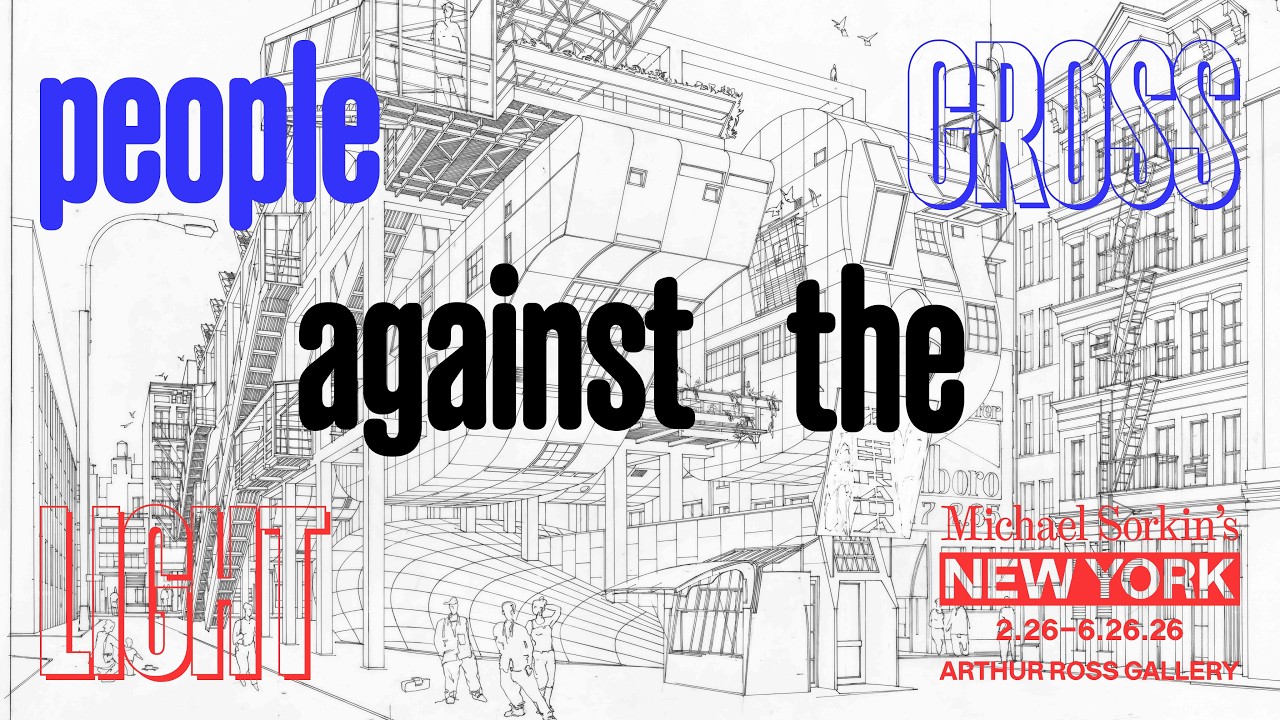
Columbia GSAPP: Coalition 5 - The Michael Sorkin Symposium - Panel 4
Keywords
Summary
161 words
Critical Evaluation
Value of the Information & Strength of the Argument
The value of the information lies in the personal anecdotes and reflections from colleagues who worked closely with Michael Sorkin. These provide unique insights into his thinking and methods, particularly his emphasis on interdisciplinary collaboration and social engagement. The argumentation is largely narrative and testimonial, relying on the credibility of the speakers rather than empirical evidence. While this limits the scientific rigor, it offers a rich qualitative perspective on Sorkin’s impact. The speakers effectively argue for the continued relevance of Sorkin’s ideas, such as propinquity and collective intelligence, in addressing contemporary urban and social challenges.
Scientific Rigor, Source Quality, Title Accuracy
The discussion is rigorous in its adherence to the theme of Sorkin’s legacy, with speakers consistently referencing his writings and projects. However, specific sources are not systematically cited; instead, the speakers rely on their personal experiences and general knowledge. The title accurately reflects the content, as it is a panel within a symposium dedicated to Sorkin. The lack of formal citations and the anecdotal nature of the content limit its scientific rigor, but the speakers’ expertise lends credibility. No comments were provided for analysis.
194 words
Title / Content Match
The title accurately reflects the content: a panel discussion within a symposium dedicated to Michael Sorkin.
Quality & Reliability
7/10
The panel features established academics and practitioners discussing the legacy of Michael Sorkin. The content is largely anecdotal and reflective, with limited verifiable data, but the speakers are credible and the discussion is coherent.
Key Moments
Markers derived by PSI from the transcript: the creator did not define chapters.
- Introduction of Ana María Durán Calisto by moderator Bart-Jan Polman.
- Durán Calisto begins her talk, emphasizing Sorkin's understanding of collective intelligence and ecology of knowledge.
- Durán Calisto discusses her collaboration with Sorkin on the book 'Beyond Petropolis' and the studio on the Amazonian city of Nueva Loja.
- Durán Calisto reads from Sorkin's preface to 'Beyond Petropolis', highlighting his synthetic analysis of the city's challenges.
- Durán Calisto reflects on changes in her teaching since Sorkin's time, including engagement with indigenous communities and technological advances.
- Introduction of Teddy Cruz and Fonna Forman by moderator.
- Cruz and Forman discuss Sorkin's lecture 'Traffic in Democracy' and his concept of propinquity.
- Cruz and Forman connect Sorkin's ideas to their work on the San Diego-Tijuana border and the 'Open Gaza' project.
- Cruz and Forman conclude with reflections on Sorkin's legacy as a social conscience in architecture.
Cited Sources
- Beyond Petropolis — Book by Ana María Durán Calisto and Michael Sorkin, discussed in the panel.
- Open Gaza — Book edited by Michael Sorkin and others, mentioned by Cruz and Forman.
- Traffic in Democracy — Lecture by Michael Sorkin, referenced by Cruz and Forman.
Concurring Sources
- Michael Sorkin: The Architect as Public Intellectual — Article discussing Sorkin's role as a public intellectual, aligning with the panel's emphasis on his social engagement.
Contribution & Novelties
The panel provides a unique personal perspective on Michael Sorkin’s influence, particularly his interdisciplinary approach and commitment to social justice. It highlights specific projects like ‘Beyond Petropolis’ and ‘Open Gaza’ that may not be widely known. The discussion offers insights into how Sorkin’s ideas are being applied in contemporary practice, especially in the context of borders and migration.
Pour aller plus loin :
- Michael Sorkin (architect) — Overview of Sorkin’s life and work.
- Terreform — Nonprofit organization founded by Sorkin, involved in urban research.
- Open Gaza: Architectures of Hope — Book project imagining futures for Gaza, mentioned in the panel.
- Propinquity — Concept central to Sorkin’s ideas on democracy and urban space.
112 words
Radar Profile
The radar profile shows high scores in quantity and quality of information, reflecting the rich personal insights and credible speakers. The technical level is moderate, as the discussion is accessible but assumes some familiarity with architectural discourse. Overall, the panel is strong in providing qualitative perspectives on Sorkin's legacy.