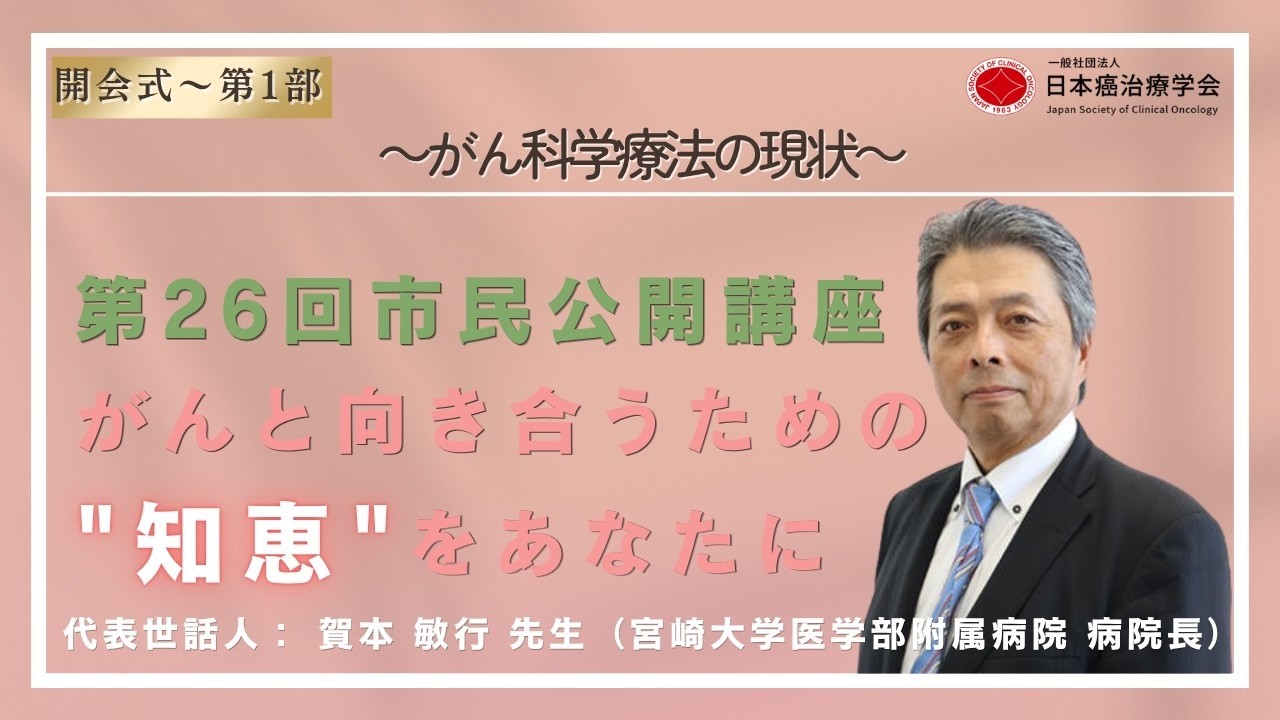
26th JSCO Public Lecture: Opening Ceremony & Part 1 (Cancer Drug Therapy and Outpatient Care)
Keywords
Summary
183 words
Critical Evaluation
Value of the Information & Strength of the Argument
The value of the information is high for a general audience, as it provides up-to-date, accurate information about cancer drug therapy and outpatient care. The argumentation is solid, based on clinical experience and recent research. Dr. Ikeda’s presentation is particularly strong, explaining complex topics like molecular targeted therapy and immunotherapy in an accessible way, and he supports his points with data, such as the response rates for gefitinib. Dr. Arakawa’s talk is practical and empathetic, offering actionable advice for patients. The speakers are credible, and the content is well-structured.
Scientific Rigor, Source Quality, Title Accuracy
The scientific rigor is good, with presentations by qualified professionals and references to recent research, such as the Nature Medicine study on chronotherapy. However, specific sources are not cited in detail, and the content is simplified for a public audience. The title accurately describes the content, which is the opening and first part of the lecture. No comments were provided for analysis.
166 words
Title / Content Match
The title accurately reflects the content: the opening ceremony and first part of the public lecture, focusing on current cancer drug therapy and outpatient care.
Quality & Reliability
8/10
Content is presented by medical professionals (professor, certified nurse) from a university hospital, based on established clinical practice and recent research. The information is reliable and well-structured, though it is a public lecture aimed at general audience, so depth is limited.
Key Moments
Markers derived by PSI from the transcript: the creator did not define chapters.
- Opening and greetings by the moderator and Dr. Kamoto.
- Video message from Dr. Muto.
- Introduction to Part 1 and Dr. Ikeda's presentation begins.
- Dr. Ikeda discusses cancer statistics and treatment modalities.
- Dr. Ikeda explains molecular targeted therapy and genomic medicine.
- Dr. Ikeda introduces chronotherapy and recent research findings.
- Dr. Arakawa's presentation on outpatient treatment begins.
- Dr. Arakawa shares practical tips for managing side effects and daily life.
- Discussion and closing of Part 1.
Cited Sources
- JSCO Public Information Page — Official page for patient and public information from the Japanese Society for Cancer Therapy.
Concurring Sources
- JSCO Public Information Page — Official source for cancer information from the Japanese Society for Cancer Therapy.
Contribution & Novelties
The video provides a valuable update on cancer drug therapy, including recent advances in molecular targeted therapy, immunotherapy, and the emerging field of chronotherapy. It also emphasizes the importance of outpatient care and patient empowerment. For a general audience, it demystifies cancer treatment and offers practical advice.
Pour aller plus loin :
- Cancer immunotherapy — Overview of immunotherapy approaches, including checkpoint inhibitors.
- Chronotherapy (treatment scheduling) — Concept of timing treatment based on circadian rhythms.
- Precision medicine — Tailoring treatment to individual genetic profiles.
83 words
Radar Profile
The radar profile shows high scores in quality and reliability, moderate in quantity and technical level, reflecting a well-produced but introductory-level lecture.