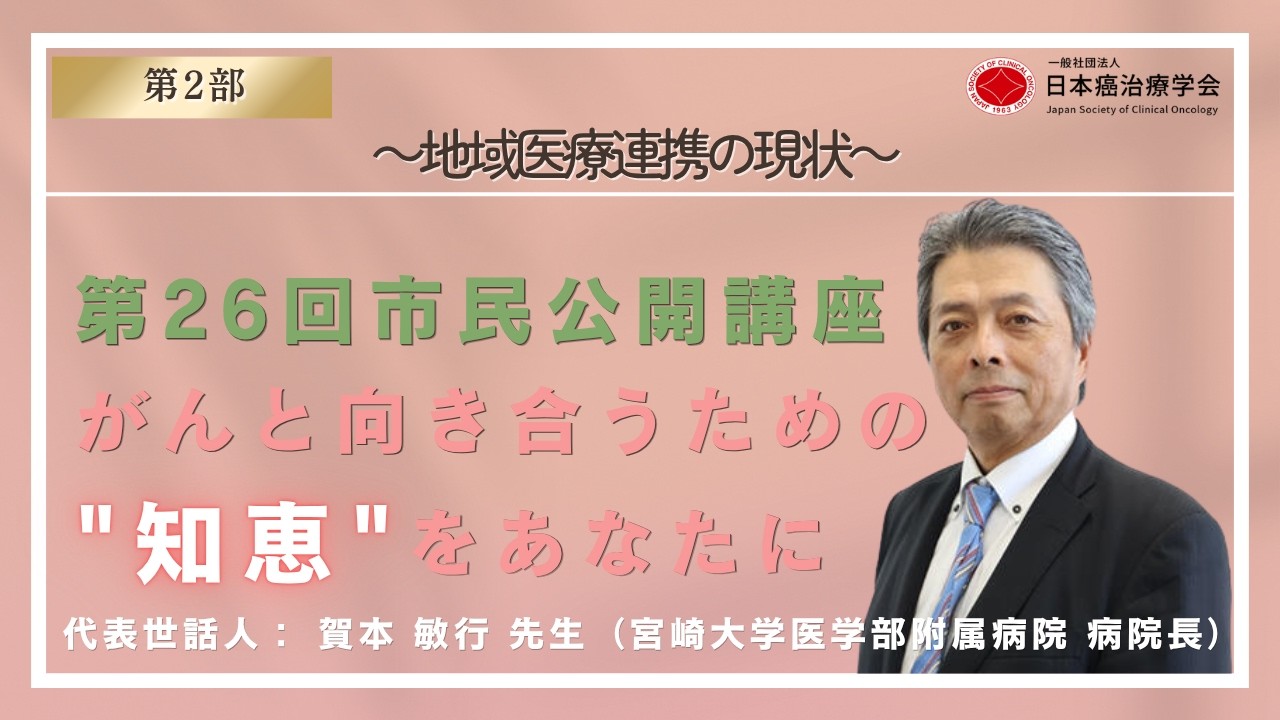
The 26th JSCO Public Lecture Part 2: Current Status of Regional Medical Collaboration
Keywords
Summary
171 words
Critical Evaluation
Value of the Information & Strength of the Argument
The value of the information is high for a public audience, as it provides concrete examples of how regional medical collaboration works in different settings. The speakers use real data (e.g., physician density, cancer screening rates) and describe specific systems (e.g., clinical pathways, databases) that are relevant to patients and healthcare professionals. The argumentation is solid, based on professional experience and local data. However, some claims lack explicit citations, and the presentations are somewhat descriptive rather than analytical. The speakers also acknowledge limitations, such as the financial sustainability of the database system.
Scientific Rigor, Source Quality, Title Accuracy
The scientific rigor is moderate: the speakers are experts and present data, but they do not always cite specific sources. The video is a public lecture, so it is not a peer-reviewed presentation. The title accurately reflects the content. The description provides a link to the JSCO website, which is a reliable source for further information. No comments were provided for analysis.
169 words
Title / Content Match
The title accurately reflects the content: Part 2 focuses on the current state of regional medical collaboration, with three presentations from different regions.
Quality & Reliability
8/10
The video features three expert physicians (urologists) from different regions (Kyoto, Miyazaki, Hokkaido) discussing regional cancer care collaboration. They present concrete data (e.g., number of physicians per 100,000 population, cancer screening rates) and describe specific systems (e.g., regional clinical pathways, databases). The content is consistent with known healthcare structures in Japan. However, some data are not referenced to specific sources, and the video is a public lecture, so it may simplify complex issues.
Key Moments
Markers derived by PSI from the transcript: the creator did not define chapters.
- Introduction to Part 2 on regional medical collaboration.
- Dr. Kita begins his presentation on urban collaboration in Kyoto.
- Dr. Kita discusses the density of medical institutions in Kyoto and the role of cancer care coordination hospitals.
- Dr. Kita explains the prostate cancer unit and shared decision-making.
- Dr. Tsukino presents the regional clinical pathway system in Miyazaki.
- Dr. Tsukino describes the MUNET network and the transition to a digital database.
- Dr. Sato discusses the challenges of rural healthcare in Hokkaido.
- Dr. Oshikawa provides commentary on patient empowerment and the role of communication.
Cited Sources
- JSCO Public Information Page — Official website of the Japanese Society for Cancer Therapy, providing information for patients and the public.
Concurring Sources
- JSCO Public Information Page — The official JSCO page provides general information on cancer care and public lectures, consistent with the video's content.
Contribution & Novelties
The video provides a comparative overview of regional cancer care collaboration in three distinct Japanese regions: urban (Kyoto), semi-urban (Miyazaki), and rural (Hokkaido). It highlights the diversity of challenges and solutions, such as the use of clinical pathways and digital databases. The emphasis on patient empowerment and communication is a valuable addition.
Pour aller plus loin :
- Cancer Regional Clinical Pathways in Japan — Overview of cancer medical care policies in Japan.
- Miyazaki Urological Network (MUNET) — Official page of the MUNET network (if exists, but not sure; otherwise omit URL).
- Prostate Cancer Treatment Guidelines — JSCO guidelines for cancer treatment.
101 words
Radar Profile
The radar profile shows high scores in information quantity and quality, reflecting the detailed presentations and data. The technical level is moderate, suitable for a public audience. Overall reliability is high due to the expertise of the speakers, though some data lack explicit citations.