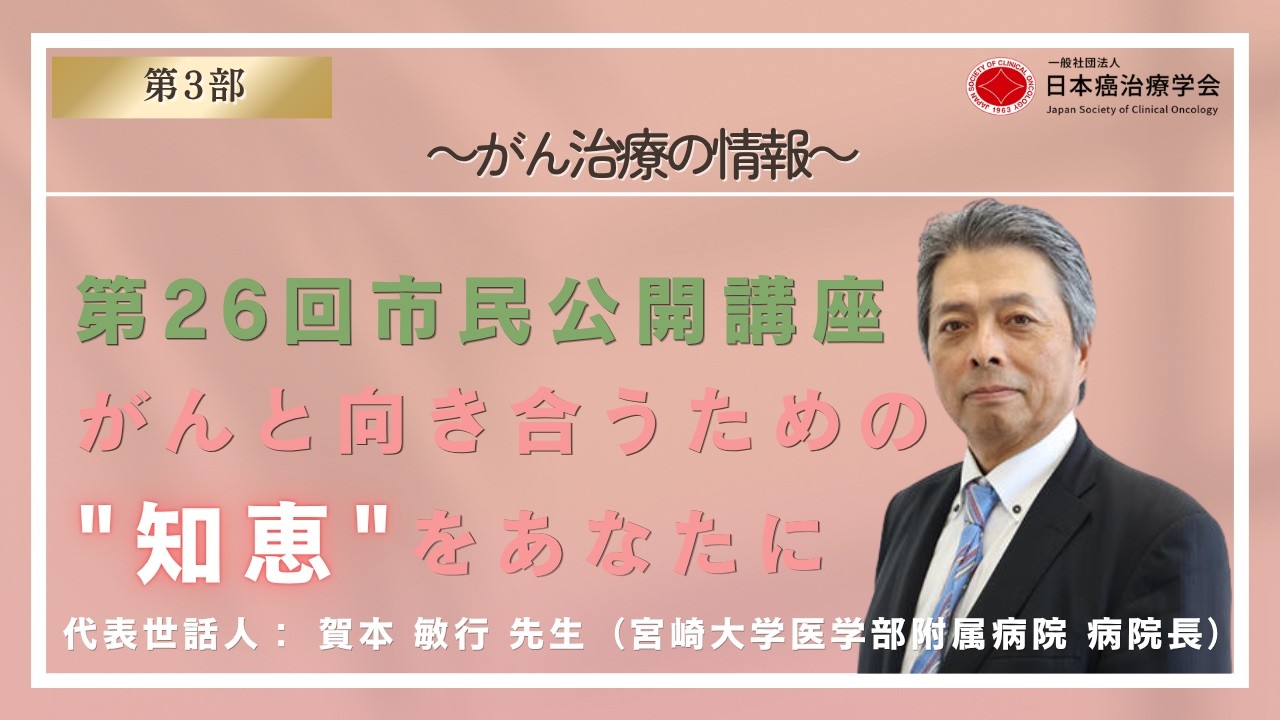
26th JSCO Public Lecture Part 3: Cancer Treatment Information
Keywords
Summary
213 words
Critical Evaluation
Value of the Information & Strength of the Argument
The video provides valuable information on navigating cancer information, addressing common pitfalls and offering practical tools. The arguments are well-structured and supported by references to official sources, such as the Cancer Information Service and the National Cancer Center. The speakers use clear examples and analogies to illustrate their points, making the content accessible. The emphasis on evidence-based medicine and the warning against misinformation are scientifically sound. The presentation is persuasive and grounded in clinical experience, though specific study citations are not always provided.
Scientific Rigor, Source Quality, Title Accuracy
The scientific rigor is high, as the content aligns with established medical guidelines and official recommendations. The speakers are qualified professionals, and the information is consistent with current medical knowledge. The sources mentioned, such as the Cancer Information Service, are credible and official. The title accurately reflects the content, which is focused on cancer treatment information. The video is part of an official public lecture series by a professional society, adding to its credibility. No comments were provided for analysis.
178 words
Title / Content Match
The title accurately reflects the content, which focuses on cancer treatment information and how to find reliable sources.
Quality & Reliability
8/10
The video is an official public lecture by the Japanese Society of Medical Oncology, featuring two expert speakers: a certified nurse specialist in cancer counseling and a medical oncologist. They provide evidence-based information on finding reliable cancer information and avoiding online scams. The content aligns with established medical guidelines and official sources like the National Cancer Center's Cancer Information Service. The presentation includes practical demonstrations and references to scientific studies, though specific citations are not always detailed.
Key Moments
Markers derived by PSI from the transcript: the creator did not define chapters.
- Introduction to Part 3 on cancer treatment information
- Ayabe begins her talk on finding reliable cancer information
- Explanation of cancer consultation support centers
- Common misconceptions: health checkups vs cancer screenings
- Standard treatment vs advanced medical care explained
- Dangers of internet misinformation and algorithms
- Introduction to Cancer Information Service website demonstration
- Advice for family and friends of cancer patients
- Oshikawa's talk on online cancer scams and how to avoid them
- Self-check sheet for suspicious treatments and final recommendations
Cited Sources
- JSCO Public Page — Official page of the Japanese Society of Medical Oncology for patients and the public, mentioned as a resource for cancer information.
Concurring Sources
- Cancer Information Service — Official website of the National Cancer Center Japan, recommended in the video as a reliable source.
Contribution & Novelties
The video provides a practical guide for patients and families on how to navigate cancer information, emphasizing the importance of using official sources like the Cancer Information Service. It offers a unique self-check sheet for evaluating suspicious treatments, which is a novel tool. The speakers bring clinical experience and a patient-centered approach, highlighting the psychological aspects of cancer and the dangers of misinformation.
Pour aller plus loin :
- Cancer Information Service (Japan) — Official website of the National Cancer Center Japan, providing evidence-based cancer information.
- Health on the Net (HON) Code — A certification for reliable health websites, relevant to evaluating online health information.
- National Cancer Institute (US) — A comprehensive source of cancer information, useful for comparison.
- Cochrane Library — A database of systematic reviews, relevant for evidence-based medicine.
130 words
Radar Profile
The radar profile shows high scores in information quantity, quality, and reliability, with a moderate technical level. This indicates a well-balanced presentation that is both informative and trustworthy, suitable for a general audience seeking reliable cancer information.