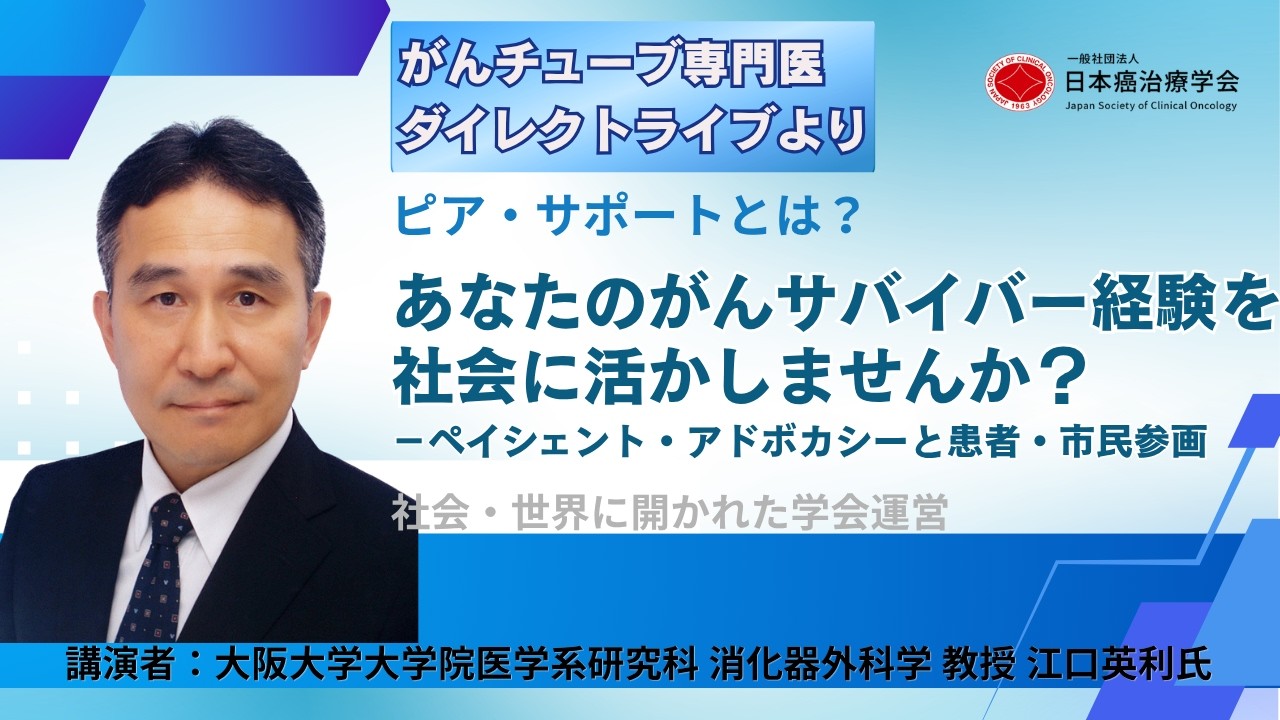
あなたのがんサバイバー経験を社会に活かしませんか?-ペイシェント・アドボカシーと患者・市民参画
Keywords
Summary
190 words
Critical Evaluation
Value of the Information & Strength of the Argument
The video provides valuable information on patient advocacy and PPI, clearly explaining concepts and their practical applications. The argumentation is solid, based on the speaker’s expertise and examples from the Japanese Society of Medical Oncology. The discussion of the PAL program and the inclusion of patient representatives in guideline development strengthens the credibility. The Q&A session adds practical insights, such as how to participate in such programs and the role of PMDA. The speaker’s arguments are coherent and well-structured, though they rely primarily on anecdotal evidence and institutional examples rather than empirical data.
Scientific Rigor, Source Quality, Title Accuracy
The scientific rigor is high, as the speaker is a recognized expert and the content aligns with established practices in patient advocacy. The sources cited include the official website of the Japanese Society of Medical Oncology for the certified navigator program. The title accurately reflects the content, focusing on patient advocacy and PPI. The video does not include any commercial advertising. The discussion is well-referenced to institutional programs, but lacks external citations to peer-reviewed literature.
183 words
Title / Content Match
The title accurately reflects the content, which focuses on patient advocacy and patient-public involvement in cancer care.
Quality & Reliability
8/10
The video features a recognized expert in hepatobiliary surgery and vice president of the Japanese Society of Medical Oncology, providing a clear and structured explanation of patient advocacy and PPI. The content is consistent with established concepts and includes references to official programs. However, it is primarily an expert opinion with limited external citations.
Key Moments
Markers derived by PSI from the transcript: the creator did not define chapters.
- Introduction and self-introduction of Dr. Eguchi
- Definition of patient advocacy and its importance
- Explanation of peer support and its role
- Examples of patient advocacy in the US and Japan
- Introduction to PAL program and patient advocate leadership
- Discussion on patient and public involvement (PPI) in guideline development
- Q&A session on participation and healthcare system challenges
Cited Sources
- Certified Cancer Navigator Program — Mentioned as a resource for those interested in becoming certified navigators.
Concurring Sources
- Patient Advocacy in Oncology — ASCO's patient advocacy resources align with the video's emphasis on patient advocacy.
Contribution & Novelties
The video provides a clear and accessible introduction to patient advocacy and PPI in the context of cancer care, emphasizing the importance of incorporating patient experiences into healthcare policy and research. It highlights specific initiatives by the Japanese Society of Medical Oncology, such as the PAL program and citizen membership, which are relatively novel in Japan. The discussion on the role of PMDA in PPI is also informative.
Pour aller plus loin :
- Patient and Public Involvement in Health and Social Care Research — Official UK guidance on PPI.
- Patient Advocacy: A Concept Analysis — Academic article on patient advocacy.
- Peer Support in Cancer Care — NCI resource on peer support.
111 words
Radar Profile
The radar profile shows high scores in quality of information and reliability, reflecting the expert's credibility and structured content. The quantity of information is moderate, and the technical level is accessible, making it suitable for a general audience. The overall balance indicates a trustworthy educational resource.
💬 Sur les 0 commentaires analysés, aucune tendance n'est disponible.