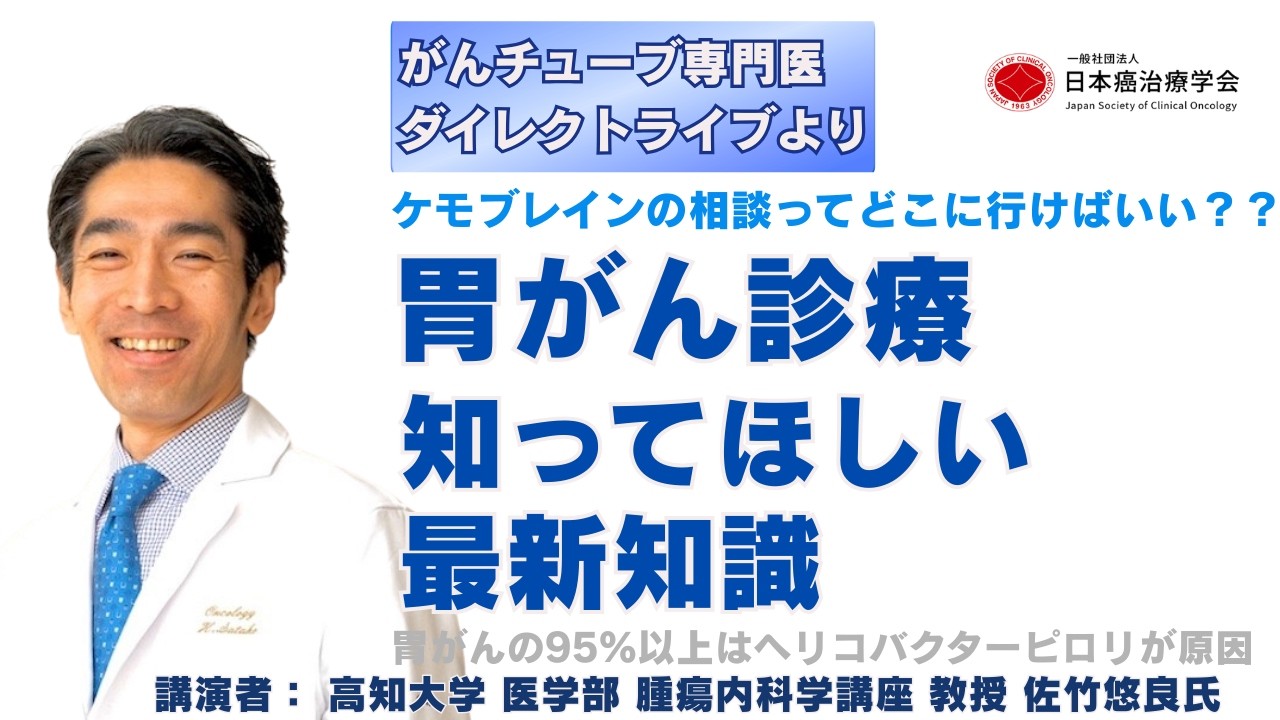
胃がん診療 知ってほしい最新知識
Keywords
Summary
157 words
Critical Evaluation
Value of the Information & Strength of the Argument
The video provides valuable and up-to-date information on gastric cancer, covering epidemiology, risk factors, screening, and treatment. The argumentation is solid, based on established medical knowledge and recent research, such as the effectiveness of immunotherapy in perioperative settings. The speaker clearly explains complex concepts, making them accessible to a lay audience. The inclusion of a Q&A session adds practical value, addressing common concerns about H. pylori transmission and screening recommendations.
Scientific Rigor, Source Quality, Title Accuracy
The scientific rigor is high, as the speaker is a medical oncologist and the content aligns with current guidelines. However, specific sources are not cited within the video, and the only link provided is to the Japanese Society of Medical Oncology’s certified cancer navigator program. The title accurately reflects the content, and the video is well-structured. The Q&A section provides additional insights, but the lack of explicit references limits the ability to verify all claims independently.
161 words
Title / Content Match
The title accurately reflects the content, which is a comprehensive overview of the latest knowledge in gastric cancer care.
Quality & Reliability
8/10
The video is an expert lecture by a medical oncologist from Kochi University, providing up-to-date and accurate information on gastric cancer. It covers epidemiology, risk factors, screening, and treatment, with references to recent studies and guidelines. The content is consistent with established medical knowledge, though it lacks detailed citations and is presented in a simplified manner for a general audience.
Key Moments
Markers derived by PSI from the transcript: the creator did not define chapters.
- Introduction to gastric cancer in Japan, epidemiology and trends.
- Explanation of Helicobacter pylori as the main cause and its transmission.
- Differentiation between differentiated and undifferentiated gastric cancer types.
- Metastatic routes and common sites of spread.
- Importance of screening and current screening rates in Japan.
- Treatment options: endoscopic resection, surgery, and systemic therapy.
- Role of biomarkers in guiding treatment decisions.
- Q&A session addressing H. pylori infection and screening frequency.
Cited Sources
- Certified Cancer Navigator Program — Mentioned in the video description as a resource for cancer patients.
Concurring Sources
- Gastric cancer statistics — Global cancer statistics from IARC, consistent with the video's claims about incidence.
- Helicobacter pylori eradication and gastric cancer prevention — Studies showing that H. pylori eradication reduces gastric cancer risk.
Dissenting Sources
- Screening for gastric cancer — The USPSTF does not recommend routine screening for gastric cancer in the US, whereas the video recommends screening for all adults over 50 in Japan. This discrepancy is due to differences in incidence and risk factors.
Contribution & Novelties
The video provides a concise and up-to-date overview of gastric cancer management, emphasizing recent advances such as perioperative immunotherapy and the importance of biomarkers. It serves as a valuable educational resource for patients and the public.
Pour aller plus loin :
- Gastric cancer - World Health Organization — General cancer statistics and risk factors.
- Helicobacter pylori infection - Centers for Disease Control and Prevention — Information on H. pylori and its link to gastric cancer.
- Gastric Cancer Treatment (PDQ®) - National Cancer Institute — Detailed treatment information from NCI.
- Immune checkpoint inhibitors in gastric cancer - PubMed — Review of immunotherapy in gastric cancer.
- Biomarkers for gastric cancer - Nature Reviews Clinical Oncology — Overview of biomarkers in gastric cancer.
120 words
Radar Profile
The radar profile shows high scores in information quantity, quality, and reliability, with a moderate technical level. This indicates a well-balanced and informative video suitable for a general audience, with a strong emphasis on accurate medical information.
💬 No comments were provided for analysis.