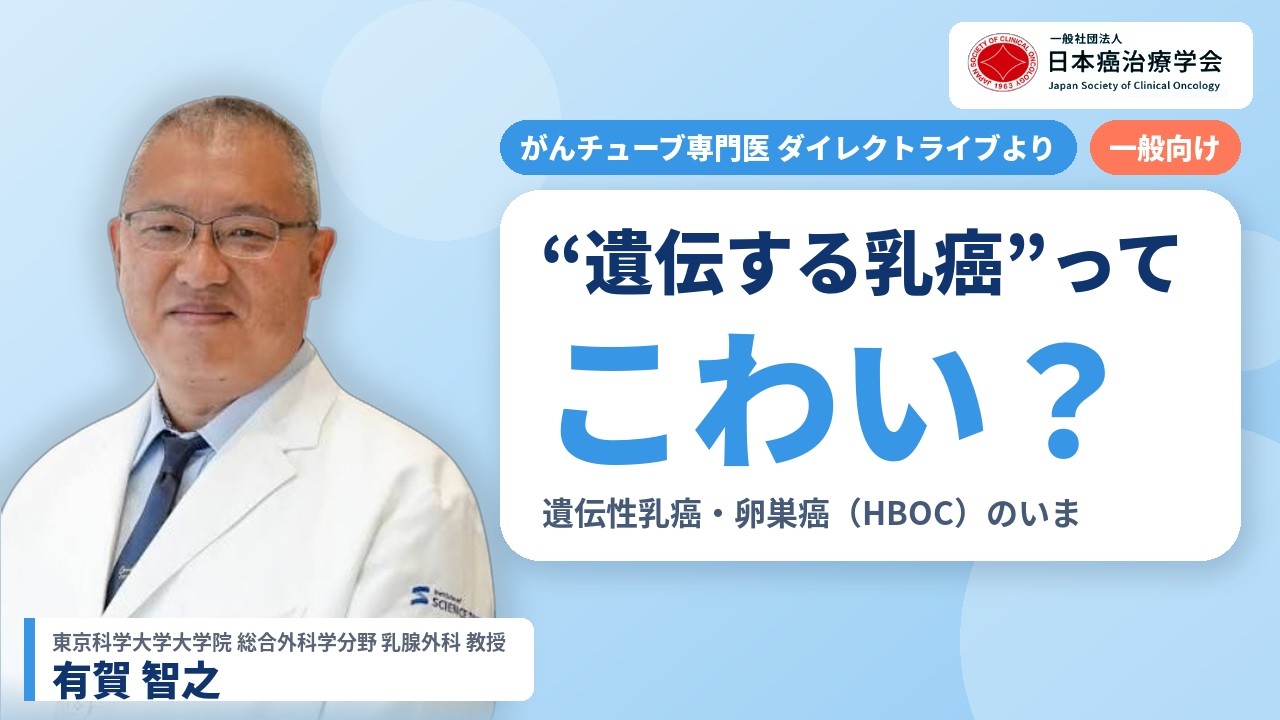
遺伝する乳癌って、こわい?
Keywords
Summary
201 words
Critical Evaluation
Value of the Information & Strength of the Argument
The video provides valuable information on HBOC, combining epidemiological data, genetic explanations, and clinical management strategies. The argumentation is solid, based on established medical knowledge and recent research. The speaker effectively explains complex genetic concepts in an accessible manner, using analogies and clear examples. The discussion of risk-reducing surgeries and surveillance is well-supported by data on risk reduction. The inclusion of a Q&A session adds practical value, addressing common concerns about testing, insurance, and family implications. The overall argument is coherent and persuasive, emphasizing the benefits of knowing one’s genetic status.
Scientific Rigor, Source Quality, Title Accuracy
The scientific rigor is high, with the speaker citing specific studies, such as a Japanese study of 7000 breast cancer patients, and providing precise statistics on cancer risks. The sources are not explicitly cited in the video, but the information aligns with current medical guidelines. The title accurately reflects the content, which addresses the fear of hereditary breast cancer and provides a balanced perspective. The video is produced by a reputable organization (Japan Society of Clinical Oncology) and features an expert in the field, enhancing its credibility.
193 words
Title / Content Match
The title is appropriate and engaging, directly addressing the common fear about hereditary breast cancer and framing the discussion around understanding and managing risk.
Quality & Reliability
8/10
The video is an expert lecture by a professor of breast surgery, providing a clear and accurate overview of HBOC, including epidemiological data, genetic mechanisms, clinical management, and recent insurance coverage changes. The information is consistent with established medical knowledge, though it is presented in a simplified manner and lacks detailed citations.
Key Moments
Markers derived by PSI from the transcript: the creator did not define chapters.
- Introduction and speaker background
- Explanation of hereditary cancer and HBOC prevalence
- Genetic mechanism of BRCA1/2 and cancer risk
- Cancer risks associated with BRCA mutations (breast, ovarian, pancreatic, prostate)
- Insurance coverage history and current testing criteria
- Surveillance and risk-reducing surgery options
- Recent expansion of insurance coverage to first-degree relatives
- Q&A session on testing age, variants, and insurance discrimination
Cited Sources
- 認定がんナビ制度 — Mentioned in the video description as a resource for certified cancer navigation.
Concurring Sources
- Hereditary breast-ovarian cancer syndrome - Wikipedia — Provides background on HBOC, consistent with the video's content.
Contribution & Novelties
The video provides a comprehensive and up-to-date overview of HBOC, particularly highlighting the recent insurance coverage expansion in Japan. It clarifies common misconceptions about hereditary cancer and emphasizes the importance of genetic testing for proactive management. The lecture is valuable for both patients and healthcare professionals, offering practical guidance on surveillance and risk-reducing options.
Pour aller plus loin :
- Hereditary breast-ovarian cancer syndrome - Wikipedia — Overview of HBOC, including genetics and management.
- BRCA mutation - Wikipedia — Detailed information on BRCA1/2 mutations and associated risks.
- PARP inhibitor - Wikipedia — Explanation of PARP inhibitors and their role in BRCA-mutated cancers.
- Genetic discrimination - Wikipedia — Discussion of legal and ethical issues related to genetic information.
116 words
Radar Profile
The radar profile shows high scores in information quantity, quality, and reliability, with a moderate technical level. This indicates a well-balanced, informative video that is accessible to a general audience while maintaining scientific accuracy.
💬 No comments were provided for analysis.