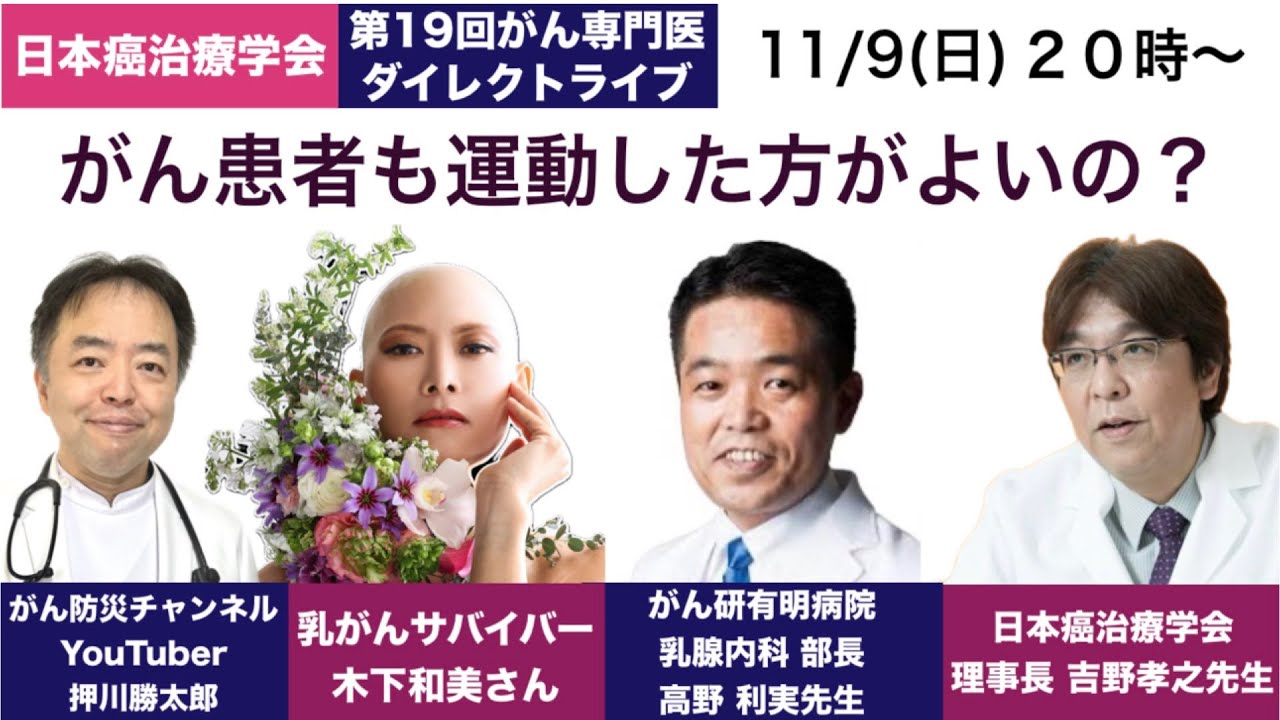
がん患者も運動した方がよいの?第19回がんチューブ専門医ダイレクトライブ20251109
Keywords
Summary
151 words
Critical Evaluation
Value of the Information & Strength of the Argument
The video provides valuable information on the benefits of exercise for cancer patients, supported by references to epidemiological studies and clinical trials. The argumentation is solid, with Dr. Takano clearly distinguishing between observational data and interventional evidence. He appropriately notes limitations, such as the observational nature of many studies and the mixed results from recent trials. The inclusion of a survivor’s perspective adds practical value, and the Q&A addresses common patient concerns. The emphasis on ’not must, but want’ is a nuanced approach that respects patient autonomy.
Scientific Rigor, Source Quality, Title Accuracy
The scientific rigor is high, with references to established guidelines (e.g., from the National Cancer Center Japan) and recent clinical trials (CHALLENGE). The speaker is a qualified oncologist, and the content aligns with current evidence. The title accurately reflects the content. The description includes a link to a related video, but no direct sources are cited in the description; however, the speaker mentions specific studies and guidelines during the talk. The adéquation between title and content is good, with no significant discrepancies.
184 words
Title / Content Match
The title accurately reflects the content, which focuses on whether cancer patients should exercise, with a keynote lecture and Q&A.
Quality & Reliability
8/10
The video features a board-certified oncologist (Dr. Takano) presenting evidence-based information on exercise oncology, referencing epidemiological studies, clinical trials (e.g., CHALLENGE trial), and guidelines. The discussion includes survivor perspectives and practical Q&A. Information is generally reliable, though some claims are based on expert opinion and preliminary data.
Chapters
- 配信開始・挨拶
- 日本癌治療学会の活動と「がんチューブ」の目的
- 特別ゲスト紹介:中村能明先生(国立がん研究センター中央病院)
- サバイバーゲスト紹介:あすさん(大腸がんサバイバー)
- 基調講演:がんゲノム医療と遺伝子パネル検査(中村先生)
- 遺伝子パネル検査とは?(一人ひとりに合わせた「究極の個別化医療」)
- コンパニオン診断とエキスパートパネルの役割
- 検査を受けられる条件と保険適用のタイミング
- 検査の結果、自分に合う薬が見つかる確率は?
- リキッドバイオプシー(血液検査)によるゲノム診断の進歩
- 遺伝性腫瘍が判明した場合の家族への影響とサポート
- 基調講演のまとめ(テイクホームメッセージ)
- あすさんの体験談:遺伝子検査を受けたきっかけと結果
- ディスカッション:検査結果をどう治療の選択に活かすか
- 第2部:事前質問回答コーナー
- Q1:標準治療がない、あるいは終了した段階でしか受けられないのか?
- Q2:地方の病院でも都市部と同じレベルのゲノム医療は受けられる?
- Q3:リキッドバイオプシーは組織検体の代わりになるのか
- Q4:MSI-HighやTMB-Highといった指標の意味と重要性
- Q5:希少がんにおいてゲノム医療が果たす役割
- Q6:がんゲノム情報管理センター(C-CAT)の役割とデータ活用
- Q7:自費で受ける遺伝子検査と保険診療の検査の違い
- リアルタイムチャットへの回答:治験へのアクセス方法など
- エンディング:ゲノム医療の普及がもたらす希望
Cited Sources
- Related video on cancer genomic medicine — Referenced in the description as a related video, not directly cited in the talk.
Contribution & Novelties
The video offers a comprehensive overview of exercise oncology, a relatively new field, and provides practical guidance for cancer patients. It highlights the CHALLENGE trial, which is a significant recent finding. The discussion also addresses barriers to exercise and proposes solutions like the HABIT program. The emphasis on ’not must, but want’ is a refreshing perspective that may encourage patient engagement.
Pour aller plus loin :
- Exercise oncology — Overview of the field.
- CHALLENGE trial — Details of the trial on exercise and colorectal cancer.
- American College of Sports Medicine guidelines — Official guidelines on exercise for cancer survivors.
99 words
Radar Profile
The radar profile shows high scores in information quantity, quality, technical level, and reliability, indicating a well-rounded and credible presentation. The video excels in providing substantial and reliable information, with a technical depth suitable for a general audience.