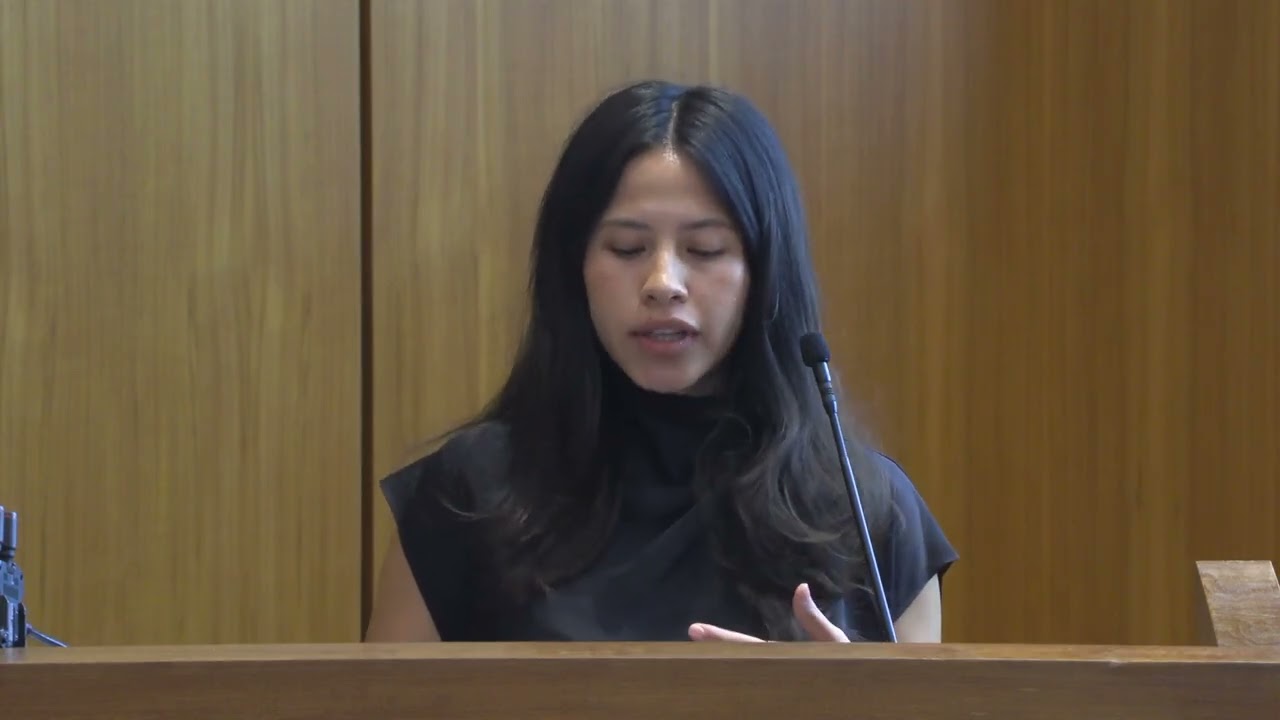
Aidaly Xicotencatl - Climate Resilient Design in SD Public Schools - MAS CSP 2026 Symposium
Keywords
Summary
125 words
Critical Evaluation
Value of the Information & Strength of the Argument
The presentation provides valuable empirical data on microclimate variability in school environments, directly linking it to student exposure and equity. The argumentation is solid, using a clear framework of triple jeopardy (exposure, susceptibility, adaptive capacity) and supporting it with specific measurements and case studies. The transferability of the model is convincingly argued, though the evidence base is limited to a single week of data.
Scientific Rigor, Source Quality, Title Accuracy
The scientific rigor is moderate: the methodology is transparent, but the sample size is small and the monitoring period short. Sources cited include state guidance (CDPH, CalOSHA) and reports on redlining and tree canopy, but specific references are not provided in the description. The title accurately reflects the content, and the presentation is well-structured.
133 words
Title / Content Match
The title accurately reflects the content, focusing on climate resilient design in San Diego public schools.
Quality & Reliability
7/10
The presentation is based on original field data collection with clear methodology and references to existing policies and reports. However, the sample size is limited (two schools, one week), and some claims rely on external sources not fully detailed.
Key Moments
Markers derived by PSI from the transcript: the creator did not define chapters.
- Introduction and project overview
- Statistics on heat and tree canopy in California schools
- Research question and three threads: measure, understand, transfer
- School demographics and environmental justice context
- Methodology: sensor deployment at two schools
- Outdoor temperature findings and timing of peaks
- Indoor findings: building buffering and sun exposure effects
- Existing green projects at the schools and transferable model
- Policy takeaways and acknowledgments
Cited Sources
- California Department of Public Health Heat Guidance — Referenced as existing state guidance for schools.
- CalOSHA Heat Illness Prevention Standards — Referenced as existing state standards for heat illness prevention.
- California Climate Ready Schools Framework — Mentioned as a funding source for climate resilience in schools.
- CalFire Green Schoolyard Grants — Mentioned as a funding source for green schoolyards.
Concurring Sources
- EPA Heat Island Effect — Supports the claim that vegetation and shade reduce heat.
- American Planning Association on Green Schoolyards — Supports the benefits of green schoolyards for health and learning.
Contribution & Novelties
The project contributes original microclimate data from school campuses, linking heat exposure to environmental justice and providing a transferable model for other districts. It emphasizes community-engaged design and education as integral components.
Pour aller plus loin :
- Urban heat island effect — Relevant to understanding heat variability in urban environments.
- Redlining and environmental justice — Historical context for unequal heat exposure.
- Green schoolyards — EPA resource on the benefits of vegetation for cooling.
- CalOSHA Heat Illness Prevention — Official standard referenced in the presentation.
84 words
Radar Profile
The radar profile shows high scores in information quality and reliability, with moderate technical depth. The presentation is strong on empirical data and policy relevance, but the limited scope and lack of detailed source citations slightly reduce the overall score.