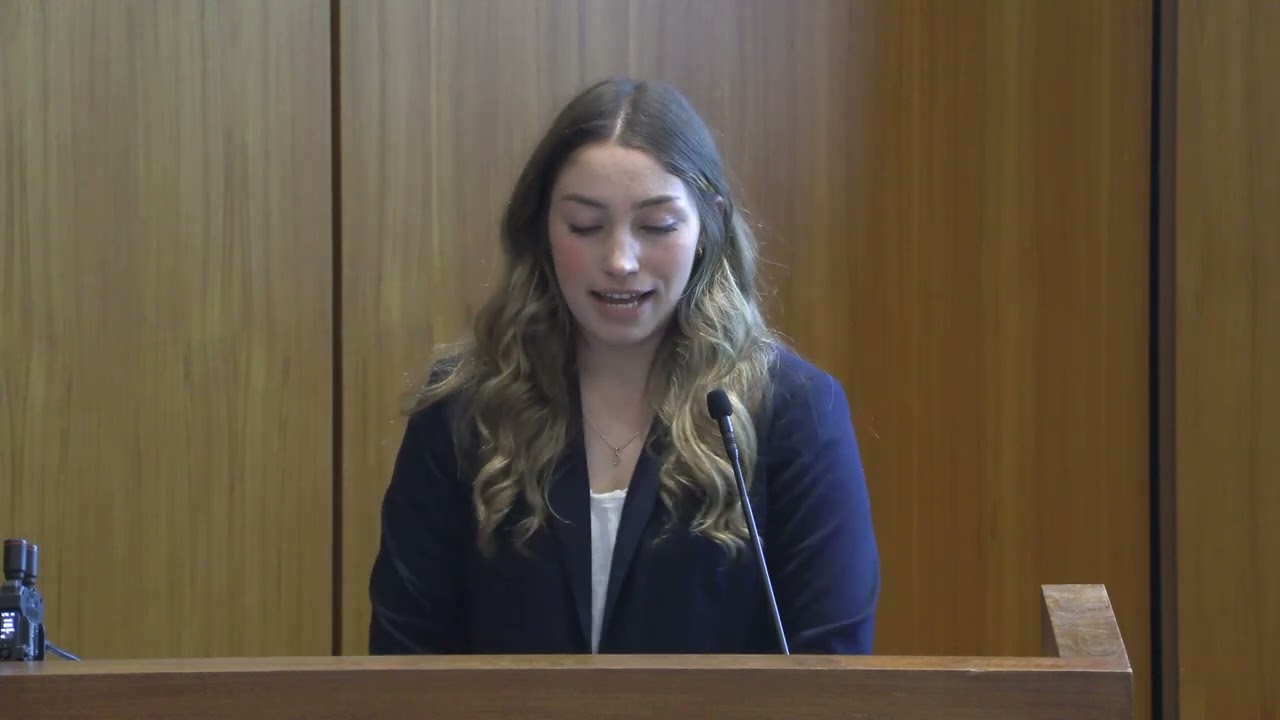
Clara Arcaris-Weiss - Social & EJ Considerations for FIRO in CA - MAS CSP 2026 Symposium
Keywords
Summary
179 words
Critical Evaluation
Value of the Information & Strength of the Argument
The presentation provides valuable insights into the integration of environmental justice into water management, a topic often overlooked. The argumentation is structured and logical, starting with the need for EJ considerations, then presenting a systematic analysis of multiple tools, and culminating in a case study that includes community perspectives. The speaker effectively uses maps and examples to illustrate her points. The discussion of tool limitations and the emphasis on community engagement strengthen the argument. However, the presentation is based on a student project, and the analysis is not deeply detailed in the time allotted, but the methodology appears sound.
Scientific Rigor, Source Quality, Title Accuracy
The presentation demonstrates scientific rigor through the use of established EJ screening tools and a clear methodology. The speaker acknowledges limitations of the tools and the need for multiple metrics. The title accurately reflects the content. The sources cited are the tools themselves and the workshop, but no external references are provided in the description. The presentation is a capstone project, so it is not peer-reviewed, but it is based on credible data sources.
188 words
Title / Content Match
The title accurately reflects the content, which focuses on social and environmental justice considerations for Forecast-Informed Reservoir Operations in California.
Quality & Reliability
7/10
The presentation is based on a capstone project with clear methodology, using established environmental justice screening tools and a case study with community engagement. However, it is a student presentation, not peer-reviewed, and some limitations are acknowledged.
Key Moments
Markers derived by PSI from the transcript: the creator did not define chapters.
- Introduction to the presentation and topic of environmental justice for FIRO.
- Explanation of FIRO and its benefits, referencing Lake Mendocino pilot study.
- Discussion of why environmental justice is important in water management.
- Introduction of the four EJ screening tools and three key indicators.
- Explanation of methods for statewide analysis and mapping of reservoir sites.
- Presentation of statewide maps for education and hazardous waste proximity, highlighting variations among tools.
- Introduction of the Yuba-Feather case study, including historical flooding events.
- Presentation of case study maps and identification of vulnerable communities.
- Summary of community workshop findings and key takeaways.
- Q&A session addressing tool differences and El Niño implications.
Cited Sources
- CalEnviroScreen — California-specific environmental health screening tool used in the analysis.
- Climate and Economic Justice Screening Tool — Federal tool used to identify disadvantaged communities.
- EPA's EJ Screen — Environmental justice screening tool from the EPA.
- Social Vulnerability Index — CDC's tool for measuring social vulnerability.
Concurring Sources
- CalEnviroScreen — Tool used in the analysis, consistent with its intended purpose.
- Social Vulnerability Index — Tool used to assess social vulnerability, aligning with the presentation's focus.
Dissenting Sources
- CalEnviroScreen vs. Federal Tools — The presentation notes that CalEnviroScreen often shows different results compared to federal tools, likely due to differences in data sources and scales.
Contribution & Novelties
This presentation contributes to the emerging field of integrating environmental justice into water management, specifically FIRO. It provides a comparative analysis of multiple EJ tools and highlights the importance of community engagement. The case study of the Yuba-Feather watershed offers a concrete example of how these considerations can be applied.
Pour aller plus loin :
- Forecast-Informed Reservoir Operations (FIRO) — Overview of FIRO concept and applications.
- Environmental justice — Background on environmental justice principles.
- Atmospheric river — Explanation of atmospheric rivers and their role in California precipitation.
87 words
Radar Profile
The radar profile shows relatively high scores across all dimensions, indicating a well-rounded presentation with good information content, quality, technical depth, and reliability. The lowest score is in technical level, suggesting it is accessible to a broader audience.
💬 No comments were provided for analysis.