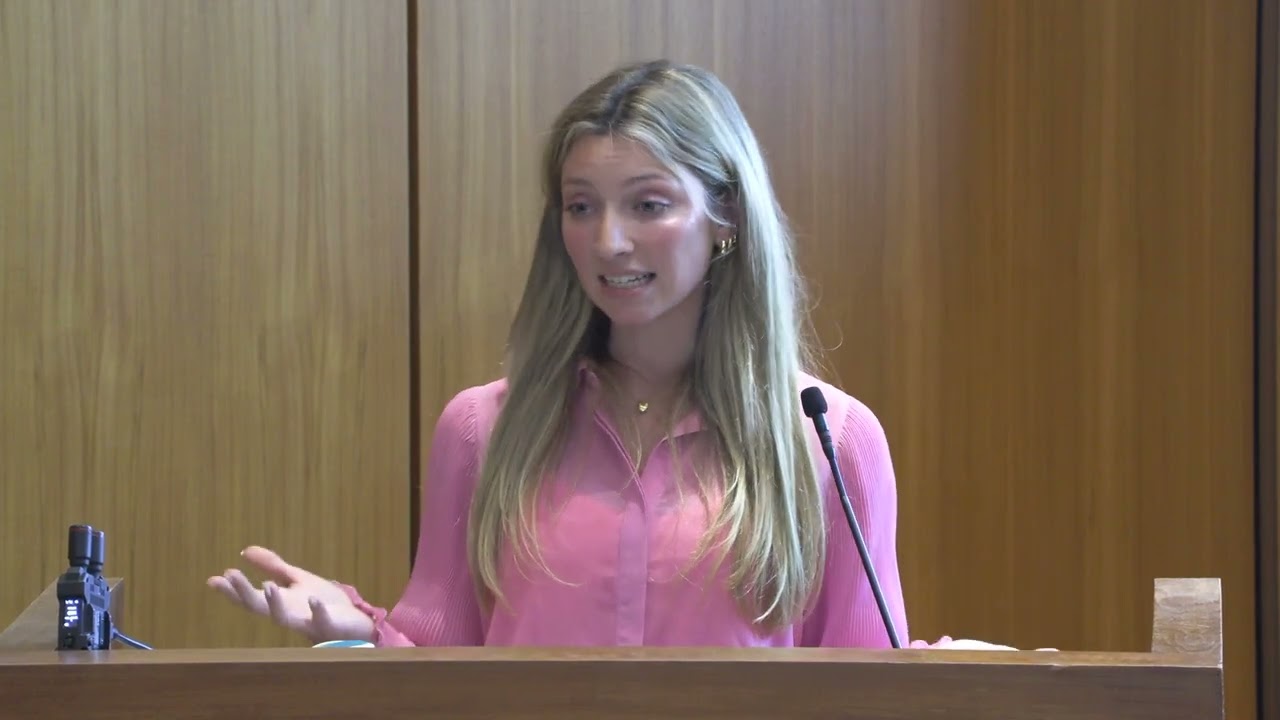
Greta Schultz - Who's Using All the Power? Data Center Sustainability in IL - MAS CSP 2026 Symposium
Keywords
Summary
133 words
Critical Evaluation
Value of the Information & Strength of the Argument
The presentation provides valuable insights into the intersection of data center growth, energy policy, and climate risk. The argumentation is well-structured, moving from the current state of data centers to future risks and policy recommendations. The use of specific data points, such as the 70% of PJM cost increase and water usage comparisons, strengthens the argument. However, some claims lack direct citations, and the analysis is based on a student project rather than peer-reviewed research. The recommendations are practical and grounded in existing policy frameworks, such as the Illinois EPA and ICC.
Scientific Rigor, Source Quality, Title Accuracy
The presentation demonstrates scientific rigor through the use of data from Monarch and Climate Weather Intelligence, and references to academic concepts like principal-agent theory and Ostrom’s commons governance. However, the sources are not explicitly cited in the video, and the reliance on projections without detailed methodology limits the assessment. The title accurately reflects the content, and the presentation is well-organized. The speaker acknowledges the limitations and provides a balanced view, avoiding alarmism.
179 words
Title / Content Match
The title accurately reflects the content, focusing on data center power consumption and sustainability in Illinois.
Quality & Reliability
7/10
The presentation is based on a capstone project with original analysis, including maps and data from Monarch and Climate Weather Intelligence. It cites specific data points and projections, but lacks peer-reviewed sources and relies on some unverified claims. The speaker demonstrates a solid understanding of the subject, but the presentation is a student project, not a formal study.
Key Moments
Markers derived by PSI from the transcript: the creator did not define chapters.
- Introduction to the capstone project on data center sustainability in Illinois.
- Definition of data centers and their energy consumption.
- Reasons for data center growth in Illinois: nuclear power, fiber, land, policy.
- Map of data centers in northern Illinois and grid infrastructure.
- Projected grid capacity shortfalls and demand growth.
- Impact on electricity bills and ratepayers.
- Climate risks: heat and cooling system failures.
- Flooding risks and stormwater infrastructure.
- Drought and water stress, with map of drought burden.
- Extreme cold and grid stress events.
- Comparison of water use: corn, city, data center.
- Industry efforts and their limitations.
- Illinois policy history and the POWER Act.
- Principal-agent problem and four recommendations.
- Conclusion and call for responsible governance.
Cited Sources
- Monarch and Climate Weather Intelligence — Provided data and mapping for climate projections specific to Illinois.
- Q and McCubbins (principal-agent theory) — Referenced for the principal-agent problem framework.
- Ostrom's commons governance framework — Referenced for community agreements recommendation.
Concurring Sources
- Monarch and Climate Weather Intelligence — Provided climate data and projections used in the analysis.
Contribution & Novelties
The presentation offers a comprehensive case study of data center sustainability in Illinois, integrating climate projections with policy analysis. It highlights the often-overlooked climate risks to data centers and proposes concrete policy recommendations. The use of maps and data from Monarch adds a visual and data-driven element.
Pour aller plus loin :
- Data center — Provides background on data centers and their energy use.
- Principal–agent problem — Explains the theoretical framework used.
- Elinor Ostrom — Overview of Ostrom’s work on commons governance.
82 words
Radar Profile
The radar profile shows high scores in information quantity and quality, with moderate technical level and reliability. This indicates a well-researched presentation with strong data support, but with room for more rigorous sourcing and technical depth.
💬 No comments were provided for analysis.