PL2.03 - The oldest modern human genomes allow dating Neandertal admixture
Keywords
Summary
152 words
Critical Evaluation
Value of the Information & Strength of the Argument
The talk provides high-value information, presenting novel findings from a major study. The argumentation is solid, based on rigorous scientific methods including radiocarbon dating, DNA damage patterns, and population genetics analyses. The speaker clearly explains the logic behind each step, from identifying human bones to estimating population size and dating admixture. The evidence is compelling, with multiple lines of support, including independent confirmation from a concurrent study.
Scientific Rigor, Source Quality, Title Accuracy
The scientific rigor is excellent, with detailed methodological descriptions and cross-validation. The sources are primarily the speaker’s own research, published in peer-reviewed journals, and he references a concurrent study in Science. The title accurately reflects the content, focusing on the oldest genomes and dating admixture. The talk is well-structured and transparent about limitations, such as small sample sizes and the need for further research.
146 words
Title / Content Match
The title accurately reflects the content, focusing on the oldest modern human genomes and their use in dating Neandertal admixture.
Quality & Reliability
9/10
Presentation by a leading expert in ancient DNA, based on peer-reviewed research published in high-impact journals, with detailed methodological explanations and cross-validation with independent studies.
Key Moments
Markers derived by PSI from the transcript: the creator did not define chapters.
- Introduction to ancient DNA methods and challenges
- Explanation of DNA damage patterns and the 'smiley plot'
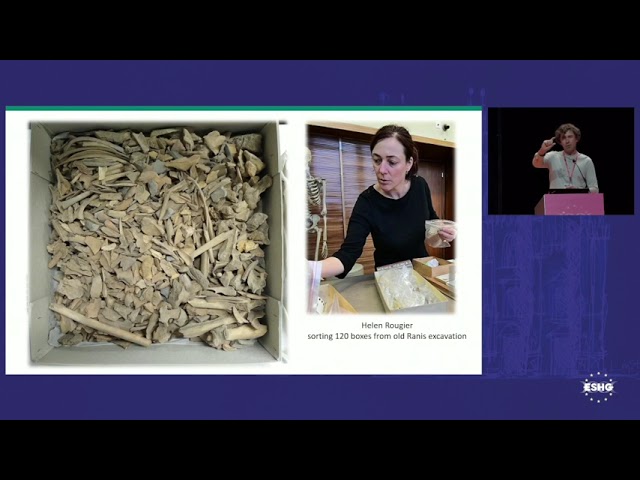
- Discovery of the Ranis bones and their significance
- Analysis of population size and relatedness among early humans
- Dating the Neandertal admixture event using DNA segment decay
- Implications for understanding early human migration and extinction
Cited Sources
- A 45,000-year-old human genome from Ranis, Germany — The speaker's own study on the Ranis genomes, published in Nature.
- The genetic history of the Southern Arc: A bridge between West Asia and Europe — Concurrent study by Leonardo Iasi and colleagues, confirming the admixture dating.
Concurring Sources
- A 45,000-year-old human genome from Ranis, Germany — The speaker's own study, providing the primary data.
- The genetic history of the Southern Arc: A bridge between West Asia and Europe — Independent study confirming the admixture dating.
Contribution & Novelties
This talk presents a significant advance in understanding early modern human history, providing the oldest modern human genomes from outside Africa and refining the timing of Neandertal admixture. The findings challenge previous assumptions about the LRJ culture and reveal a small, possibly extinct population. The methodological innovations in ancient DNA analysis are also highlighted.
Pour aller plus loin :
- Ancient DNA — Overview of the field and techniques.
- Neanderthal genetics — Background on Neanderthal DNA in modern humans.
- Ranis cave — Site of the discovery, with context on the archaeological findings.
91 words
Radar Profile
The radar profile shows high scores across all dimensions, indicating a well-rounded and reliable scientific presentation. The strengths are particularly notable in information quantity, quality, and reliability, with a slightly lower but still strong technical level.