E05.1 - Defining novel forms of leukodystrophies
Keywords
Summary
187 words
Critical Evaluation
Value of the Information & Strength of the Argument
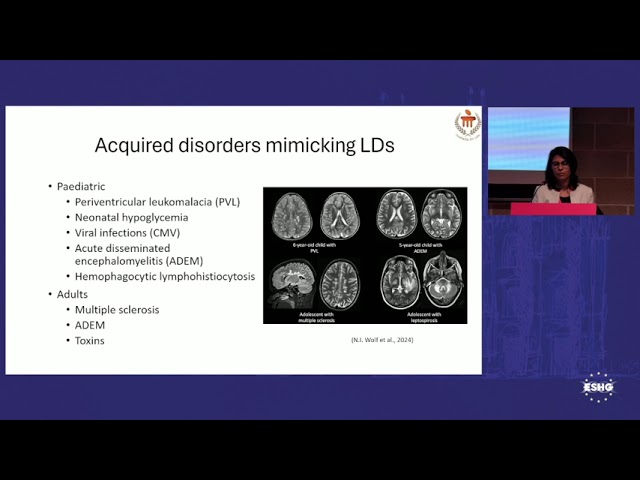
The presentation offers valuable insights into the classification and diagnosis of leukodystrophies, drawing on the speaker’s extensive clinical experience and research. The argumentation is solid, supported by specific case examples and genetic findings. The speaker effectively demonstrates how novel phenotypes and genotypes are being identified, particularly in under-represented populations, and discusses the implications for therapy development. The discussion of challenges, such as the low diagnostic yield in adults and the potential for acquired mimics, adds depth to the argumentation.
Scientific Rigor, Source Quality, Title Accuracy
The scientific rigor is high, as the speaker is a recognized expert and the content is based on peer-reviewed research and clinical cases. However, the video does not provide explicit citations for all claims, though the speaker mentions specific genes and studies. The title accurately reflects the content, which focuses on defining novel forms of leukodystrophies. The presentation is well-structured and adheres to scientific standards.
159 words
Title / Content Match
The title accurately reflects the content, which focuses on defining novel forms of leukodystrophies through clinical and genetic characterization.
Quality & Reliability
8/10
Presentation by a clinical geneticist with expertise in leukodystrophies, based on peer-reviewed research and clinical cases. The content is up-to-date and includes references to specific genes and studies, but lacks detailed citations in the video itself.
Key Moments
Markers derived by PSI from the transcript: the creator did not define chapters.
- Introduction and speaker introduction
- Overview of CNS white matter structure and function
- Historical classification of leukodystrophies
- Diagnostic approaches and challenges
- Hypomyelinating leukodystrophies: novel genes and phenotypes
- Aminoacyl-tRNA synthetase disorders and multisynthetase complex
- Mitochondrial leukodystrophies and novel ISCA1-related disorder
- Challenges and opportunities in leukodystrophy research
Cited Sources
- No explicit sources cited in the video — The speaker mentions specific genes and studies but does not provide direct citations.
Concurring Sources
- No concordant sources provided — No external sources were provided in the video description.
Dissenting Sources
- No discordant sources provided — No conflicting sources were mentioned.
Contribution & Novelties
The presentation provides an updated overview of leukodystrophy classification and highlights several novel genetic forms, including TMEM163-related HLD, transient infantile HLD type 19, AIMP2-related disorder, and ISCA1-related mitochondrial leukodystrophy. It emphasizes the importance of brain imaging and genomics in diagnosis and discovery, and discusses the potential of multi-omics in future research.
Pour aller plus loin :
- Leukodystrophy - Wikipedia — General overview of leukodystrophies.
- Hypomyelinating leukodystrophy - Orphanet — Information on hypomyelinating leukodystrophies.
- Aminoacyl-tRNA synthetase - Wikipedia — Background on ARS enzymes.
- Mitochondrial disease - Wikipedia — Overview of mitochondrial disorders.
91 words
Radar Profile
The radar profile shows high scores across all dimensions, indicating a well-balanced and reliable presentation. The content is technically deep, scientifically rigorous, and provides substantial information, making it a valuable resource for professionals in genetics and neurology.