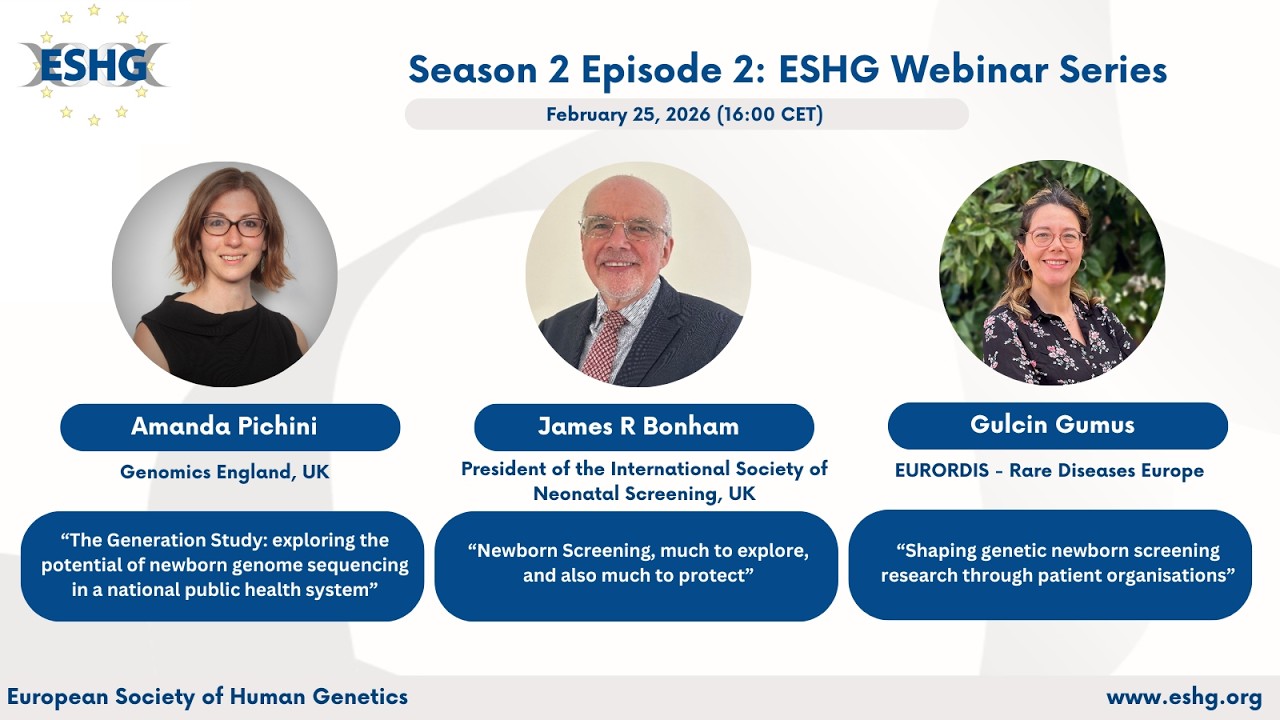
ESHG Webinar Series Season 2 Episode 2 with Amanda Pichini, James R. Bonham and Gulcin Gumus
Keywords
Summary
126 words
Critical Evaluation
Value of the Information & Strength of the Argument
The webinar provides valuable insights into the implementation of genomic newborn screening, with concrete data from the Generation Study, such as recruitment numbers, turnaround times, and detection rates. The argumentation is solid, with each speaker presenting evidence and addressing potential challenges. Pichini’s presentation is particularly strong, detailing the study’s methodology, including condition selection principles and consent processes. Bonham offers a balanced view, acknowledging the benefits of traditional screening while cautioning about the complexities of genomic approaches. Gumus highlights the importance of patient involvement, adding a crucial ethical dimension. The discussion is well-reasoned and grounded in practical experience.
Scientific Rigor, Source Quality, Title Accuracy
The webinar demonstrates scientific rigor through the use of data from the Generation Study and references to established screening programs. The speakers are credible experts, and the content aligns with current debates in the field. The title accurately describes the content. However, specific sources are not cited in detail during the presentations, and the webinar is more of an expert opinion than a systematic review. The description provides links to relevant resources, which enhance the credibility. Overall, the rigor is high, but the lack of explicit citations within the talk slightly reduces the score.
206 words
Title / Content Match
The title accurately reflects the content, which is a webinar episode featuring three experts discussing genomic newborn screening.
Quality & Reliability
8/10
The webinar features experts from Genomics England, the International Society of Neonatal Screening, and EURORDIS, providing authoritative perspectives on genomic newborn screening. The content is well-structured, evidence-based, and includes early results from the Generation Study. However, it is primarily an expert discussion rather than a peer-reviewed study, and some claims lack detailed citations.
Key Moments
Markers derived by PSI from the transcript: the creator did not define chapters.
- Introduction by Martina Cornell, ESHG president, outlining the webinar structure.
- Amanda Pichini begins her presentation on the Generation Study.
- Pichini discusses the challenges of genomic newborn screening, including consent and equity.
- Pichini explains the study's three aims and the importance of co-design.
- Pichini details the recruitment journey and consent process.
- Pichini presents early results, including detection rates and turnaround times.
- James Bonham discusses traditional newborn screening and its successes.
- Gulcin Gumus speaks on the role of patient organizations in gNBS.
- Q&A session begins, with questions from the audience.
Cited Sources
- The Generation Study — Mentioned by Amanda Pichini as the study she is presenting.
- International Society of Neonatal Screening — James Bonham is president of this organization.
- EURORDIS — Gulcin Gumus represents this patient organization.
Concurring Sources
- Genomics England — The Generation Study is run by Genomics England.
- NHS Newborn Blood Spot Screening — Describes the existing newborn screening program in the UK.
Contribution & Novelties
The webinar provides an up-to-date overview of the Generation Study, including early results and implementation challenges, which is valuable for researchers and clinicians. It also highlights the importance of patient and public involvement in genomic screening research.
Pour aller plus loin :
- Newborn screening — Background on traditional newborn screening.
- Genome sequencing — Overview of sequencing technologies.
- Informed consent — Ethical considerations in research.
64 words
Radar Profile
The radar profile shows high scores in information quantity, quality, and reliability, with a slightly lower technical level, reflecting the webinar's focus on practical implementation and ethical considerations rather than deep technical details.
💬 No comments were provided for analysis.