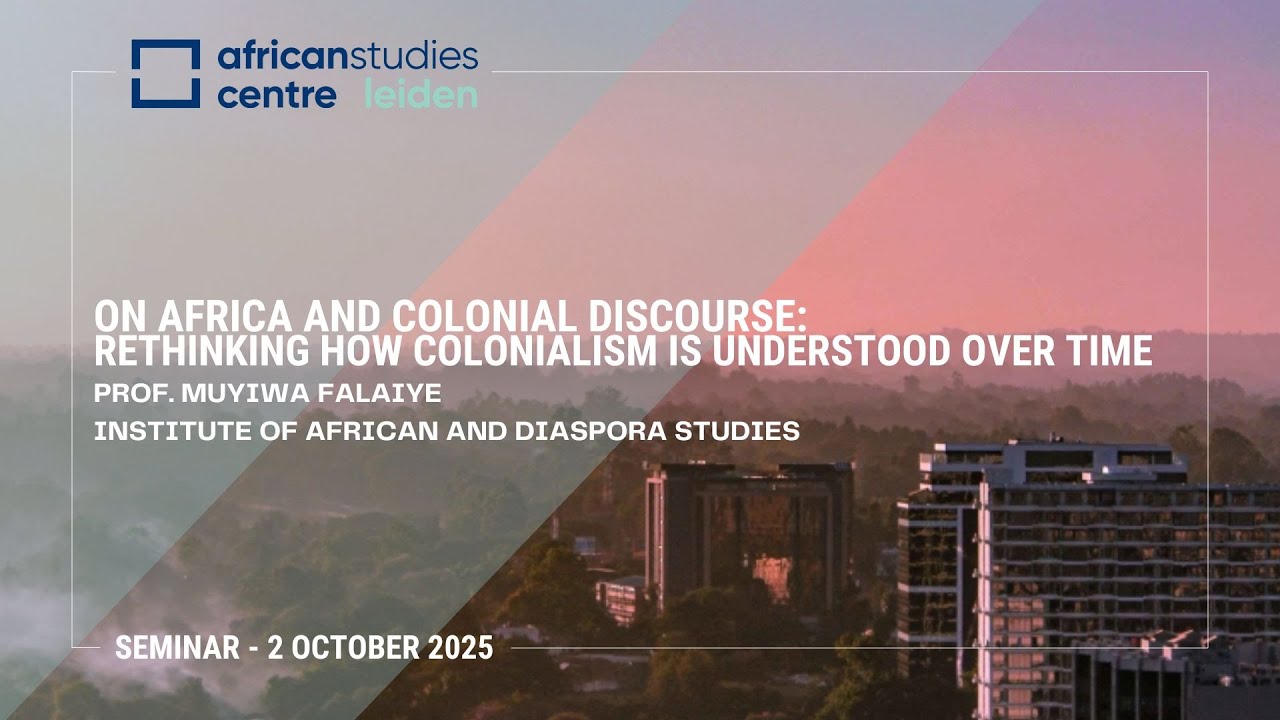
On Africa and colonial discourse: rethinking how colonialism is understood over time
Keywords
Summary
124 words
Critical Evaluation
Value of the Information & Strength of the Argument
The talk provides valuable insights into the colonial discourse, offering a balanced critique of both decolonization and anti-decolonization positions. The argumentation is coherent, using the elephant metaphor effectively to illustrate the psychological and intellectual stagnation. The speaker engages with key thinkers and texts, such as Walter Rodney’s ‘How Europe Underdeveloped Africa’ and Toni Morrison’s views on racism, adding depth. However, some arguments are presented as assertions without extensive evidence, and the talk is more of an opinion piece than a systematic analysis.
Scientific Rigor, Source Quality, Title Accuracy
The speaker demonstrates scholarly rigor by referencing multiple authors and historical events, but he does not provide formal citations or a bibliography. The sources mentioned are credible (e.g., Rodney, Morrison, Olaudah Equiano), but their use is illustrative rather than systematic. The title accurately reflects the content, focusing on rethinking colonialism over time. The talk is well-structured and stays on topic.
157 words
Title / Content Match
The title accurately reflects the content: the speaker rethinks colonialism as both episodic and epochal, and discusses colonial discourse in Africa.
Quality & Reliability
7/10
The speaker is a professor of African philosophy with extensive publications. The talk is an expert opinion, well-structured, and references several scholars (e.g., Walter Rodney, Toni Morrison) and historical events. However, it is a lecture without formal citations or peer-reviewed sources, and some claims are presented without detailed evidence.
Key Moments
Markers derived by PSI from the transcript: the creator did not define chapters.
- Introduction of the speaker by the host, highlighting his credentials and publications.
- Speaker begins with historical events: Columbus, French Revolution, Russian Revolution, and Mansa Musa's trip.
- Introduction of the elephant metaphor to illustrate Africa's stagnation.
- Discussion of the decolonization debate and its extremes.
- Critique of anti-decolonization arguments and the commercialization of decolonization.
- Exploration of slavery narratives, referencing Olaudah Equiano and Harriet Jacobs.
- Discussion on reparations and the need for Africa to take responsibility.
- Reference to Walter Rodney's analysis of underdevelopment and the responsibility of Africans.
- Quotation of Toni Morrison on racism as a distraction.
- Conclusion: call for forward-looking pan-Africanism and moving beyond colonial narratives.
Cited Sources
- How Europe Underdeveloped Africa — Referenced as a key text on African underdevelopment.
- The Interesting Narrative of the Life of Olaudah Equiano — Quoted to illustrate the horrors of slavery.
- Incidents in the Life of a Slave Girl — Referenced for the experience of slavery.
- Toni Morrison's quote on racism — Quoted to discuss the function of racism.
Concurring Sources
- How Europe Underdeveloped Africa — Supports the argument that colonialism led to underdevelopment.
- Toni Morrison's quote on racism — Aligns with the idea that racism distracts from productive work.
Dissenting Sources
- George Ayittey's works — Ayittey argues that African leaders are responsible for Africa's problems, which contrasts with the emphasis on colonial legacy.
Contribution & Novelties
The talk offers a fresh perspective by framing colonialism as both episodic and epochal, moving beyond the binary debate on decolonization. It emphasizes the need for Africans to take responsibility for their own development, rather than dwelling on blame. The speaker’s use of the elephant metaphor is a powerful illustration of psychological stagnation.
Pour aller plus loin :
- Decolonization - Wikipedia — Provides an overview of decolonization movements and debates.
- Walter Rodney - Wikipedia — Background on the author of ‘How Europe Underdeveloped Africa’.
- African Philosophy - Internet Encyclopedia of Philosophy — Explores key themes in African philosophy, including epistemology and decolonization.
102 words
Radar Profile
The radar profile shows high scores in information quantity and quality, reflecting the speaker's expertise and the depth of the discussion. The technical level is moderate, suitable for an academic audience. The overall reliability is good, though the lack of formal citations slightly reduces the score.
💬 Sur les 0 commentaires analysés, aucune tendance n'est disponible.