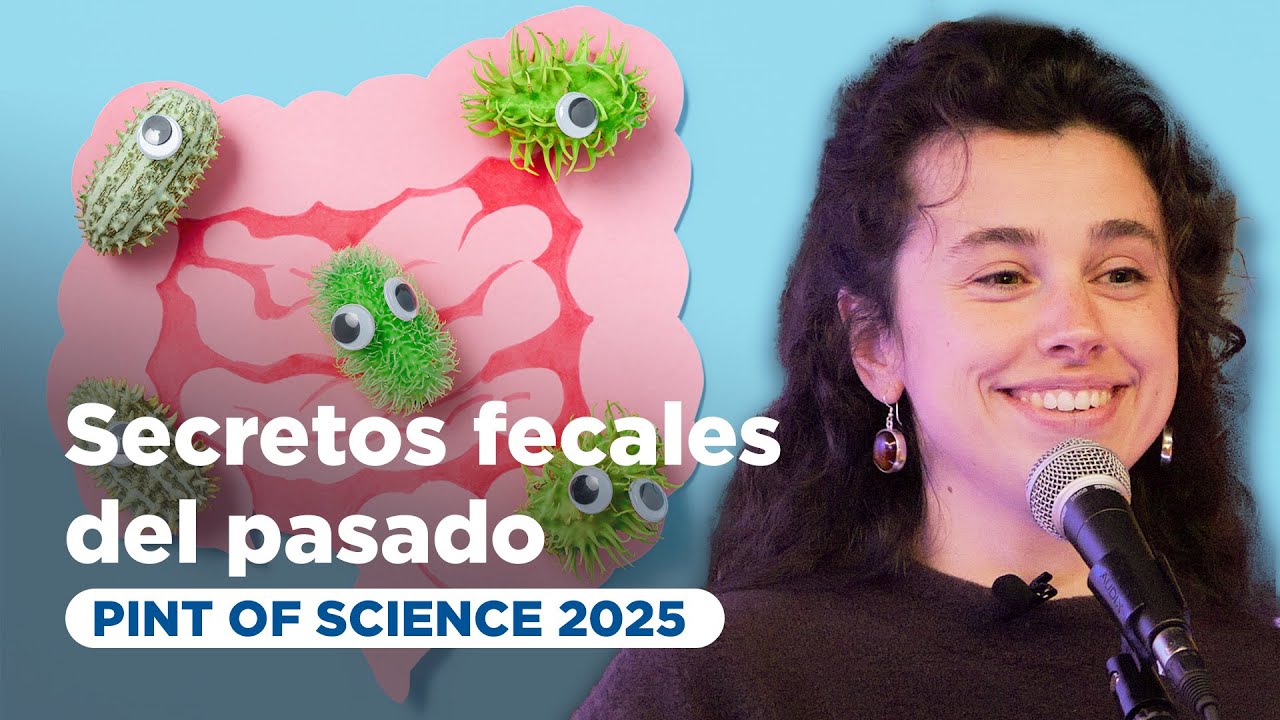
¡Vaya charla de mierda! Secretos fecales del pasado
Keywords
Summary
210 words
Critical Evaluation
The talk is an excellent example of science communication, blending humor with rigorous scientific content. The speaker, Carlota Pintado Laguna, demonstrates a strong command of the subject, drawing on specific studies and archaeological evidence. The structure is clear, moving from the basics of fecal composition to three key research areas: microbiota, parasites, and diet. The discussion of Neanderthal microbiota is particularly compelling, as it uses genetic analysis of coprolites to infer evolutionary relationships and dietary habits. The speaker correctly notes that the presence of fiber-degrading bacteria suggests a significant plant component in Neanderthal diets, challenging the stereotype of hyper-carnivorous Neanderthals. This is supported by recent research, though the talk does not provide specific citations, which would have strengthened the scientific credibility. The section on paleoparasitology is informative, explaining transmission routes and the impact of the Neolithic transition. The speaker’s point that humans are responsible for the transmission of certain parasites is well-taken, though it could have been nuanced with examples of zoonotic diseases. The dietary analysis section is engaging, with the example of the Oregon coprolite providing a tangible illustration. The talk’s main strength is its ability to make complex scientific concepts accessible without oversimplifying. However, it occasionally lacks depth, particularly in explaining methodologies like ancient DNA analysis. The title is catchy and appropriate, though it may trivialize the content for some viewers. Overall, the talk is scientifically sound and well-presented, earning a high score for quality and reliability.
239 words
Title / Content Match
The title is catchy and humorous, accurately reflecting the topic of fecal remains in archaeology.
Quality & Reliability
8/10
The talk is based on established scientific research, including studies on Neanderthal coprolites and paleoparasitology, presented by a researcher. The content is well-structured and references specific studies, though it lacks detailed citations during the talk.
Key Moments
Markers derived by PSI from the transcript: the creator did not define chapters.
- Introduction: the speaker introduces the topic of fecal remains in archaeology and asks the audience about daily fecal production.
- Composition of feces: water, bacteria, undigested food, and pigments like stercobilin.
- How coprolites are preserved and recovered, including contexts like caves and latrines.
- Introduction to the first aspect: the origins of human microbiota, with a focus on Neanderthal coprolites from El Salt.
- Discussion of specific bacteria in Neanderthal microbiota, including Bifidobacterium and Akkermansia, and their implications for health.
- Comparison with modern microbiomes and the loss of diversity due to Western diet and antibiotics.
- Introduction to paleoparasitology: sources of parasite remains, including mummies and latrines.
- Transmission routes and the impact of the Neolithic transition on parasitic infections.
- Dietary analysis: how coprolites reveal plant and animal consumption, with an example from Oregon.
- Conclusion: the importance of fecal remains as 'black boxes' for understanding the past.
Cited Sources
- UBUInvestiga Blog — The channel's blog, which may contain additional scientific content and references.
Concurring Sources
- UBUInvestiga Blog — The channel's blog, which may contain additional scientific content and references.
Contribution & Novelties
The talk provides a comprehensive overview of the scientific value of coprolites, synthesizing recent research on Neanderthal microbiota and paleoparasitology. It highlights the potential of ancient fecal remains to inform on diet, health, and evolution, making complex topics accessible to a general audience.
Pour aller plus loin :
- Coprolite (Wikipedia) — Provides background on fossilized feces and their study.
- Paleoparasitology (Wikipedia) — Overview of the study of parasites in archaeological remains.
- Gut microbiota (Wikipedia) — Explains the role of gut bacteria in health and disease.
- El Salt (Wikipedia) — Archaeological site in Spain where Neanderthal coprolites were found.
- Akkermansia muciniphila (Wikipedia) — A bacterium mentioned in the talk, relevant to metabolic health.
112 words
Radar Profile
The radar profile shows high scores in quantity and quality of information, with a moderate technical level, indicating a well-balanced talk that is both informative and accessible.