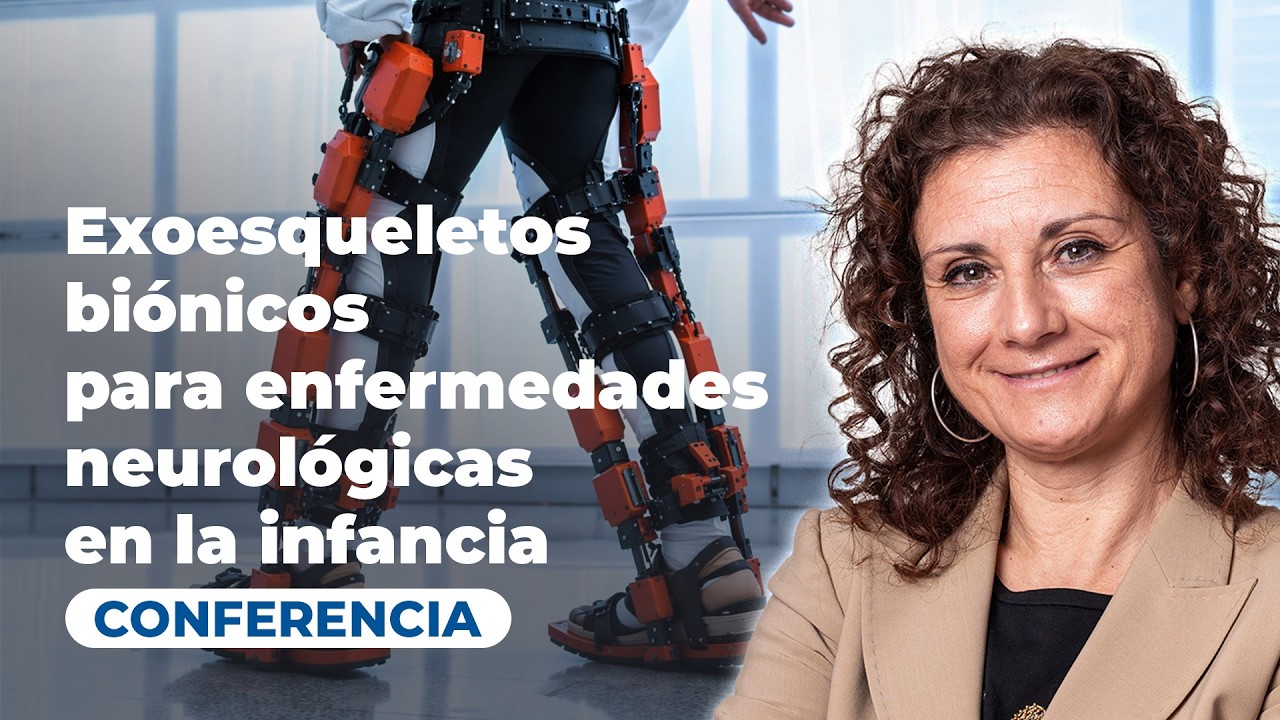
Exoesqueletos biónicos para niños con enfermedades neuromusculares | Elena García Armada
Keywords
Summary
159 words
Critical Evaluation
The talk provides a compelling and expert overview of pediatric exoskeletons, grounded in the speaker’s extensive experience. The scientific rationale for using exoskeletons to promote walking is well-argued, citing the physiological benefits of dynamic loading and neural plasticity. However, the presentation is primarily qualitative, with limited quantitative data presented. While the speaker mentions clinical results, specific metrics and study details are not provided, which limits the ability to critically assess efficacy. The talk is more of an inspirational and educational piece than a rigorous scientific presentation. The speaker’s credibility is high, given her patents and awards, but the lack of detailed citations for the claims made is a weakness. The technical aspects of the exoskeleton’s control system are explained in a simplified manner, which is appropriate for a general audience but may leave experts wanting more depth. The adéquation between title and content is excellent, as the talk directly addresses the topic. Overall, the talk is valuable for raising awareness and providing insight into the field, but it would benefit from more concrete evidence and references.
176 words
Title / Content Match
The title accurately reflects the content: the talk focuses on bionic exoskeletons for children with neuromuscular diseases.
Quality & Reliability
8/10
The speaker is a leading expert with a strong track record (CSIC, Marsi Bionics, patents, awards). The talk is based on her own research and clinical applications, but it is a conference presentation rather than a peer-reviewed publication, so some claims lack detailed citations.
Key Moments
Markers derived by PSI from the transcript: the creator did not define chapters.
- Introduction: Elena García Armada introduces herself and the topic of bionic exoskeletons.
- Explanation of the convergence of digital, physical, and biological worlds leading to bionics.
- Discussion of neuromuscular diseases in children and their impact on mobility.
- Secondary effects of immobility: scoliosis, joint deformities, osteoporosis.
- Importance of walking as rehabilitation and the need for proper neural retraining.
- Development of the first pediatric exoskeleton and its adaptive control system.
- Clinical results and improvements in muscle strength and bone density.
- Challenges in designing exoskeletons for children: size, weight, safety.
- Future vision: integrating exoskeletons into daily life and technology transfer.
Cited Sources
- UBUinvestiga — Official website of the University of Burgos research dissemination unit, which organized the conference.
Concurring Sources
- Marsi Bionics — Company website providing information on their exoskeleton products and clinical applications, consistent with the talk.
Contribution & Novelties
The talk provides an expert perspective on the development and application of pediatric exoskeletons, highlighting the importance of adaptive control and the physiological benefits of walking. It bridges engineering and clinical practice, offering insights into the challenges and successes of bringing such technology to children with neuromuscular diseases.
Pour aller plus loin :
- Exoskeleton - Wikipedia — Provides general background on exoskeletons, including medical applications.
- Marsi Bionics — Official website of the company founded by Elena García Armada, detailing their products and research.
- European Inventor Award 2022 — Information about the award received by Elena García Armada for her work on pediatric exoskeletons.
- Spinal muscular atrophy - Wikipedia — Relevant to the neuromuscular diseases discussed in the talk.
118 words
Radar Profile
The radar profile shows high scores in quantity and quality of information, reflecting the expert's depth of knowledge. The technical level is moderately high, suitable for a general scientific audience. The overall reliability is strong due to the speaker's credentials, though the lack of detailed citations slightly lowers the score.