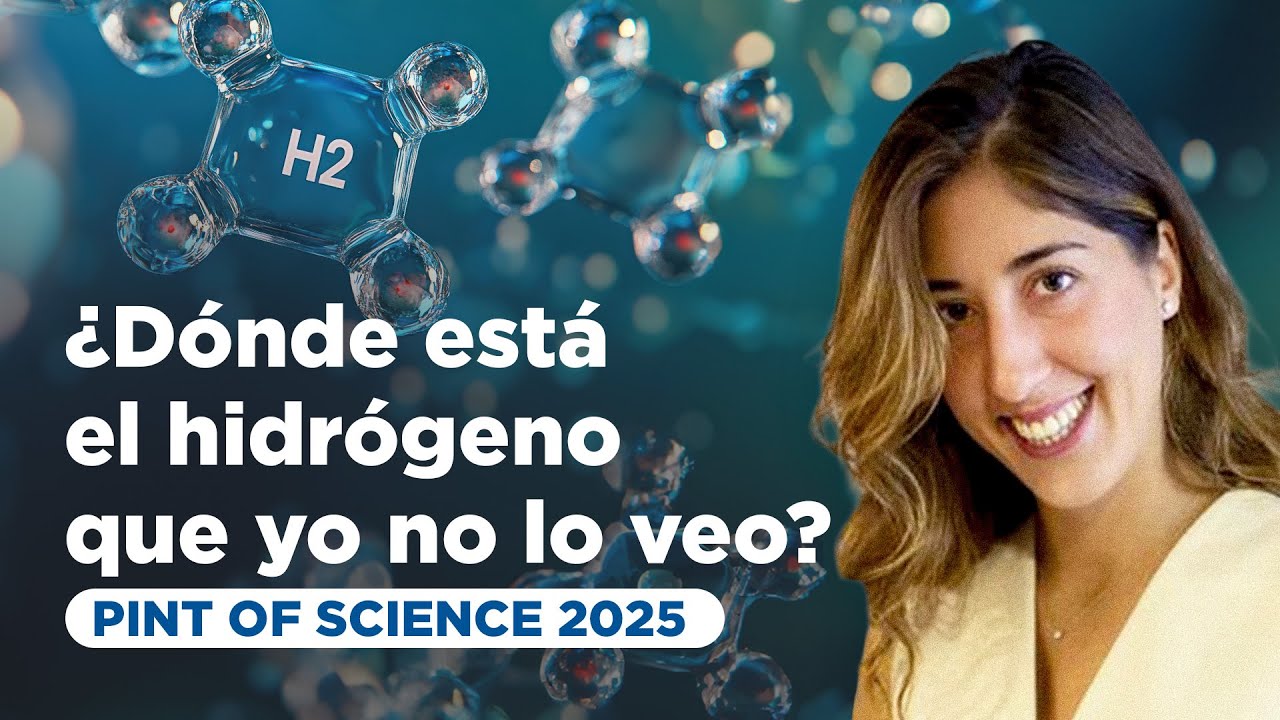
¿Dónde está el hidrógeno, que yo no lo veo?
Keywords
Summary
155 words
Critical Evaluation
The talk is a well-structured and engaging science communication piece. The speaker, a PhD in computational chemistry with over six years of experience in hydrogen research, demonstrates a strong command of the subject. The content is scientifically accurate, and the explanations are clear and accessible without oversimplifying complex concepts. The live electrolysis demonstration is a highlight, making the science tangible for the audience. The argumentation is logical, progressing from basic properties of hydrogen to its role as an energy vector and its applications. The comparison between hydrogen fuel cell vehicles and battery electric vehicles is balanced, acknowledging the current advantages of electric vehicles in terms of infrastructure and cost while noting the potential of hydrogen for long-range and heavy-duty applications. The speaker also addresses safety concerns, reassuring the audience with factual information. However, the talk lacks explicit citations to external sources, which would strengthen its credibility. The title is well-aligned with the content, as it addresses the common question of where hydrogen is, both physically and in the energy landscape. Overall, the talk is informative and reliable, suitable for a general audience interested in energy and technology.
187 words
Title / Content Match
The title is engaging and accurately reflects the content, which addresses common questions about hydrogen's visibility and role.
Quality & Reliability
8/10
The speaker is a PhD in computational chemistry with over 6 years of experience in hydrogen research. The talk is scientifically accurate, explains fundamental concepts clearly, and includes a live demonstration. Claims are consistent with established science, though no external sources are cited.
Key Moments
Markers derived by PSI from the transcript: the creator did not define chapters.
- Introduction and speaker background
- First interactive question: Is hydrogen a gas?
- Explanation of hydrogen liquefaction at -253°C
- Demonstration with balloon: hydrogen is less dense than air
- Discussion on hydrogen volume and storage challenges
- Question about hydrogen presence in the air; composition of air
- Introduction to electrolysis and homemade electrolyzer demonstration
- Explanation of hydrogen as an energy vector, not a source
- Applications in mobility: Toyota Mirai and comparison with electric vehicles
- Safety considerations and conclusion
Cited Sources
- UBUInvestiga Blog — Official blog of the university research unit, providing additional scientific outreach content.
Concurring Sources
- International Energy Agency - Hydrogen — IEA provides comprehensive data and analysis on hydrogen's role in energy transitions.
Contribution & Novelties
The talk provides a clear and engaging explanation of hydrogen as an energy vector, emphasizing its role in storing renewable energy. It demystifies common misconceptions and offers a balanced comparison between hydrogen fuel cell and battery electric vehicles.
Pour aller plus loin :
- Hydrogen production — Overview of methods including electrolysis.
- Fuel cell — Explanation of how fuel cells convert hydrogen to electricity.
- Green hydrogen — Definition and production from renewable sources.
72 words
Radar Profile
The radar profile shows high scores in information quantity, quality, and reliability, with a moderate technical level. This indicates a well-balanced talk that is both informative and accessible, suitable for a general audience interested in hydrogen energy.
💬 No comments were provided for analysis.