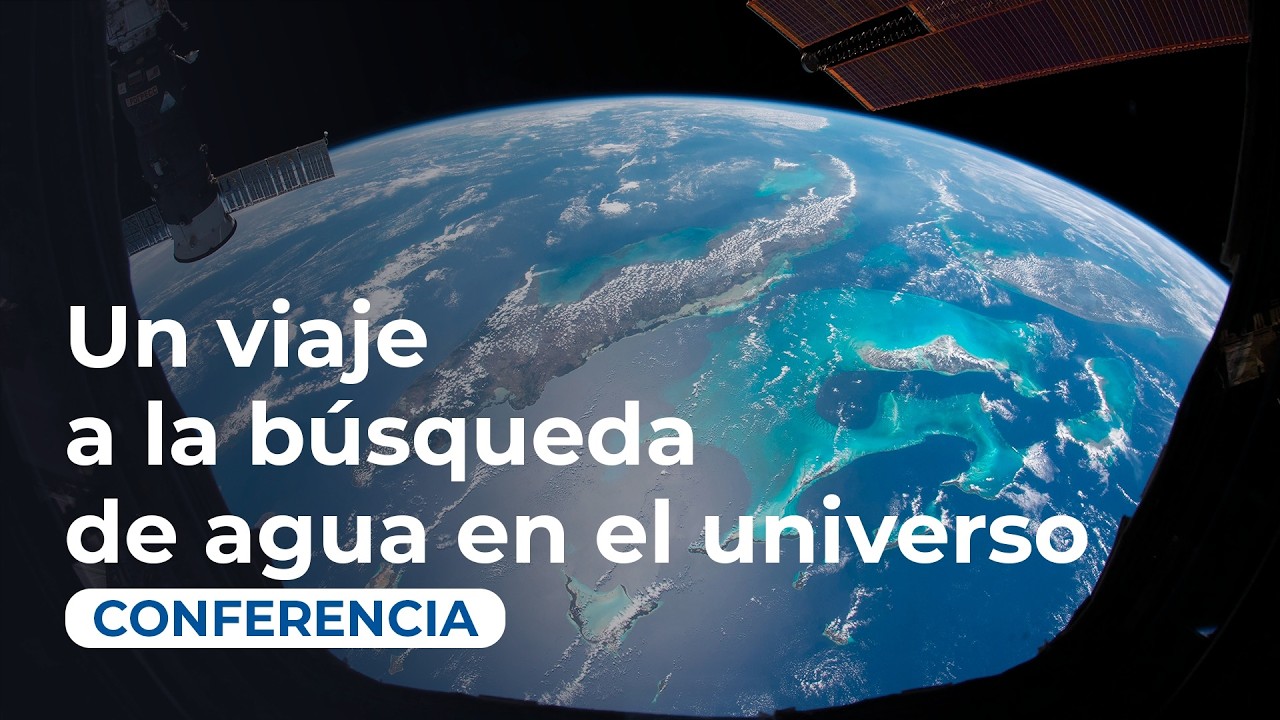
Un viaje a la búsqueda de agua en el universo | Conferencia Javier Alonso, astrofísico
Keywords
Summary
218 words
Critical Evaluation
The conference provides a solid, scientifically accurate overview of water in the universe, delivered by a qualified astrophysicist. The speaker demonstrates a strong command of the subject, presenting complex concepts in an accessible manner without oversimplifying to the point of inaccuracy. The discussion of biosignatures and biomarkers is particularly well-handled, correctly distinguishing between molecules that may indicate life and those that are merely associated with it. The historical context of Pluto’s reclassification is presented with a touch of humor and political insight, adding depth to the narrative. The talk is well-structured, progressing logically from the solar system to exoplanets, and includes up-to-date references to missions like Chandrayaan and the James Webb Space Telescope. However, the lack of specific citations or references to scientific papers is a minor weakness, as the audience cannot easily verify the claims. Additionally, some analogies, such as comparing Valles Marineris to a ‘sea’ rather than a canyon, are vivid but may slightly distort the scale for a lay audience. The speaker’s enthusiasm is evident, but the talk occasionally meanders, and the pacing could be tighter. Overall, the content is reliable and informative, making it a valuable resource for science communication. The title accurately reflects the content, and the talk fulfills its promise of a journey through the universe in search of water.
216 words
Title / Content Match
The title accurately reflects the content, which is a journey through the universe in search of water, from the solar system to exoplanets.
Quality & Reliability
8/10
The speaker is a professional astrophysicist with a PhD and current research position, providing credible scientific content. The talk is largely based on established astronomical knowledge, with references to missions and observations. However, some simplifications and analogies are used for a general audience, and no specific sources are cited in the video itself.
Key Moments
Markers derived by PSI from the transcript: the creator did not define chapters.
- Introduction to the conference series and the topic of water in the universe.
- Explanation of biosignatures and biomarkers, and why water is a key indicator.
- Overview of the solar system's structure, including the Kuiper belt and the reclassification of Pluto.
- Discussion of water on inner planets: Venus's greenhouse effect and Mars's lost water.
- Evidence of water on Mars and the Moon, including Valles Marineris and polar craters.
- The asteroid belt and the potential for water on asteroids.
- The Galilean moons, especially Europa, as prime targets for finding life.
- Other moons like Enceladus and Titan, and the search for water in the outer solar system.
- Exoplanets and the habitable zone, with recent discoveries and the role of JWST.
- Conclusion: humanity is on the verge of discovering life beyond Earth.
Cited Sources
- UBUInvestiga Blog — The official blog of the University of Burgos research dissemination, mentioned in the video description as a source for more information.
Concurring Sources
- NASA - Water on the Moon — NASA's confirmation of water on the Moon, supporting the speaker's claims about lunar water.
- ESA - Enceladus — ESA's page on Enceladus, highlighting its water plumes and potential habitability.
Dissenting Sources
- No specific discordant sources found — The speaker's claims align with current scientific consensus; no major contradictions were identified.
Contribution & Novelties
The talk provides a comprehensive and accessible synthesis of current knowledge about water in the universe, from the solar system to exoplanets, with a focus on its astrobiological significance. It effectively communicates the latest findings and the ongoing search for life, making it a valuable resource for science communication.
Pour aller plus loin :
- Water on Mars — Overview of evidence for water on Mars.
- Europa (moon) — Details on Europa’s subsurface ocean and its potential for life.
- Habitable zone — Explanation of the circumstellar habitable zone concept.
88 words
Radar Profile
The radar profile shows high scores in information quantity, quality, and reliability, with a slightly lower technical level, reflecting a talk that is scientifically sound but accessible to a general audience.