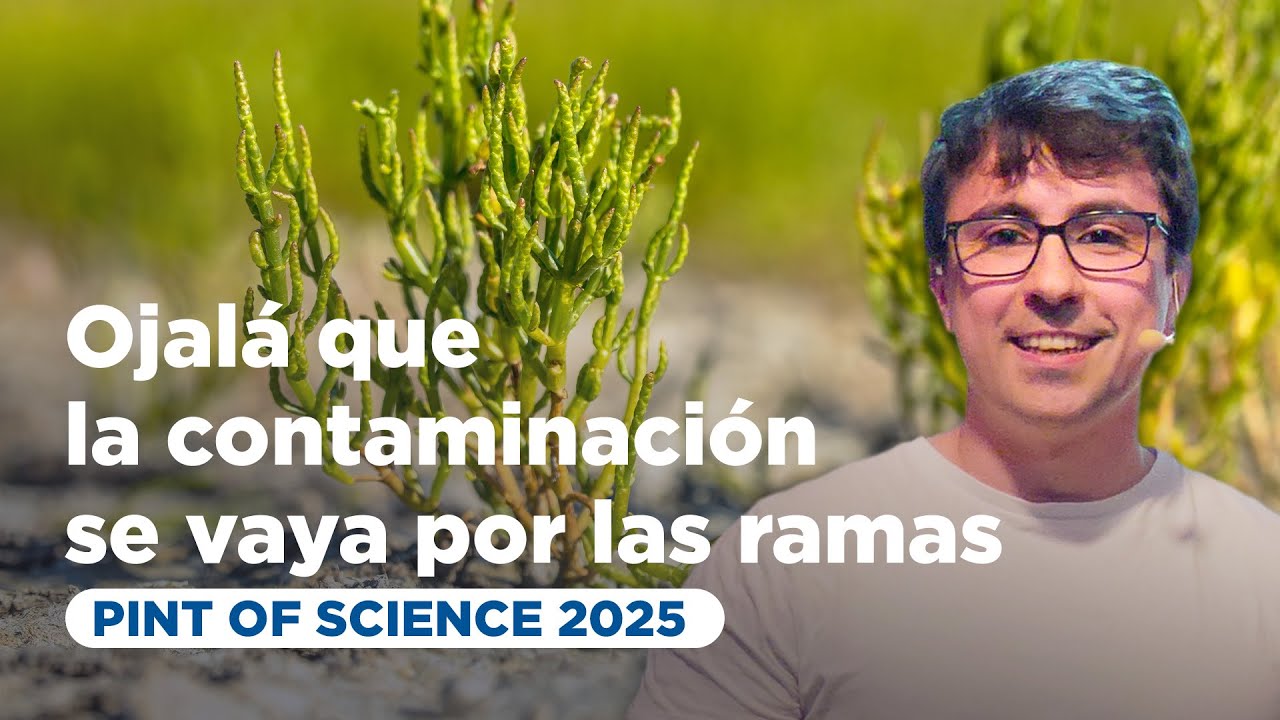
Ojalá que la contaminación se vaya por las ramas | Plantas para descontaminar
Keywords
Summary
128 words
Critical Evaluation
The talk provides a solid introduction to phytoremediation, covering fundamental concepts and practical considerations. The speaker, a doctoral researcher, demonstrates good knowledge of the subject, and the content is scientifically accurate. The presentation is well-structured, moving from definitions to mechanisms, advantages, limitations, and potential enhancements. However, the talk lacks specific data and detailed citations, which would strengthen its scientific rigor. The speaker mentions statistics like ‘one third of the world’s soils are degraded’ and ‘over 250,000 contaminated sites in Europe’ but does not provide sources. The discussion of PGPR is brief and could be expanded. The title is engaging and the content aligns well with it. Overall, the talk is informative and accessible, but for a scientific audience, more depth and references would be beneficial. The speaker also mentions the use of genetic engineering but notes it is not permitted in the EU, which is a relevant point. The talk does not delve into the specifics of bioelectrochemical systems, which are part of the speaker’s research, but this is understandable given the audience. The presentation is a good overview for a general audience, and the speaker’s enthusiasm is evident. The lack of visual aids or detailed slides might be a minor drawback, but the verbal explanations are clear. The talk could benefit from including case studies or examples of successful phytoremediation projects. Overall, it is a valuable contribution to science communication, but for a more critical evaluation, the absence of citations and the simplification of complex topics are notable.
249 words
Title / Content Match
The title is metaphorical and intriguing, and the content clearly explains how plants can remediate contamination, aligning well with the title.
Quality & Reliability
7/10
The speaker is a doctoral researcher in biotechnology, providing a scientifically accurate overview of phytoremediation, its mechanisms, advantages, and limitations. The talk is accessible and well-structured, but lacks detailed citations and specific data, and some claims are simplified.
Key Moments
Markers derived by PSI from the transcript: the creator did not define chapters.
Cited Sources
- UBUInvestiga Blog — The speaker's research group's blog, mentioned in the video description, likely contains related scientific content.
Concurring Sources
- Phytoremediation - Wikipedia — General information on phytoremediation, consistent with the talk's content.
Contribution & Novelties
The talk provides a clear and engaging introduction to phytoremediation, emphasizing its potential as a sustainable remediation technology. It highlights the role of plant growth-promoting microorganisms (PGPR) as a key enhancement strategy, which is an active area of research. The speaker also discusses the concept of phytomining and the valorization of biomass, offering a forward-looking perspective.
Pour aller plus loin :
- Phytoremediation - Wikipedia — Comprehensive overview of phytoremediation mechanisms and applications.
- Plant Growth-Promoting Rhizobacteria - Wikipedia — Detailed information on PGPR and their role in plant health.
- Hyperaccumulator plants - Wikipedia — Explanation of hyperaccumulator plants and their use in phytoremediation.
102 words
Radar Profile
The radar profile shows balanced scores across all dimensions, with slightly lower scores for technical depth and quantity of information, reflecting the talk's introductory nature. The overall quality is good, making it a reliable resource for general audiences.