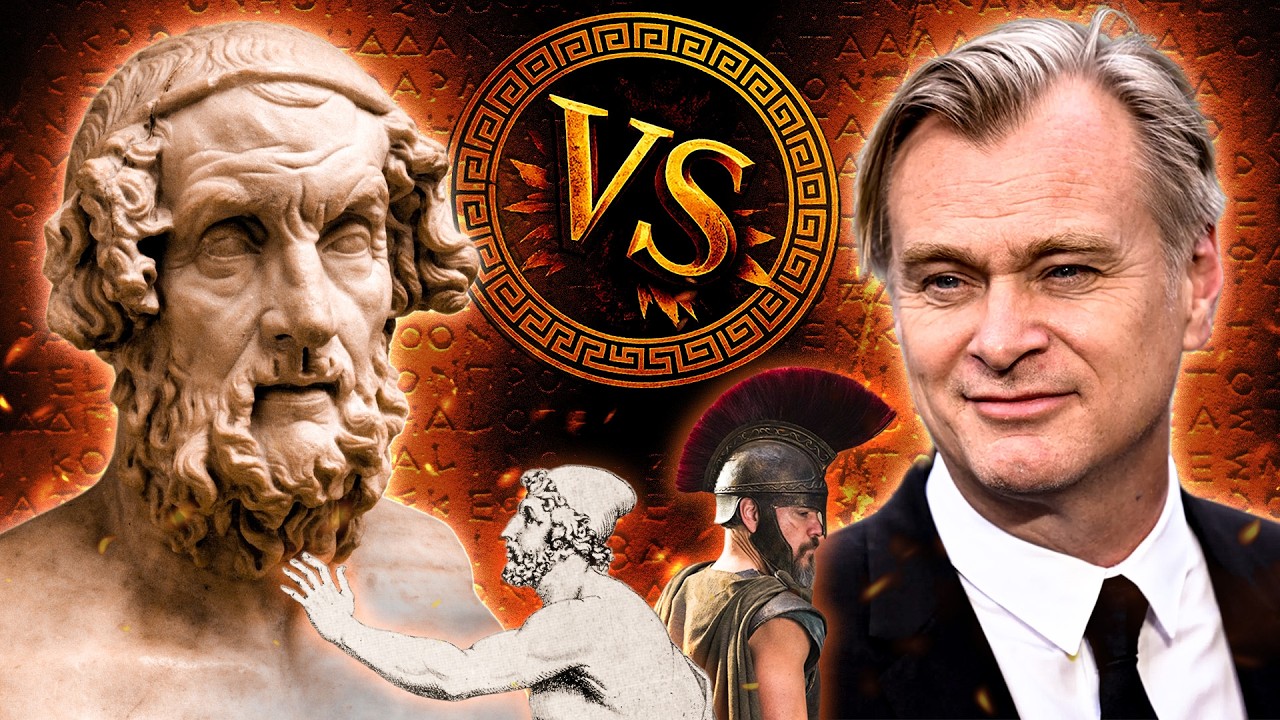
Los cambios en 'La Odisea' de Nolan, explicados por una experta en filología griega
Keywords
Summary
158 words
Critical Evaluation
The video provides a valuable expert perspective on Nolan’s ‘Odyssey’, grounded in classical scholarship. Ortega’s analysis is nuanced, acknowledging the necessity of adaptation while evaluating the film’s choices. She effectively explains the cultural significance of the gods in the original epic and justifies their reduced role in the film as a deliberate narrative decision to focus on human themes. The discussion is well-structured, covering key omissions and changes, and offers insights into the film’s contemporary relevance. However, the analysis is primarily opinion-based, lacking direct citations to specific scholarly works or textual references, which limits its academic rigor. The conversation also assumes a certain level of familiarity with the Odyssey, which may not be accessible to all viewers. Despite this, the expert’s credentials and the institutional backing of the university lend credibility. The title accurately reflects the content, and the video successfully bridges classical literature and modern cinema. Overall, it is a thoughtful and informative discussion, though it could benefit from more concrete references to the text and scholarly debates.
169 words
Title / Content Match
The title accurately reflects the content: a detailed analysis of the changes in Nolan's 'Odyssey' by a Greek philology expert.
Quality & Reliability
8/10
The discussion is led by a university professor of Greek philology, providing expert insights grounded in classical scholarship. The video is produced by a university science communication unit, adding institutional credibility. However, it is an opinion-based analysis rather than a peer-reviewed study, and no specific academic sources are cited beyond the expert's credentials.
Key Moments
Markers derived by PSI from the transcript: the creator did not define chapters.
- Introduction of the expert and the topic of discussion.
- Discussion on the film's focus on human themes rather than divine intervention.
- Analysis of the absence of gods and the role of Athena.
- Comparison with other adaptations like 'The Return'.
- Explanation of the necessity of selecting and merging episodes.
- Discussion on the contemporary relevance of the Odyssey.
- Reflections on the richness of the original text and its multiple interpretations.
- Closing remarks on the value of Nolan's adaptation.
Cited Sources
- Perfil investigador de Mª Begoña Ortega Villaro — Official university profile of the expert, providing her credentials and research background.
- UBUInvestiga Blog — Blog of the University of Burgos's Science Communication Unit, which produced the video.
Concurring Sources
- The Return (2024 film) - Wikipedia — Another recent adaptation of the Odyssey, mentioned in the video as sharing a similar focus on the human aspect of Odysseus's return.
Dissenting Sources
- Criticism of Nolan's Odyssey on social media — Some viewers have criticized the film for omitting the gods, arguing that it undermines the original epic's religious and cultural context. The expert addresses this criticism, defending the film's approach.
Contribution & Novelties
This video offers a unique expert analysis of Nolan’s ‘Odyssey’ from a classical philology perspective, highlighting the deliberate narrative choices and their cultural significance. It bridges ancient literature and modern cinema, providing insights into how contemporary adaptations reflect current societal concerns.
Pour aller plus loin :
- The Odyssey - Wikipedia — For a comprehensive overview of the original epic.
- Christopher Nolan - Wikipedia — For background on the director and his filmography.
- Classical reception studies - Wikipedia — For understanding how ancient texts are adapted and reinterpreted.
87 words
Radar Profile
The radar profile shows high scores in quality of information and reliability, reflecting the expert's credentials and the institutional backing. The quantity of information is also strong, but the technical level is moderate, indicating that the content is accessible to a general audience. Overall, the video is a reliable and informative analysis.
💬 Sur les 0 commentaires analysés, aucune tendance n'est disponible.