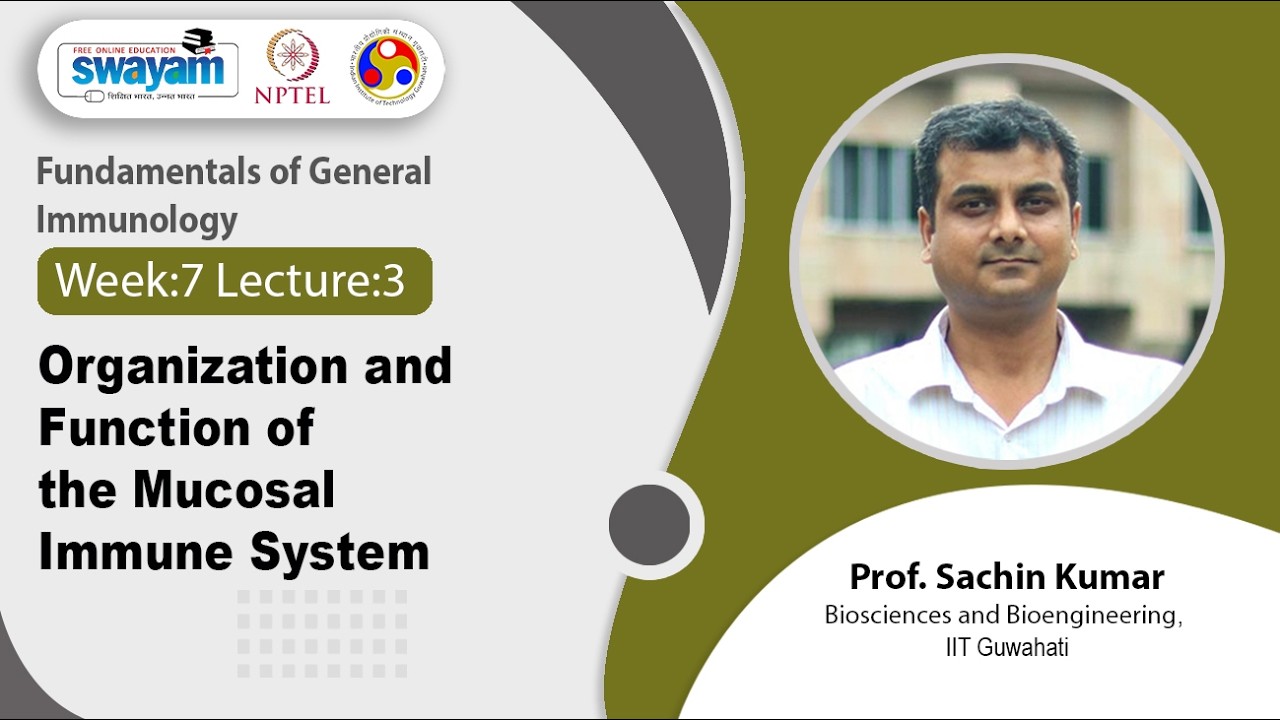
Lec 27: Organization and Function of the Mucosal Immune System
Keywords
Summary
190 words
Critical Evaluation
Value of the Information & Strength of the Argument
The lecture provides a comprehensive overview of the mucosal immune system in the genital tract, highlighting key anatomical and cellular differences between male and female. The argumentation is structured and logical, progressing from general barriers to specific immune cells and then to hormonal influences. However, the presentation is largely descriptive and lacks critical analysis or comparison with recent research. The professor makes some claims without providing evidence or citations, such as the assertion that females are more susceptible to autoimmune diseases due to XIST, which is presented as established fact without discussing alternative hypotheses or nuances. The discussion of HIV susceptibility is simplified, focusing solely on CD4+ T cell density without considering other co-factors. Overall, the information is valuable for an introductory understanding but lacks depth and critical evaluation.
Scientific Rigor, Source Quality, Title Accuracy
The lecture is part of a formal academic course, which lends some credibility, but no specific sources are cited within the video. The description provides links to the course page and playlist, but these do not contain direct references to the scientific literature. The title accurately reflects the content, which is a lecture on mucosal immunity. However, the transcription contains numerous errors and mispronunciations, which may affect the accuracy of the information presented. The professor does not explicitly mention any studies or publications, so the scientific rigor is limited to the general knowledge of the field. The adequacy between title and content is good, as the lecture indeed covers the organization and function of the mucosal immune system in the genital tract.
266 words
Title / Content Match
The title accurately reflects the content, which focuses on the organization and function of the mucosal immune system, specifically in the genital tract.
Quality & Reliability
6/10
The lecture is part of a formal academic course (NPTEL) by an IIT professor, providing structured content on mucosal immunology. However, the transcription contains numerous inaccuracies and mispronunciations (e.g., 'immology', 'macrofasages', 'renditic'), and no citations or references are provided within the video. The scientific content is generally accurate but lacks depth and precision in some areas.
Key Moments
Markers derived by PSI from the transcript: the creator did not define chapters.
- Introduction to the lecture and module on mucosal immunology, focusing on the genital tract.
- Discussion of general barriers in the genital tract: enzymes, antimicrobial peptides, acidic pH, and cellular factors.
- Overview of humoral factors: secretory IgA, complement, acute phase proteins, and interferons.
- Detailed description of the female genital tract anatomy and immune components in the vaginal epithelium.
- Explanation of the cervical columnar epithelium and its high CD4+ T cell density, linking to HIV susceptibility.
- Discussion of the endometrial wall and its immune cell aggregates, including CD8+ T cells and NK cells.
- Overview of the menstrual cycle and hormonal regulation, including estrogen and progesterone.
- Comparison of immune cell populations during menstrual and secretory phases.
- Introduction to the male reproductive system: penile urethra and testicular compartments.
- Discussion of sexual dimorphism in immune responses, including susceptibility to infections and autoimmune diseases.
- Explanation of XIST and its role in female predisposition to autoimmunity.
Cited Sources
- NPTEL Course: Fundamentals of General Immunology — Course page for the lecture series, providing context and additional materials.
- Playlist: Fundamentals of General Immunology — Playlist containing all lectures of the course.
Concurring Sources
- Mucosal immunology — General reference for mucosal immunity concepts.
Contribution & Novelties
This lecture provides a structured overview of the mucosal immune system in the genital tract, highlighting key differences between male and female. It emphasizes the role of CD4+ T cells in HIV susceptibility and introduces the concept of XIST in female autoimmunity. While not groundbreaking, it serves as a useful educational resource for students.
Pour aller plus loin :
- Mucosal immunology — Overview of the mucosal immune system.
- X-inactivation — Mechanism of X chromosome silencing, relevant to XIST discussion.
- HIV — Background on HIV infection and CD4+ T cell targeting.
90 words
Radar Profile
The radar profile shows moderate scores across all dimensions, with slightly higher scores in information quantity and quality, reflecting a comprehensive but not deeply rigorous lecture. The technical level is moderate, suitable for an introductory course.
💬 No comments were provided for analysis.