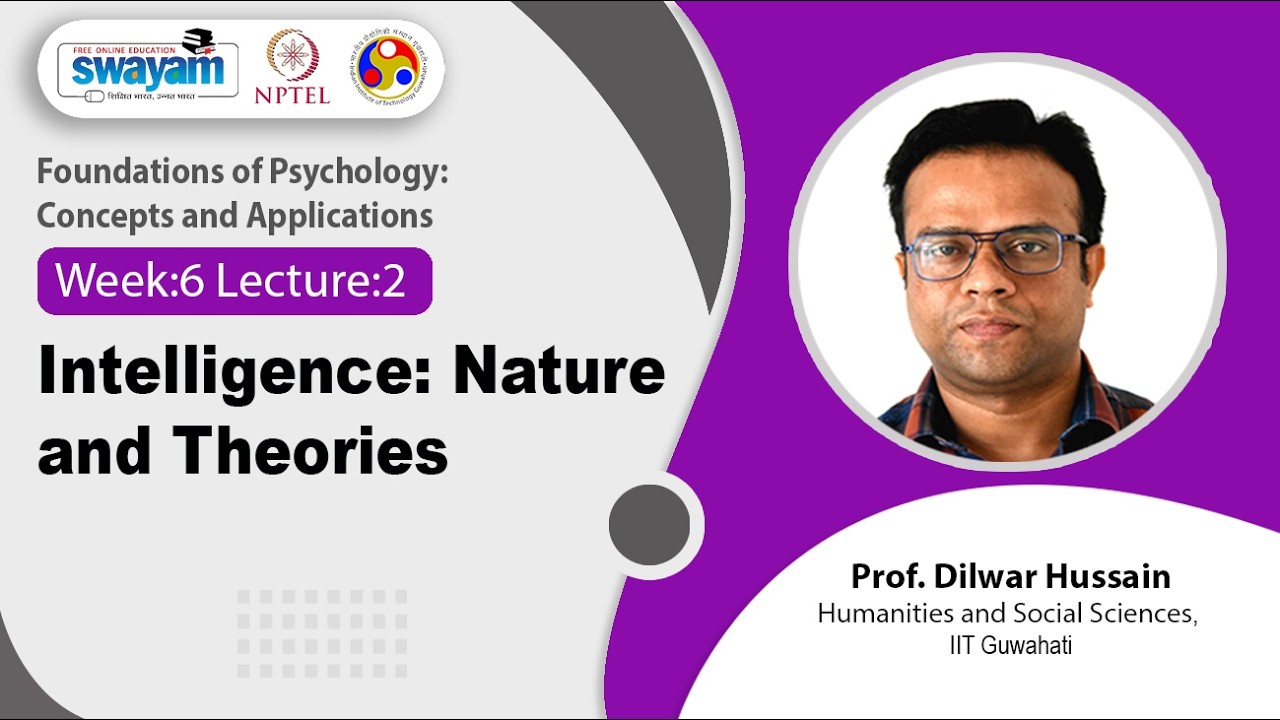
Lec 15: Intelligence: Nature and Theories
Keywords
Summary
127 words
Critical Evaluation
The lecture provides a solid, well-structured introduction to the psychology of intelligence. It effectively balances theoretical perspectives with empirical evidence, particularly in the discussion of the nature vs. nurture debate. The presentation of twin and adoption studies is clear and accurate, and the explanation of heritability is nuanced, correctly emphasizing that it applies to populations, not individuals. The coverage of theories is comprehensive, including both psychometric and cognitive approaches. However, the lecture lacks specific citations to studies or researchers, which would enhance its scientific rigor. Additionally, the discussion of environmental influences is somewhat brief, and the lecture does not address contemporary issues such as cultural bias in IQ testing or the Flynn effect. Overall, the content is reliable and appropriate for an introductory psychology course, but it does not offer deep critical analysis or novel insights.
136 words
Title / Content Match
The title accurately reflects the content, which covers the nature of intelligence and major theories.
Quality & Reliability
8/10
Lecture from a reputable academic institution (IIT Guwahati) by a professor in psychology. Content is well-structured, covers major theories and research findings, and is consistent with established psychological literature. Minor limitations: no citations to specific studies or sources within the lecture, and the presentation is introductory.
Key Moments
Markers derived by PSI from the transcript: the creator did not define chapters.
- Introduction to module six and lecture overview
- Discussion on the difficulty of defining intelligence
- Presentation of various definitions of intelligence
- Introduction to the nature vs. nurture debate
- Evidence from twin studies on genetic influence
- Adoption studies and heritability estimates
- Environmental influences and interaction with genetics
- Overview of major theories of intelligence
- Discussion of Gardner's multiple intelligences
- Sternberg's triarchic theory and conclusion
Cited Sources
- Course page: Foundations of Psychology: Concepts and Applications — Official course page for the lecture series
- Playlist: Foundations of Psychology — Playlist containing all lectures of the course
Concurring Sources
- Twin studies and IQ — Supports the lecture's claims about genetic influence on intelligence.
Contribution & Novelties
The lecture provides a clear and accessible overview of intelligence theories and the nature vs. nurture debate, synthesizing classic research findings. It is particularly useful for students new to psychology. The lecture does not present new research but effectively organizes existing knowledge.
Pour aller plus loin :
- Spearman’s g factor — Foundational concept in psychometric theories.
- Gardner’s Theory of Multiple Intelligences — Influential theory expanding the concept of intelligence.
- Sternberg’s Triarchic Theory — Cognitive approach to intelligence.
- Heritability of IQ — Overview of research on genetic and environmental influences.
89 words
Radar Profile
The radar profile shows high scores in quantity and quality of information, with moderate technical depth. This indicates a well-balanced lecture that is informative and reliable, suitable for an introductory audience.