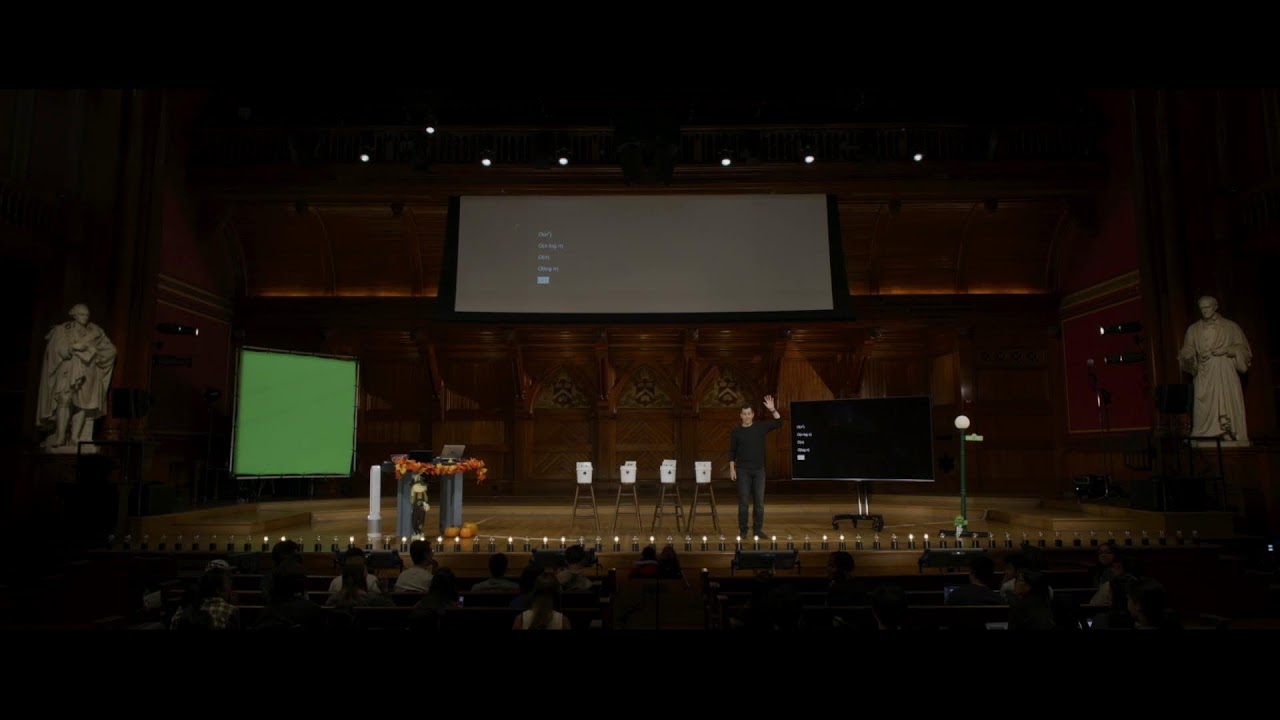
CS50 Fall 2025 - Lecture 5 - Data Structures (live, unedited)
Keywords
Summary
124 words
Critical Evaluation
Value of the Information & Strength of the Argument
The lecture provides a comprehensive and well-structured introduction to fundamental data structures. The value lies in its clear explanations, practical code demonstrations, and the emphasis on trade-offs. The argumentation is solid, as each data structure is motivated by real-world analogies and then implemented in C, showing both advantages and limitations. The instructor effectively builds on previous knowledge, connecting new concepts to earlier topics like pointers and memory management.
Scientific Rigor, Source Quality, Title Accuracy
The scientific rigor is high, as the content aligns with standard computer science education. The sources are primarily the instructor’s own expertise and the course materials, with references to the CS50 website and related resources. The title accurately describes the content, and the lecture is well-organized with clear sections. No external sources are cited beyond the course’s own materials, but the explanations are based on well-established principles.
150 words
Title / Content Match
The title accurately reflects the content: a lecture on data structures, delivered live and unedited.
Quality & Reliability
9/10
Lecture by a renowned Harvard professor, part of a well-established course, with clear explanations and code demonstrations. The content is accurate and aligns with standard computer science curricula.
Key Moments
Markers derived by PSI from the transcript: the creator did not define chapters.
- Introduction to the lecture and overview of data structures.
- Animated explanation of queues and stacks with the story of Jack.
- Discussion of queues and stacks as abstract data types, with FIFO and LIFO properties.
- Introduction to dictionaries as key-value pairs.
- Demonstration of resizing arrays using malloc and realloc.
- Explanation of realloc and its use in resizing arrays.
- Introduction to linked lists and their implementation.
- Discussion of trees, specifically binary search trees.
- Explanation of hashing and hash tables, including collision resolution.
- Introduction to tries and their use for efficient string storage.
Cited Sources
- CS50 Website — Official course website with lecture notes, problem sets, and resources.
- CS50 edX Course — Online version of the course available on edX.
- CS50 YouTube Channel — Channel hosting the lecture videos.
- David J. Malan's Harvard Page — Instructor's academic page.
Concurring Sources
- CS50 Lecture Notes — Official lecture notes that align with the content.
External References
Contribution & Novelties
This lecture provides a thorough and accessible introduction to data structures, building on previous weeks’ content. It offers clear code examples and emphasizes the trade-offs between different implementations. The ‘Pour aller plus loin’ section suggests further exploration.
Pour aller plus loin :
- Binary search tree — A key concept in tree data structures.
- Hash table — Fundamental for efficient key-value storage.
- Trie — A specialized tree for string operations.
- Dynamic memory allocation in C — Essential for understanding malloc and realloc.
81 words
Radar Profile
The radar profile shows high scores across all dimensions, indicating a well-rounded and reliable educational resource. The lecture excels in information quantity and quality, with a strong technical level and high reliability.
💬 Sur les 0 commentaires analysés, aucune tendance n'a pu être dégagée.