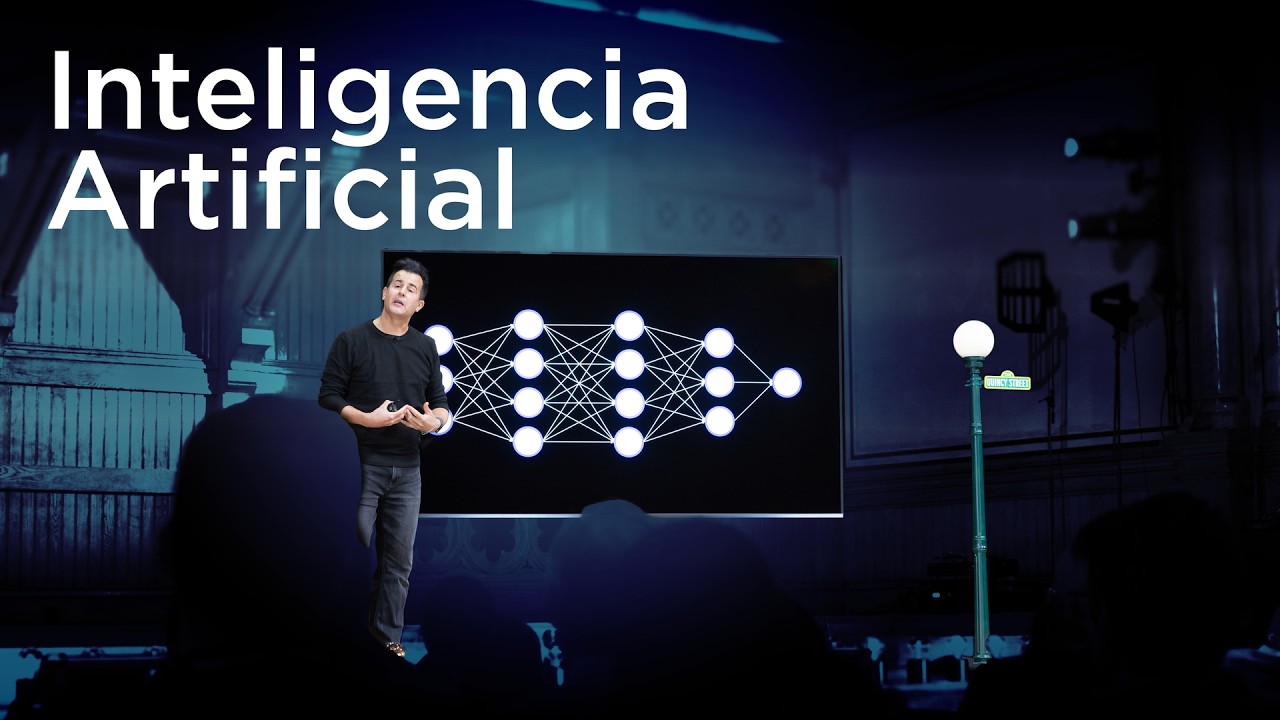
CS50x en Español - Inteligencia Artificial
Keywords
Summary
185 words
Critical Evaluation
Value of the Information & Strength of the Argument
The lecture provides valuable insights into AI, demystifying complex concepts for a general audience. Malan’s argumentation is clear and logical, building from simple examples to more advanced topics. He effectively demonstrates the practical applications of AI in programming and everyday life, making the content relatable. The interactive elements, such as the quiz and live coding, enhance engagement and understanding. However, the lecture does not delve deeply into the mathematical or algorithmic details, which may be a limitation for those seeking a more technical understanding.
Scientific Rigor, Source Quality, Title Accuracy
The lecture is scientifically rigorous in its presentation, with Malan referencing well-known AI tools and concepts. However, it does not cite specific academic sources, relying instead on general knowledge and demonstrations. The title accurately reflects the content, and the lecture is well-structured. The description provides links to CS50 resources, but these are not directly cited in the lecture. The lecture’s credibility is enhanced by Malan’s expertise and the reputation of CS50.
170 words
Title / Content Match
The title accurately reflects the content: a Spanish-language CS50 lecture on artificial intelligence.
Quality & Reliability
8/10
The lecture is delivered by a recognized expert in computer science education, David J. Malan, and is part of the reputable CS50 course. The content is well-structured, explains AI concepts clearly, and includes practical demonstrations. However, it is a lecture rather than a peer-reviewed source, and some claims are anecdotal.
Key Moments
Markers derived by PSI from the transcript: the creator did not define chapters.
- Introduction and audience engagement with QR code for quiz.
- Quiz on distinguishing AI-generated images from real ones.
- Discussion of the rubber duck debugging tool and its evolution.
- Explanation of system prompts and user prompts in AI.
- Demonstration of using GitHub Copilot to implement functions in C.
- Discussion on the importance of understanding code even when using AI.
- Introduction to machine learning applications like spam filtering and recommendations.
- Explanation of decision trees using the game Breakout as an example.
- Conclusion and summary of key concepts.
Cited Sources
- CS50 YouTube Channel — Official channel for CS50 content.
- CS50 edX Course — Online version of CS50.
- CS50 OpenCourseWare — Free access to CS50 materials.
- CS50.dev — Programming environment used in CS50.
- Creative Commons License — License for CS50 content.
Concurring Sources
- CS50 — Official CS50 website.
External References
Contribution & Novelties
This lecture provides a comprehensive introduction to AI for a general audience, emphasizing practical applications and the importance of understanding underlying principles. It uniquely combines interactive elements, such as quizzes and live coding demonstrations, to illustrate AI concepts. The lecture also highlights the role of prompt engineering and the use of AI tools like GitHub Copilot in programming education.
Pour aller plus loin :
- Machine Learning — Overview of machine learning concepts.
- Generative Pre-trained Transformer — Explanation of GPT models.
- Prompt Engineering — Techniques for crafting effective prompts.
- Decision Tree — Foundational concept in AI and decision-making.
- GitHub Copilot — AI pair programmer tool.
104 words
Radar Profile
The radar profile shows high scores in information quantity, quality, and technical level, indicating a well-rounded and informative lecture. The reliability score is also high, reflecting the credibility of the source. The lecture is strong in all dimensions, with no significant weaknesses.