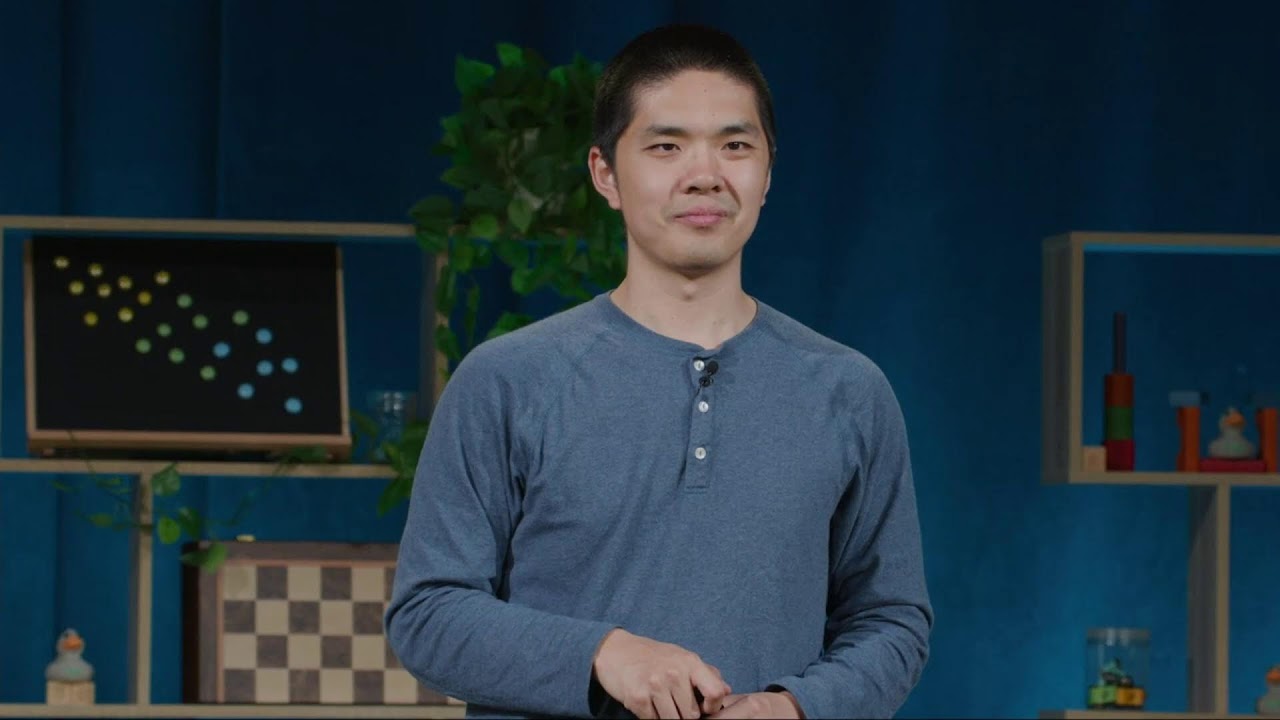
Introduction to Artificial Intelligence with Brian Yu - Chapter 3 - Analyzing (live, unedited)
Keywords
Summary
144 words
Critical Evaluation
Value of the Information & Strength of the Argument
The lecture provides a solid introduction to clustering, explaining the motivation and the k-means algorithm in a clear, step-by-step manner. The use of visual examples and real-world applications (photo organization, music playlists, facial recognition) makes the concepts relatable. The argumentation is logical: starting with the problem, then presenting the algorithm, and iteratively improving the solution. The instructor emphasizes the iterative nature of the algorithm, which helps reinforce understanding. However, the lecture does not delve into advanced topics like choosing the optimal number of clusters (e.g., elbow method) or limitations of k-means, which could be seen as a gap for a more comprehensive understanding.
Scientific Rigor, Source Quality, Title Accuracy
The content is scientifically rigorous, as it is part of Harvard’s CS50 course, a reputable educational program. The instructor, Brian Yu, is a knowledgeable educator. The lecture does not cite specific external sources, but the material is standard in machine learning education. The title accurately reflects the content, and the live, unedited format adds authenticity. The description provides links to CS50 resources, which are reliable for further learning. No comments were provided for analysis.
192 words
Title / Content Match
The title accurately reflects the content: an introductory lecture on AI, specifically focusing on data analysis and clustering.
Quality & Reliability
8/10
The content is a lecture from Harvard's CS50 course, presented by an experienced instructor. It provides a clear, structured introduction to clustering and unsupervised learning, with accurate explanations and practical examples. The material is well-established and aligns with standard AI curricula.
Key Moments
Markers derived by PSI from the transcript: the creator did not define chapters.
- Introduction to the lecture and recap of supervised learning.
- Definition of unsupervised learning and clustering.
- Examples of clustering applications: photo organization, music playlists, facial recognition.
- Visual example of data points and initial cluster centroids.
- Assignment of points to nearest centroid and recomputation of centroids.
- Iterative improvement of clusters and convergence.
- Discussion on choosing the number of clusters and limitations.
- Wrap-up and transition to next topic.
Cited Sources
- CS50 YouTube Channel — Official channel for CS50 lectures and resources.
- CS50 OpenCourseWare — Free access to course materials and lectures.
- CS50 on edX — Online course platform for CS50.
- Creative Commons License — License under which the content is shared.
Concurring Sources
- CS50 AI Course — Related course material on AI.
External References
Contribution & Novelties
This lecture provides a clear and accessible introduction to clustering, specifically the k-means algorithm, within the context of unsupervised learning. It effectively bridges the gap between theoretical concepts and practical applications, making it suitable for beginners. The live, unedited format offers an authentic learning experience.
Pour aller plus loin :
- K-means clustering — Detailed explanation of the algorithm and its variants.
- Elbow method (clustering) — Technique for determining the optimal number of clusters.
- Unsupervised learning — Overview of unsupervised learning techniques.
81 words
Radar Profile
The radar profile shows high scores in quality and reliability, reflecting the lecture's educational value and accurate content. The quantity of information is moderate, as it focuses on one topic, and the technical level is suitable for beginners. The overall balance indicates a solid introductory resource.