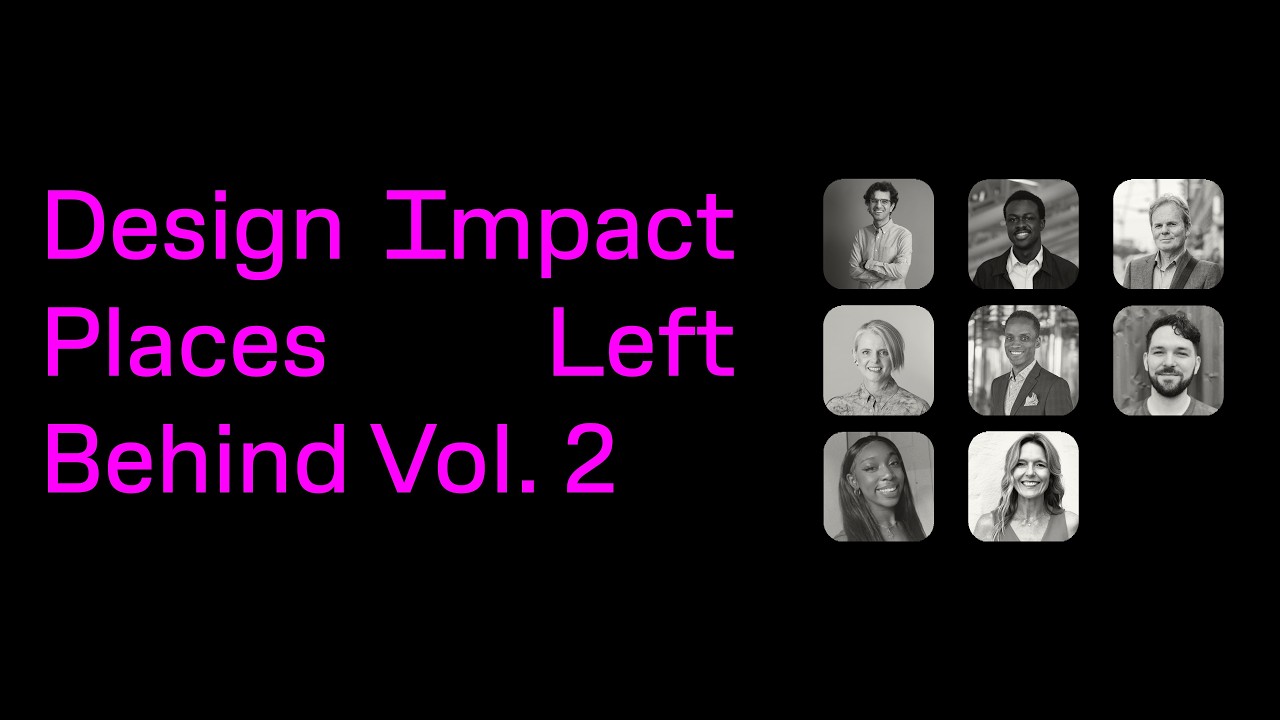
Design Impact 2026: Places Left Behind
Keywords
Summary
135 words
Critical Evaluation
Value of the Information & Strength of the Argument
The value of the information lies in the detailed case studies that provide concrete examples of how design can address inequality and regenerate neglected areas. Each presenter offers a unique perspective: Cooke emphasizes the importance of leveraging historical significance for economic revitalization, Pennington highlights the tension between profit-driven development and community needs, and Brook focuses on the role of design in reconciliation. The argumentation is solid, grounded in professional experience and specific project outcomes. The speakers effectively articulate the challenges and opportunities in their respective contexts, making a compelling case for human-centered design approaches.
Scientific Rigor, Source Quality, Title Accuracy
The scientific rigor is moderate, as the presentations are based on professional practice rather than formal research. The sources cited are primarily project-related, such as the Partnership for Equitable and Resilient Communities and the Indigenous Design Studio. The title accurately reflects the content, which focuses on places left behind and design interventions. The adequacy between title and content is strong, with each case study directly addressing the theme. The webinar is well-structured and provides valuable insights, though it lacks formal citations or references to academic literature.
195 words
Title / Content Match
The title accurately reflects the content, which focuses on spatial design and policy in addressing inequality and regeneration in places left behind.
Quality & Reliability
8/10
The video features three case studies presented by experienced practitioners, with clear methodology and references to specific projects and collaborations. The content is well-structured and grounded in professional practice, though it lacks formal citations or peer-reviewed sources.
Key Moments
Markers derived by PSI from the transcript: the creator did not define chapters.
- Introduction by Zeerak Ahmed and Michelle Cramer, setting the context for the webinar.
- Sekou Cooke presents the Selma case study, discussing the city's history and current challenges.
- Cooke details the proposed interventions, including a hospitality district and restorative justice center.
- Stacey Pennington presents the Makers Quarter case study, emphasizing the balance between top-down and bottom-up approaches.
- Calvin Brook presents the Indigenous Design Studio, focusing on restoring Indigenous presence in Canadian communities.
- Q&A session with moderators and audience questions.
Cited Sources
- Partnership for Equitable and Resilient Communities — Mentioned by Sekou Cooke as the funding organization for the Selma project.
- City Collective — Design firm involved in the Selma project, mentioned by Sekou Cooke.
- Indigenous Design Studio — Canadian practice presented by Calvin Brook.
Concurring Sources
- Everyday Urbanism — Referenced by Stacey Pennington as a key influence on her approach.
- Truth and Reconciliation Commission of Canada — Relevant to Calvin Brook's presentation on Indigenous design.
Contribution & Novelties
The webinar provides a unique platform for discussing design interventions in marginalized communities, offering three distinct case studies that illustrate different approaches to addressing inequality. The emphasis on community engagement and restorative justice in Selma, the tension between profit and community in Makers Quarter, and the focus on reconciliation in Indigenous design are valuable contributions to the field.
Pour aller plus loin :
- Everyday Urbanism — Margaret Crawford’s concept, referenced by Stacey Pennington, is central to understanding bottom-up design approaches.
- Truth and Reconciliation Commission of Canada — Relevant to Calvin Brook’s work on Indigenous design and reconciliation.
- Tactical Urbanism — Mentioned by Sekou Cooke as a strategy for quick interventions in Selma.
112 words
Radar Profile
The radar profile shows high scores in quantity and quality of information, with moderate technical depth and high reliability. This indicates a well-rounded presentation that is informative and credible, though not highly technical.
💬 No comments provided.