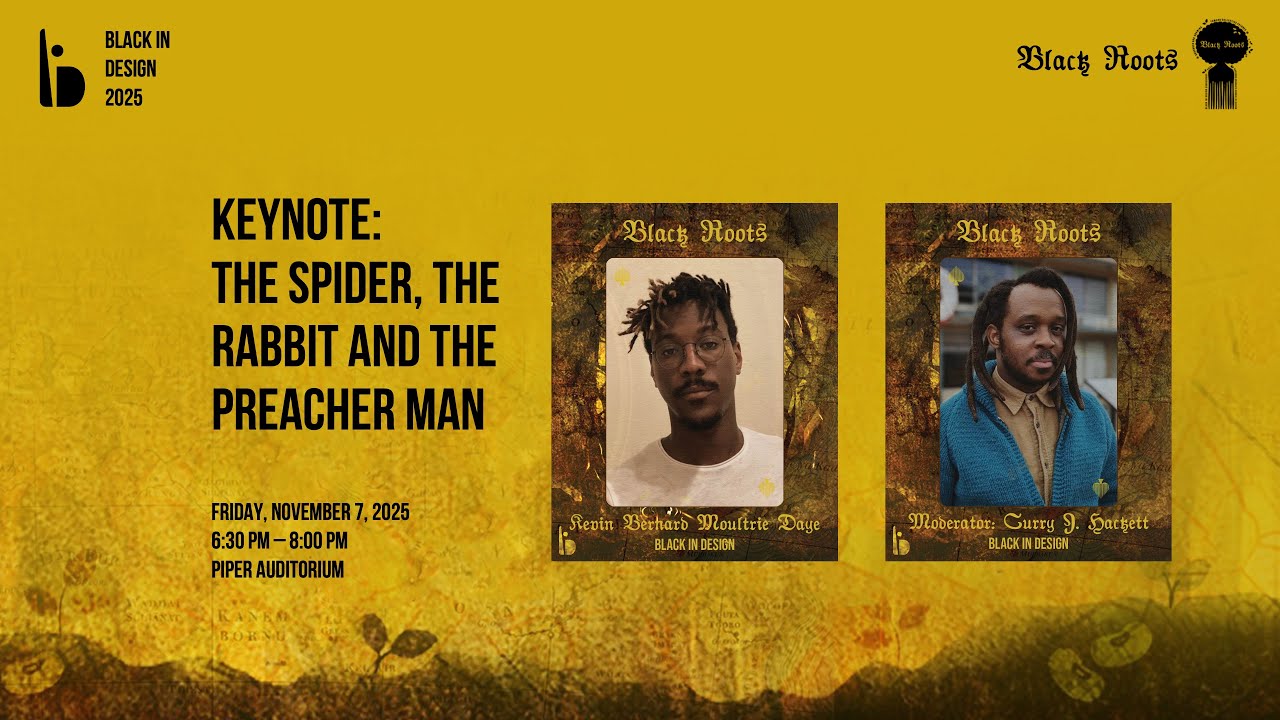
Black in Design 2025: Black Roots | Keynote: The Spider, The Rabbit and The Preacher Man
Keywords
Summary
172 words
Critical Evaluation
Value of the Information & Strength of the Argument
The value of the information lies in its synthesis of folklore, history, and critical theory to offer a nuanced perspective on Black identity and design. Daye effectively uses the Anansi story as a narrative device to illustrate themes of trickery, survival, and transformation. His argumentation is solid, drawing on established academic concepts like Afropessimism and historical documents like the Dred Scott case. He presents a coherent thesis that Black design is rooted in a unique cultural and historical experience, shaped by displacement and resilience. The interactive format enhances engagement but may dilute the depth of the argument for some viewers.
Scientific Rigor, Source Quality, Title Accuracy
The keynote demonstrates scientific rigor through its use of historical and theoretical sources. Daye references the Dred Scott case, quotes Nicole Hannah-Jones, and engages with Afropessimist thought, providing a foundation for his arguments. The quality of sources is high, though the presentation is more creative than strictly academic. The title accurately captures the content, using the spider and rabbit as central metaphors. The discussion with Curry Hackett adds depth, exploring the implications of Daye’s ideas for design practice. No comments were provided for analysis.
199 words
Title / Content Match
The title accurately reflects the content: the keynote uses the spider (Anansi) and rabbit as central metaphors to explore Black roots, culture, and design, with the 'preacher man' alluding to the spiritual and narrative dimensions.
Quality & Reliability
8/10
The keynote is a scholarly and creative presentation by an academic (assistant professor of architecture) drawing on folklore, etymology, and critical theory (Afropessimism). It references specific sources (e.g., Dred Scott case, Nicole Hannah-Jones) and engages in interdisciplinary analysis. The content is well-structured and grounded in academic discourse, though it is a keynote address rather than a peer-reviewed study.
Chapters
Cited Sources
- Dred Scott v. Sandford — Daye reads from the Supreme Court decision to illustrate the legal foundation of Black social death.
- Nicole Hannah-Jones — Daye quotes Hannah-Jones on the Middle Passage and the creation of a new Black identity.
- Afropessimism — Daye introduces Afropessimism as a theoretical framework for understanding Blackness as social death.
Concurring Sources
- The Black Atlantic: Modernity and Double Consciousness — Paul Gilroy's concept of the Black Atlantic aligns with Daye's discussion of diaspora and cultural exchange.
Contribution & Novelties
The keynote offers a novel integration of folklore and critical theory to discuss Black design, emphasizing the role of narrative and spirituality in spatial practices. It challenges conventional design discourse by centering Black ontologies and methodologies.
Pour aller plus loin :
- Anansi — The spider trickster figure central to the keynote’s narrative.
- Maafa — The term for the transatlantic slave trade and its lasting impact.
- Fred Moten — A scholar whose work on Blackness and aesthetics resonates with Daye’s themes.
80 words
Radar Profile
The radar profile shows high scores in quality and reliability, reflecting the scholarly depth and use of credible sources. The moderate technical level indicates accessibility to a general audience while maintaining intellectual rigor. The overall balance suggests a well-rounded and substantive presentation.