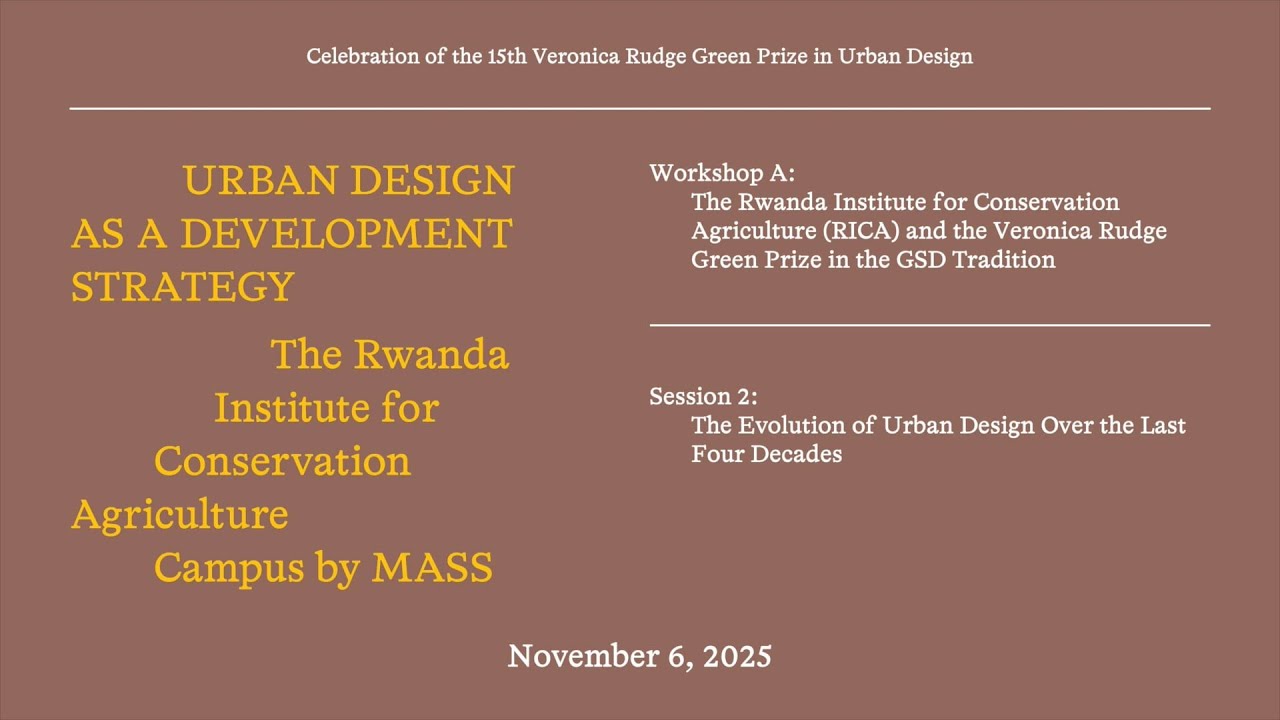
Urban Design as a Development Strategy: Workshop A, Session 2
Keywords
Summary
160 words
Critical Evaluation
Value of the Information & Strength of the Argument
The value of the information lies in its historical overview of urban design awards, providing insights into the evolution of the field. The argumentation is solid, based on the speaker’s extensive experience and the concrete examples of award-winning projects. The discussion adds depth by addressing contemporary issues such as sustainability and the need for systemic thinking. However, the arguments are largely anecdotal and lack empirical data, making them less rigorous for a scientific audience.
Scientific Rigor, Source Quality, Title Accuracy
The presentation is grounded in the speaker’s direct involvement with the Green Prize, lending credibility. The sources cited are the award-winning projects themselves, which are well-documented. The title accurately reflects the content, focusing on urban design as a development strategy. The discussion is well-structured and coherent, with no apparent contradictions. The lack of formal citations or references to external literature reduces the scientific rigor, but the expertise of the speakers compensates to some extent.
163 words
Title / Content Match
The title accurately reflects the session's focus on the evolution of urban design as a development strategy, with a specific case study.
Quality & Reliability
8/10
The content is a lecture and discussion by leading academics and practitioners, providing historical context and expert perspectives. The information is reliable but based on personal experience and opinion rather than systematic research.
Chapters
Cited Sources
- Rwanda Institute for Conservation Agriculture (RICA) — The award-winning project discussed in the session.
- Veronica Rudge Green Prize in Urban Design — The prize being discussed.
Concurring Sources
- Rwanda Institute for Conservation Agriculture (RICA) — The project is presented as a model for sustainable urban design.
Contribution & Novelties
The session provides a unique historical perspective on urban design through the lens of a prestigious award, highlighting the evolution of design priorities. It introduces the concept of ‘desakota’ as a relevant typology for contemporary urbanism. The discussion on the time lag in design and the need for systemic thinking offers valuable insights for practitioners.
Pour aller plus loin :
- Desakota — Concept of rural-urban continuum, relevant to the discussion on urban design in developing contexts.
- Urban design — Overview of the field, providing context for the evolution discussed.
- Sustainability in architecture — Key theme in the session, focusing on environmental responsibility.
102 words
Radar Profile
The radar profile shows high scores in information quantity and quality, reflecting the expert content. The technical level is moderate, indicating accessibility to a broad audience. The overall reliability is high due to the credibility of the speakers.