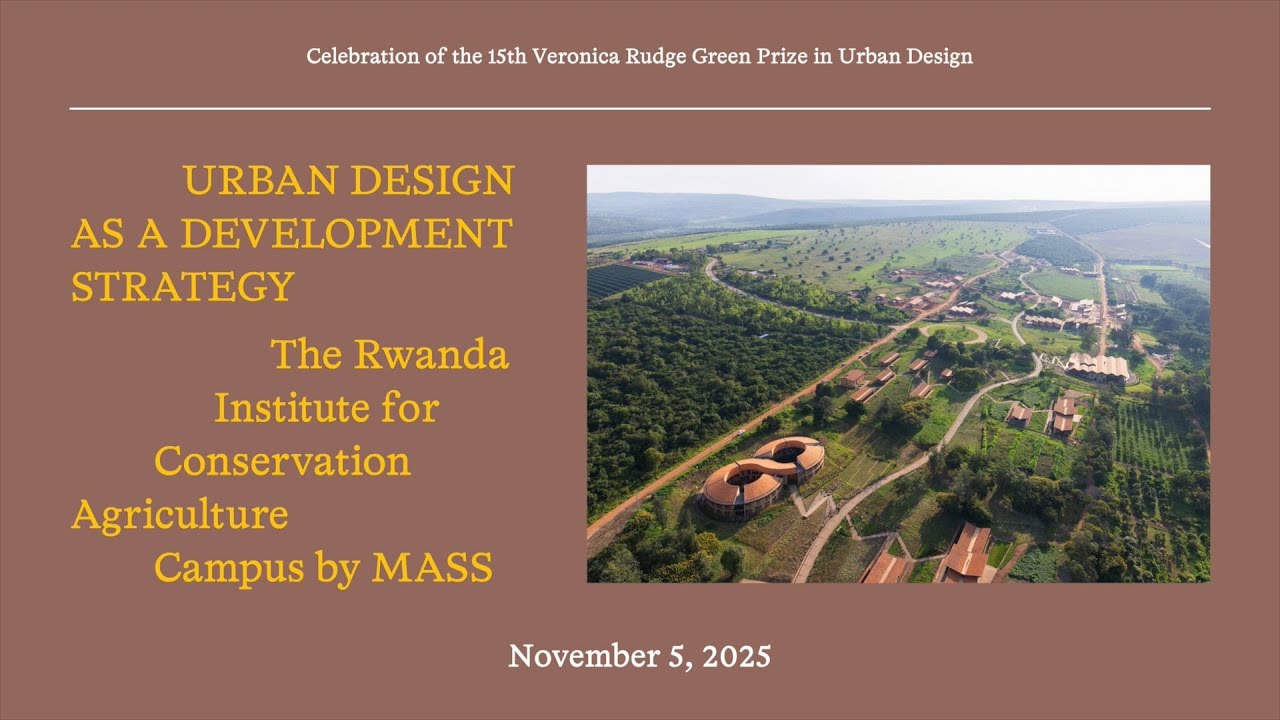
Urban Design as a Development Strategy: Opening Ceremony
Keywords
Summary
156 words
Critical Evaluation
Value of the Information & Strength of the Argument
The video provides valuable insights into the RICA project, showcasing its innovative design and sustainable practices. The argumentation is strong, supported by specific data such as the 98% local labor and 60% local materials. The speakers effectively argue that the project demonstrates how urban design can drive development and ecological stewardship. However, the presentation is largely celebratory, lacking critical examination of potential challenges or trade-offs.
Scientific Rigor, Source Quality, Title Accuracy
The video is produced by Harvard GSD, a reputable institution, and features experts in the field. The sources cited are primarily the project itself and the speakers’ expertise. The title accurately reflects the content, focusing on urban design as a development strategy. The video does not include external citations but relies on the credibility of the speakers and the institution. The content is well-structured and informative, though it could benefit from more critical analysis.
154 words
Title / Content Match
The title accurately reflects the content, which focuses on urban design as a development strategy through the case study of the RICA campus.
Quality & Reliability
8/10
The video is an official ceremony from Harvard GSD, featuring expert speakers and detailed project documentation. The content is well-structured and credible, though it is primarily celebratory and lacks critical analysis.
Chapters
Cited Sources
- Rwanda Institute for Conservation Agriculture — The project's official page on MASS Design Group's website, detailing the campus design and goals.
Concurring Sources
- MASS Design Group — The firm's official website provides additional information on their projects and philosophy.
Contribution & Novelties
The video presents the RICA campus as a pioneering example of rural urbanism, integrating sustainable agriculture with ecological restoration. It highlights the project’s innovative use of local materials and labor, and its potential as a model for other regions. The presentation underscores the importance of design in addressing global challenges like food security and climate change.
Pour aller plus loin :
- One Health — This concept is central to the project’s framing, linking human, animal, and environmental health.
- Planetary boundaries — The project uses this framework to guide sustainable design within ecological limits.
- Sponge city — Kongjian Yu’s concept, mentioned in the video, emphasizes ecological infrastructure for urban water management.
110 words
Radar Profile
The radar profile shows high scores in information quantity, quality, and reliability, with a moderate technical level. This indicates a well-rounded presentation that is informative and credible, though not overly technical.