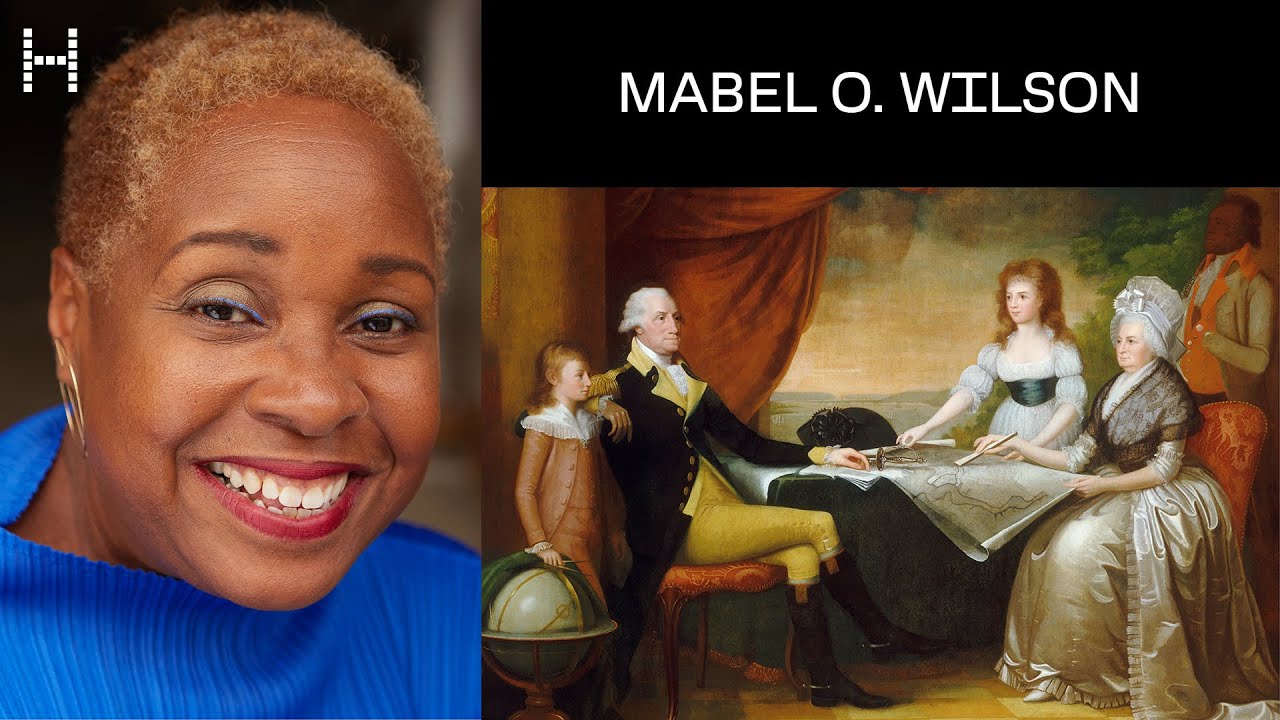
Jaqueline Tyrwhitt Urban Design Lecture: Mabel O. Wilson, "The Measure of Freedom and Unfreedom"
Keywords
Summary
182 words
Critical Evaluation
Value of the Information & Strength of the Argument
The lecture offers valuable insights into the intersections of race, property, and nation-building, using specific historical examples and visual analysis. Wilson’s argument is compelling and well-supported by references to primary sources, such as John Locke’s writings and the survey records. She effectively demonstrates how the abstract tools of surveying and the legal concept of property rights were instrumental in creating the conditions for both freedom and unfreedom. The argumentation is coherent and builds logically from the analysis of the painting to the survey and its implications.
Scientific Rigor, Source Quality, Title Accuracy
Wilson draws on established historical scholarship and primary documents, such as the survey records and Locke’s treatises. She cites specific historians and sources, lending credibility to her claims. The title accurately reflects the lecture’s focus on the dialectic of freedom and unfreedom in the founding of Washington, D.C. The lecture is well-structured and the sources are integrated effectively into the narrative.
162 words
Title / Content Match
The title accurately reflects the lecture's focus on the relationship between freedom and unfreedom in the founding of Washington, D.C.
Quality & Reliability
8/10
The lecture is delivered by a recognized scholar (Mabel O. Wilson) and draws on established historical research and primary sources. The argument is well-structured and supported by specific examples, though it is an interpretive lecture rather than a peer-reviewed study.
Chapters
Cited Sources
- Second Treatise of Government — Wilson references John Locke's theory of property and self-possession as foundational to American liberalism.
- Edward Savage's painting of the Washington family — Wilson analyzes this painting to illustrate the intersection of race, property, and nation.
- Benjamin Banneker's survey work — Wilson discusses Banneker's participation in the 1791 survey of the federal territory.
Concurring Sources
- The Invention of Brownstone Brooklyn — This book by Suleiman Osman discusses urban development and gentrification, aligning with themes of urban change and power.
Contribution & Novelties
The lecture provides a nuanced perspective on the founding of Washington, D.C., by foregrounding the roles of enslaved labor and Indigenous dispossession. Wilson’s analysis of the survey as a tool of racial and spatial ordering offers a novel framework for understanding the capital’s history.
Pour aller plus loin :
- Race and Modern Architecture — A co-edited volume by Wilson that explores the intersections of race and architecture.
- Memorial to Enslaved Laborers — A project Wilson co-designed, translating historical research into built form.
- Who Builds Your Architecture? — An advocacy project co-founded by Wilson addressing labor issues in architecture.
98 words
Radar Profile
The radar profile shows high scores in information quantity, quality, and reliability, with a moderate technical level. This indicates a well-researched and informative lecture that is accessible to a broad audience, though it assumes some familiarity with historical and architectural concepts.