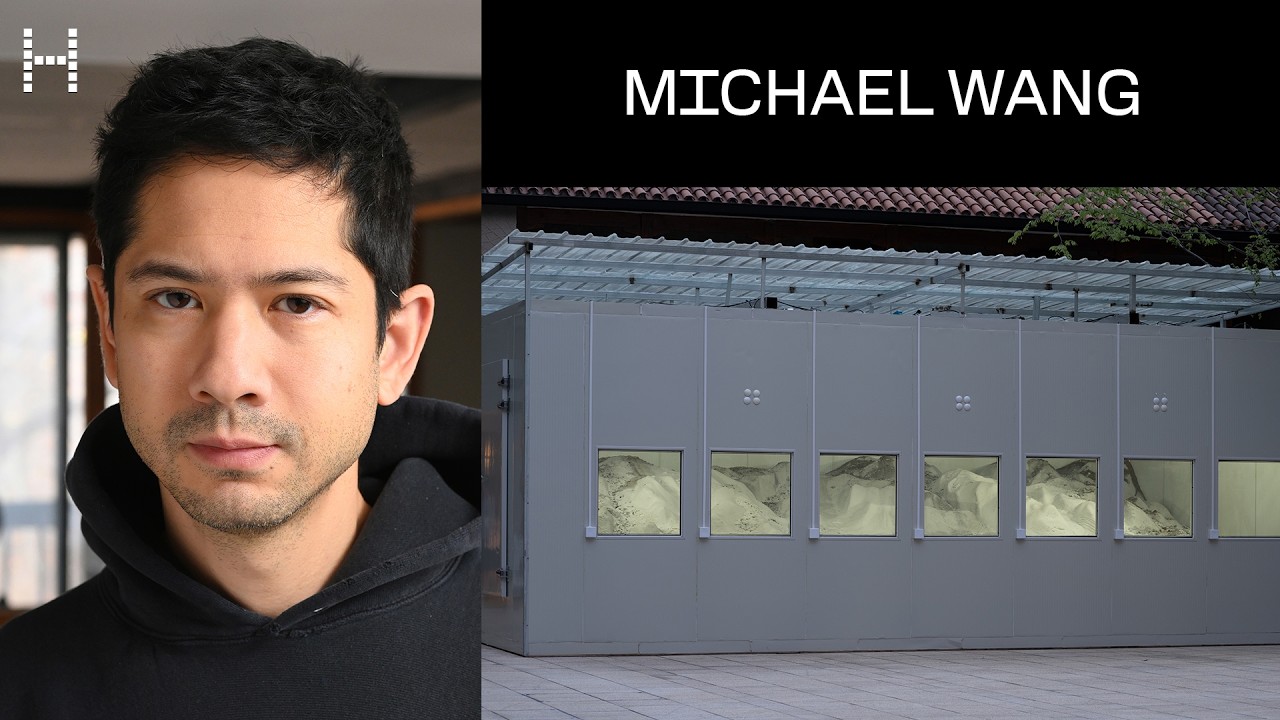
Lifeforms
Keywords
Summary
166 words
Critical Evaluation
Value of the Information & Strength of the Argument
The lecture provides valuable insights into the complex relationships between art, ecology, and technology. Wang’s argumentation is solid, grounded in his extensive artistic practice and research. He presents nuanced perspectives on conservation, extinction, and the role of human care, avoiding simplistic narratives. The value lies in his ability to translate ecological concepts into compelling artistic projects that provoke thought and discussion.
Scientific Rigor, Source Quality, Title Accuracy
The lecture demonstrates scientific rigor through its detailed references to specific species, locations, and conservation efforts. Wang cites the IUCN Red List, botanical gardens, and scientific research, lending credibility to his claims. The title ‘Lifeforms’ accurately reflects the content, which explores the intersection of life and form. The talk is well-structured and the sources are appropriately used to support his artistic concepts.
138 words
Title / Content Match
The title 'Lifeforms' aptly captures the central theme of the talk, which explores the intersection of life and form through art, nature, and technology.
Quality & Reliability
8/10
The lecture is based on the artist's own extensive practice and research, with references to specific projects, species, and locations. The information is presented with nuance and acknowledges uncertainties (e.g., lion pedigree). The speaker is an established artist with institutional recognition.
Chapters
Cited Sources
- IUCN Red List — Mentioned as the source for the classification of species extinct in the wild.
- New York Botanical Garden — Collaborated with Wang to develop a list of species extinct in New York City.
Concurring Sources
- IUCN Red List — Supports the classification of species extinct in the wild.
Contribution & Novelties
The lecture offers a unique perspective on the intersection of art and ecology, particularly through the concept of ’extinct in the wild’ species as cultural artifacts. Wang’s projects challenge traditional notions of conservation and curation, proposing new models for engaging with nature. His work with living organisms and pollutants expands the media available for art, opening up new possibilities for artistic expression.
Pour aller plus loin :
- Extinct in the Wild — Wikipedia article on the conservation status category.
- IUCN Red List — Official website for the IUCN Red List of Threatened Species.
- Taihu stone — Wikipedia article on the ornamental stones from Lake Tai.
- Photosynthesis — Wikipedia article on the biological process central to Wang’s manifesto.
117 words
Radar Profile
The radar profile shows high scores in information quantity, quality, and reliability, with a moderate technical level. This indicates a well-researched and informative lecture that is accessible to a general audience while maintaining scientific depth.