BAAKFIL and the Housing Crisis
Keywords
Summary
155 words
Critical Evaluation
Value of the Information & Strength of the Argument
The lecture offers a valuable critique of current densification policies, highlighting the often-overlooked issue of land costs and the negative social impacts of demolition-based infill. Johns presents a compelling argument for a more sustainable and community-focused approach. However, the argumentation relies heavily on anecdotal evidence and personal experience rather than systematic data. While the Backfill model is innovative, its feasibility and scalability are not thoroughly tested, and the lecture lacks concrete case studies or quantitative analysis to support the claimed benefits.
Scientific Rigor, Source Quality, Title Accuracy
The lecture demonstrates a strong foundation in professional practice and doctoral research, but the scientific rigor is moderate. Johns references his own book and mentions consultations with various stakeholders, but he does not provide specific citations or data sources during the talk. The title accurately reflects the content, and the lecture is well-structured. The lack of verifiable sources and empirical evidence limits the scientific credibility, though the speaker’s expertise adds weight to the opinions presented.
171 words
Title / Content Match
The title accurately reflects the content, focusing on the 'Backfill' model as a response to the housing crisis.
Quality & Reliability
7/10
The lecture is based on the speaker's doctoral research and professional experience, providing a well-argued perspective. However, it is primarily an opinion piece with limited empirical data presented, and the sources cited are not systematically referenced.
Key Moments
Markers derived by PSI from the transcript: the creator did not define chapters.
- Introduction and land acknowledgement
- Doug introduces Barry Johns, highlighting his career and research
- Barry begins his lecture, discussing the underutilization of architects in public policy
- Introduction to the housing crisis and the role of the housing industry
- Critique of current densification and zoning reform, citing Edmonton's example
- Discussion of demographic changes and the need for smaller housing
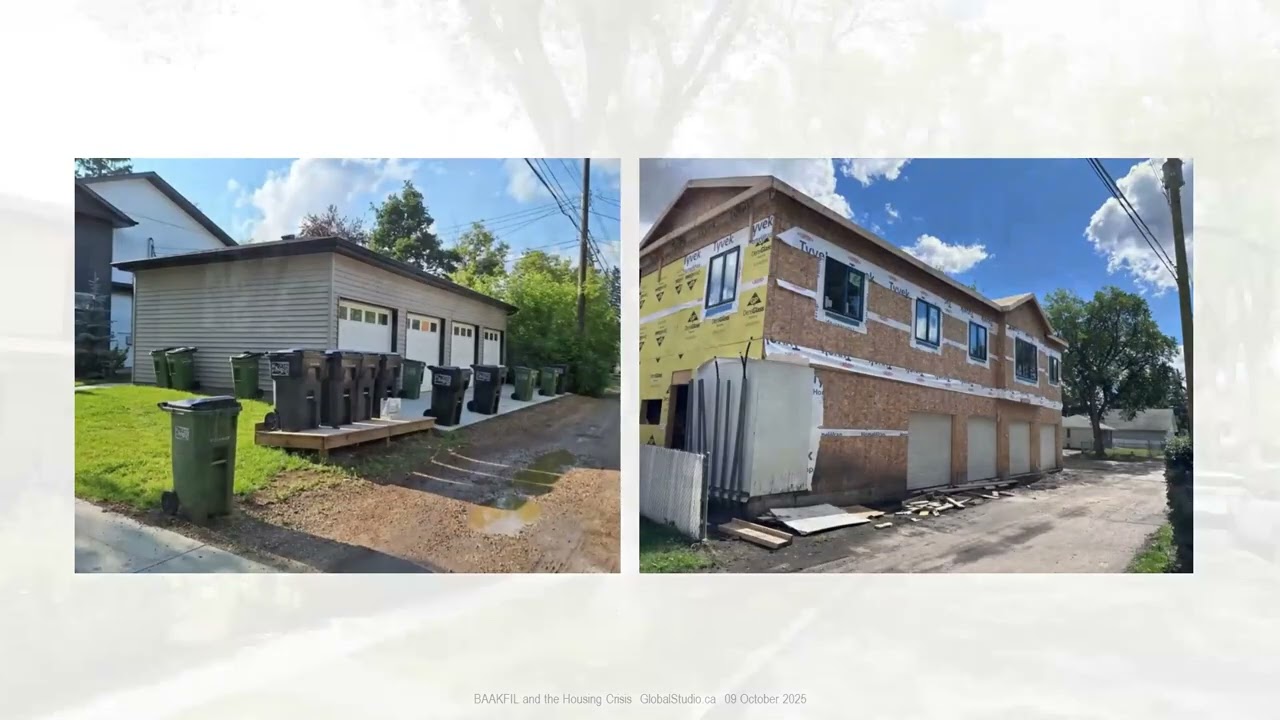
- Introduction of the Backfill concept and its five principles
- Explanation of the business model, eliminating land costs through owner-developer partnership
- Comparison with infill and the fractionalization of land
- Discussion of scalability and the '25 in 25' vision
Cited Sources
- Effective Urban Densification: A Guide for Professionals and Housing Industry — Barry's recent publication, mentioned in the introduction, which builds upon his doctoral research.
Concurring Sources
- Canadian Housing Survey — Statistics Canada data on housing, which could support demographic and housing trends mentioned in the lecture.
Dissenting Sources
- Research on the effectiveness of zoning reform for affordability — Some studies suggest that increasing supply through zoning reform can help affordability, contrary to the lecture's claim that it does not. For example, research by the Urban Institute and others indicates that supply increases can moderate price growth in some contexts.
Contribution & Novelties
The lecture presents the ‘Backfill’ model as a novel approach to densification that prioritizes retention of existing housing and community preservation while addressing affordability through land cost elimination. This contrasts with conventional infill and zoning reform strategies. The model’s emphasis on owner-developer partnerships and fractionalized land ownership offers a potential new paradigm for urban development.
Pour aller plus loin :
- Missing Middle Housing — A concept related to the need for diverse housing types between single-family homes and large apartment buildings, relevant to the discussion of housing choice.
- Gentrification — The process of neighborhood change that can lead to displacement, which is a concern in the lecture’s critique of infill.
- Land value tax — An economic policy that could address land cost issues, though not directly mentioned, it is a potential solution to the affordability problem discussed.
137 words
Radar Profile
The radar profile shows moderate scores across all dimensions, with slightly higher scores in information quantity and quality, reflecting the lecture's comprehensive coverage and expert perspective. The lower technical level and reliability scores indicate a lack of empirical data and formal citations, typical of an opinion-based lecture.