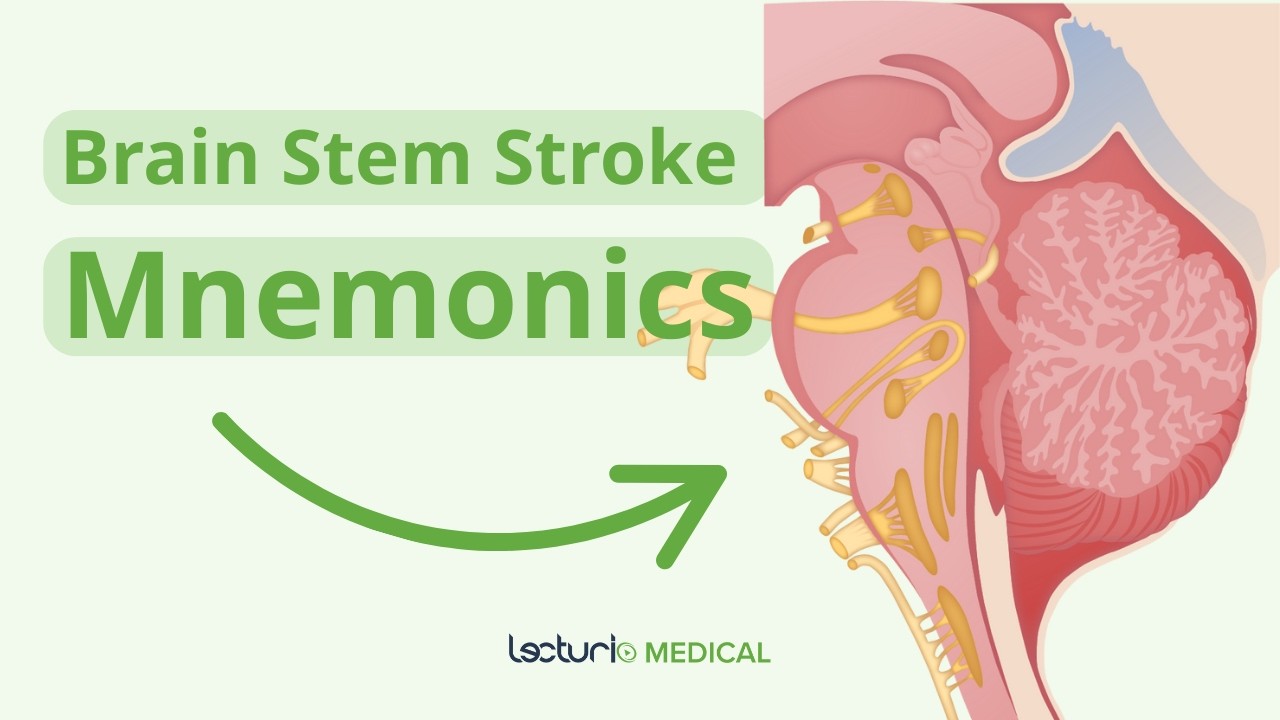
How to Ace Brain Stem Stroke Questions 💡 | USMLE Prep
Keywords
Summary
161 words
Critical Evaluation
Value of the Information & Strength of the Argument
The video provides high educational value by offering a systematic approach to a notoriously difficult topic. The Rule of Four is presented as a practical clinical tool, with clear explanations of each structure and its associated deficits. The argumentation is logical, building from basic anatomy to clinical application, and is supported by clinical cases that illustrate the principles. The presenter’s expertise and the use of mnemonics enhance the learning experience. The video effectively bridges theoretical knowledge and clinical reasoning, making it a valuable resource for medical students and clinicians.
98 words
Title / Content Match
The title accurately reflects the content, focusing on brain stem stroke localization for USMLE preparation.
Quality & Reliability
8/10
The video is an educational tutorial by a medical doctor with high USMLE scores, presenting a well-established clinical tool (Rule of Four) with clear explanations and clinical cases. The content aligns with standard medical knowledge, though it simplifies some anatomical details.
Chapters
- Introduction to Brain Stem Stroke
- The Rule of Four Overview
- Horizontal and Vertical Brain Stem Axes
- Medial Structures (M Structures)
- Lateral Structures (S Structures)
- Medial vs Lateral Stroke Findings
- Cranial Nerves and Vertical Axis Rules
- Clinical Case 1: Medial Brain Stem Stroke
- Clinical Case 2: Lateral Brain Stem Stroke
- Real-Life Exam Cases and Board Questions
Cited Sources
- Lecturio Medical - Create Account — Link to create a free account on Lecturio, mentioned in the video description.
- Lecturio Medical - Free Content — Link to free content on Lecturio, mentioned in the video description.
- Lecturio Medical - Free Trial — Link to start a free trial, mentioned in the video description.
- Lecturio Medical - Medical Educators — Link for medical educators, mentioned in the video description.
- Lecturio Medical - Neurology Course — Link to the neurology course page, mentioned in the video description.
- Lecturio Medical - Resource Package — Link to a free resource package, mentioned in the video description.
- Lecturio Medical - App (Play Store) — Link to the Lecturio app on Google Play, mentioned in the video description.
- Lecturio Medical - App (iTunes) — Link to the Lecturio app on the App Store, mentioned in the video description.
- Lecturio Medical - LinkedIn — Link to Lecturio's LinkedIn page, mentioned in the video description.
- Lecturio Medical - Pinterest — Link to Lecturio's Pinterest page, mentioned in the video description.
Concurring Sources
- Rule of Four (Gates, 2005) — The video is based on this published rule, which is a recognized clinical tool.
- Wallenberg Syndrome — The video discusses this syndrome as a classic lateral medullary stroke.
- Medial Medullary Syndrome — The video discusses this syndrome as a classic medial medullary stroke.
Contribution & Novelties
The video’s original contribution lies in its clear and concise presentation of the Rule of Four, a mnemonic that simplifies brain stem stroke localization. It effectively combines anatomical knowledge with clinical reasoning, using case-based learning to reinforce the concepts. The video also highlights common pitfalls, such as the exception of CN VIII in medullary syndromes, which is often overlooked. This makes it a valuable resource for exam preparation and clinical practice.
Pour aller plus loin :
- Rule of Four (Gates, 2005) — Original article describing the Rule of Four for brain stem stroke localization.
- Wallenberg Syndrome — Overview of lateral medullary syndrome, a key condition discussed in the video.
- Medial Medullary Syndrome — Overview of Dejerine syndrome, another key condition.
- Brainstem Stroke — Comprehensive review of brainstem strokes from NCBI Bookshelf.
131 words
Radar Profile
The radar profile shows high scores in information quantity, quality, and reliability, with a slightly lower technical level, indicating a well-balanced educational resource that is both informative and accessible.