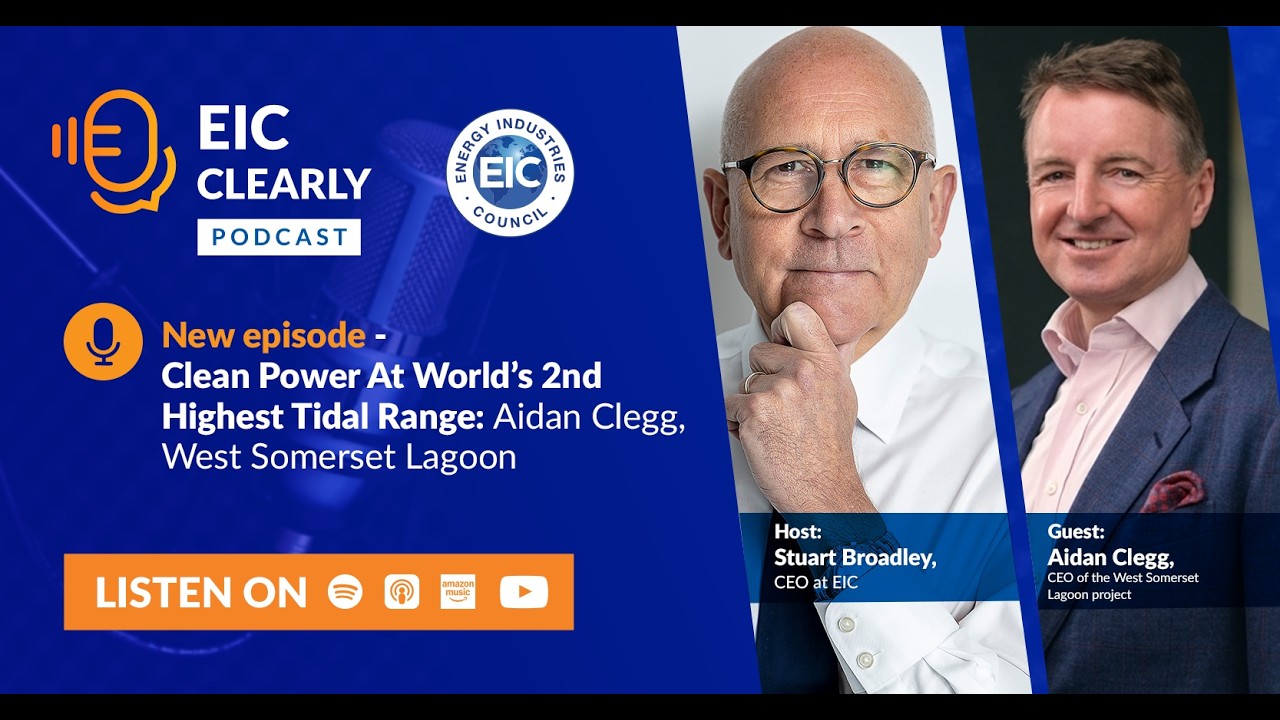
Clean Power At World’s 2nd Highest Tidal Range: Aidan Clegg, West Somerset Lagoon
Keywords
Summary
169 words
Critical Evaluation
Value of the Information & Strength of the Argument
The value of the information is high for understanding the technical and financial aspects of a large-scale tidal lagoon project. The argumentation is coherent, leveraging the CEO’s investment banking background to explain bankability and risk. The discussion provides specific data (cost, capacity, dimensions) and compares with past projects (Swansea Bay, Severn Barrage) to justify the project’s viability. However, the argumentation is one-sided, as it is an advocacy piece without critical counterpoints or independent verification.
Scientific Rigor, Source Quality, Title Accuracy
The scientific rigor is moderate; the technical details are plausible but not independently verified. The sources are primarily the interviewee’s expertise and references to established projects (La Rance, Shiwa Lake) and technologies (bulb turbines). No external sources are cited in the description, limiting verifiability. The title accurately reflects the content, and the discussion stays on topic. The podcast is produced by the Energy Industries Council, a trade association, which may introduce bias towards industry perspectives.
164 words
Title / Content Match
The title accurately reflects the content, focusing on the West Somerset Lagoon project and its potential for clean power generation.
Quality & Reliability
7/10
The discussion is led by the project CEO with a strong background in investment banking, providing credible insights into project financing and technical aspects. However, it is an advocacy piece with limited independent verification and no external sources cited.
Key Moments
Markers derived by PSI from the transcript: the creator did not define chapters.
- Introduction to the West Somerset Lagoon project and its location in the Bristol Channel.
- Aidan Clegg's background in investment banking and his motivation to join the project.
- Discussion on the key to bankability and the regulatory asset base model.
- Comparison with the failed Swansea Bay Lagoon and the Severn Barrage.
- Technical details of the lagoon: dimensions, capacity, and design life.
- Environmental considerations: location outside SSSIs, fish-friendly turbines, and bird islands.
- Technology: bulb turbines and concrete caissons, with potential UK manufacturing.
- Predictability of tidal power and integration with storage and grid.
- Local impact: tourism, marina, and community benefits.
Contribution & Novelties
The podcast provides an insider perspective on a major UK renewable energy project, detailing its financing model and technical approach. It highlights the potential of tidal range energy as a predictable and long-lasting power source, which is often overlooked in favor of wind and solar.
Pour aller plus loin :
- Tidal range energy on Wikipedia — Overview of tidal range technology and global projects.
- Regulatory asset base (RAB) model — Explanation of the financing model used for infrastructure projects.
- La Rance Tidal Power Station — Example of a long-operating tidal range plant.
- Swansea Bay Tidal Lagoon — Context on a failed UK tidal project.
104 words
Radar Profile
The radar profile shows high scores in information quantity and technical level, reflecting the detailed discussion. Quality and reliability are slightly lower due to the lack of independent sources and the promotional nature of the podcast.