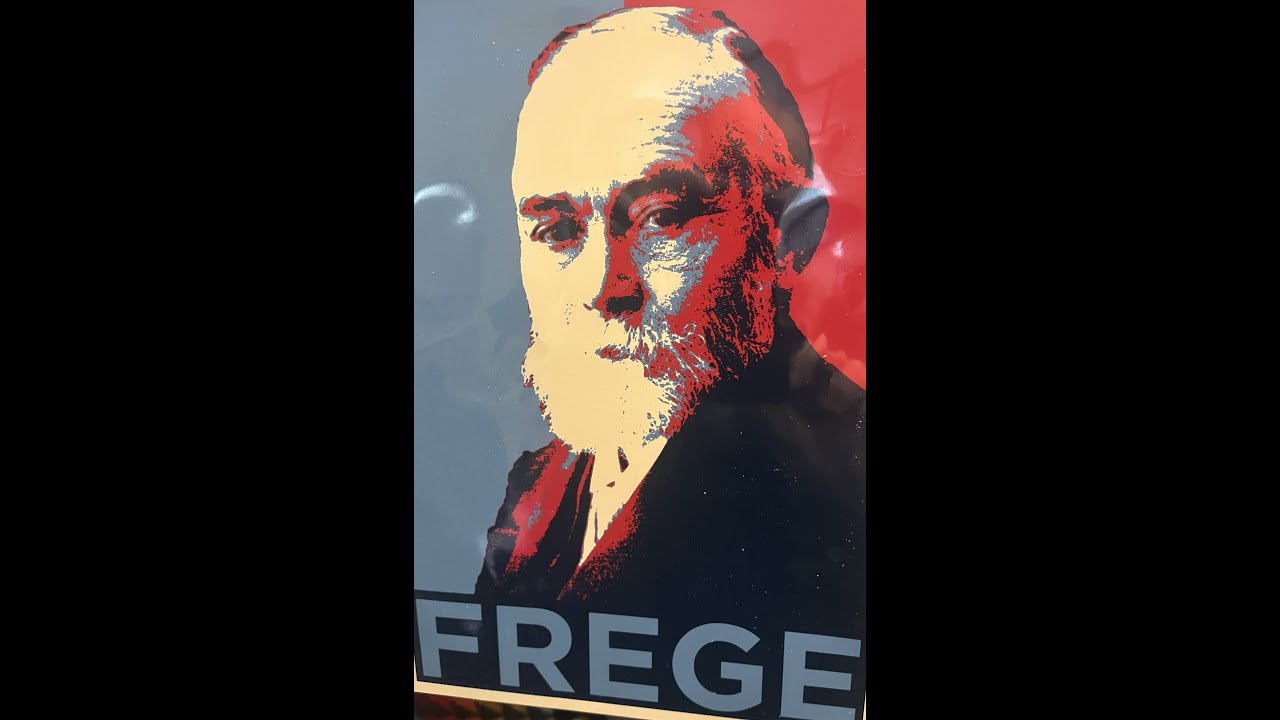
7. "Frege in Context" Brandom's 2025 Seminar Week 7: Bernard Bolzano (1781-1848), October 22, 2025
Keywords
Summary
153 words
Critical Evaluation
Value of the Information & Strength of the Argument
The value of the information is exceptionally high for an audience with a background in philosophy of logic. Brandom provides a novel interpretive framework for understanding Bolzano’s logic, emphasizing the importance of substitution and invariance as the core of his theory of consequence. He argues that Bolzano’s approach is top-down and holistic, contrasting with atomistic mereology. The argumentation is rigorous and well-supported by references to primary texts and historical context. Brandom’s claims are carefully reasoned, and he acknowledges alternative interpretations, making the discussion balanced and intellectually honest.
Scientific Rigor, Source Quality, Title Accuracy
The scientific rigor is exemplary. Brandom is a leading expert, and his analysis is grounded in careful reading of Bolzano’s ‘Theory of Science’ and related works. He provides specific references, such as the ‘Anti-Kant’ by Bolzano’s student, and mentions the historical context of Bolzano’s mathematical contributions. The title accurately reflects the content, and the seminar is well-structured. The sources cited are primarily the course materials and the primary texts discussed, which are appropriate for an academic seminar.
179 words
Title / Content Match
The title accurately reflects the content: a seminar session on Bernard Bolzano within a course on Frege's context.
Quality & Reliability
9/10
The content is a high-level academic seminar by a leading philosopher, Robert Brandom, presenting a detailed interpretive analysis of Bolzano's logic and its relation to Frege. The argumentation is rigorous, well-structured, and grounded in primary texts. The speaker demonstrates deep expertise and provides a novel framework for understanding Bolzano's significance.
Key Moments
Markers derived by PSI from the transcript: the creator did not define chapters.
- Introduction and recap of Frege's sense-reference model
- Discussion of Bolzano as the link between Kant and Frege
- Bolzano's metaphysics: Sätze an sich and Vorstellungen
- Bolzano's method: substitution and invariance
- Definition of logical consequence and its significance
- Comparison with Frege's approach and historical context
- Bolzano's mathematical contributions and epsilon-delta definition
- Discussion of the 'Anti-Kant' and Bolzano's students
- Further elaboration on the holistic method and mereology
- Conclusion and summary of key points
Cited Sources
- Course Website — Course materials for Brandom's seminar, including handouts and additional documents.
- Course Website (Alternative) — Alternative access to course materials for the Frege seminar.
Concurring Sources
- Stanford Encyclopedia of Philosophy: Bernard Bolzano — Provides scholarly overview of Bolzano's philosophy, supporting the seminar's interpretations.
- Stanford Encyclopedia of Philosophy: Logical Consequence — Discusses Bolzano's definition of consequence, aligning with Brandom's presentation.
Contribution & Novelties
This seminar offers a fresh perspective on Bolzano’s logic, emphasizing the centrality of substitution and invariance as the foundation of his theory of consequence. Brandom argues that Bolzano’s method is top-down and holistic, which contrasts with traditional atomistic approaches. This interpretation highlights Bolzano’s anticipation of Frege’s ideas and his significance as a bridge between Kant and Frege. The seminar also provides a detailed analysis of Bolzano’s metaphysics and its implications for understanding logical consequence.
Pour aller plus loin :
- Bernard Bolzano — Stanford Encyclopedia of Philosophy entry providing comprehensive overview.
- Gottlob Frege — Stanford Encyclopedia of Philosophy entry on Frege, useful for comparison.
- Logical Consequence — Stanford Encyclopedia of Philosophy entry discussing various theories of logical consequence, including Bolzano’s.
119 words
Radar Profile
The radar profile shows high scores across all dimensions, indicating a content that is rich in information, technically deep, and highly reliable. The balance between quantity and quality is excellent, with a slight emphasis on quality and technical level, reflecting the seminar's academic nature.
💬 No comments were provided for analysis.