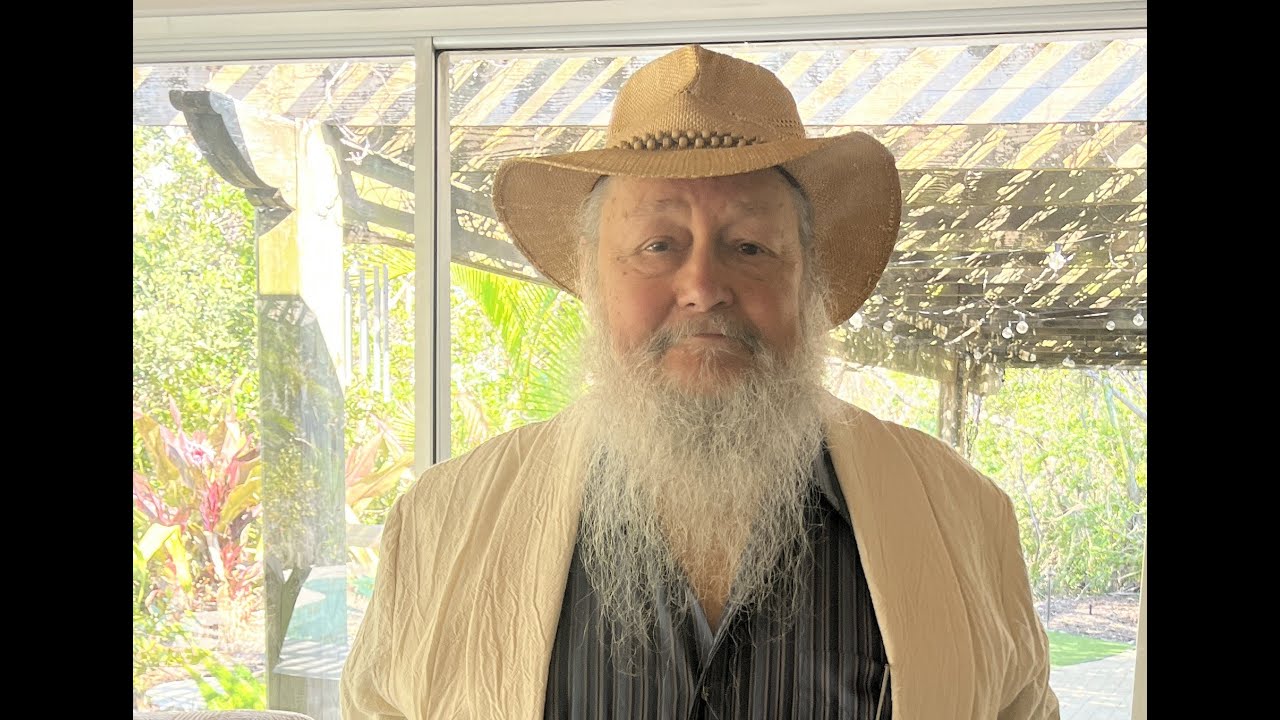
Robert Brandom "A Tune Beyond Us, Yet Ourselves" Zurich, September 2025
Keywords
Summary
144 words
Critical Evaluation
Value of the Information & Strength of the Argument
The lecture provides a high-value philosophical argument, synthesizing historical positions (Spinoza, Kant, Sellars) into a coherent narrative that addresses a central issue in contemporary philosophy. Brandom’s argumentation is rigorous, building step-by-step from historical foundations to his own proposal. He clearly defines key terms (conceptual phenomenalism, conceptual realism) and uses examples (the blue guitar poem) to illustrate abstract points. The distinction between reasoning practices and reasoning relations is a valuable contribution, offering a way to reconcile conceptual realism with a pragmatist account of concepts. The argument is persuasive within its own framework, though it remains an interpretive proposal rather than a definitive proof.
Scientific Rigor, Source Quality, Title Accuracy
Brandom demonstrates scholarly rigor by grounding his argument in the works of Spinoza, Kant, Sellars, and McDowell, and he provides a handout with references. The lecture is part of an academic conference, lending credibility. The title, drawn from a Wallace Stevens poem, is evocative and accurately reflects the lecture’s theme of seeking a ’tune beyond us, yet ourselves’—the aspiration to know reality as it is, despite our conceptual mediation. The content matches the title well, as Brandom explores the possibility of conceptual realism. The lecture does not include a Q&A session, but the argument is self-contained.
213 words
Title / Content Match
The title, taken from a Wallace Stevens poem, aptly captures the lecture's central theme of conceptual realism and the aspiration to know things as they are, despite the mediating role of our conceptual apparatus.
Quality & Reliability
8/10
The lecture is delivered by a leading philosopher (Robert Brandom) at an academic conference, presenting a well-structured argument with references to historical figures (Kant, Spinoza, Sellars, McDowell). The content is consistent with established philosophical literature, though it is an original interpretation rather than a peer-reviewed publication.
Key Moments
Markers derived by PSI from the transcript: the creator did not define chapters.
- Introduction: The scientific revolution transformed the appearance-reality distinction, moving from resemblance to representation.
- Spinoza's holistic account of representation: equations represent figures via global isomorphism, not local resemblance.
- Kant's turn: concepts as functions of judgment, understanding concepts via their role in reasoning.
- Kant's conceptual phenomenalism: conceptual form restricted to appearances, leading to transcendental idealism.
- The challenge of conceptual realism: how to attribute conceptual structure to reality itself, avoiding subjective idealism.
- Proposal: distinguish reasoning practices from reasoning relations, drawing on Harman's critique of deductive rules.
- Sketch of a pragmatics-first approach: conceptual content as inferential role in social practices, aiming for conceptual realism.
Cited Sources
- Text of lecture (downloadable) — Provided in the video description as the source for the lecture text.
Concurring Sources
- Making It Explicit — Brandom's major work that develops his inferentialist account of meaning and conceptual content, which aligns with the lecture's themes.
- Mind and World — McDowell's book, which Brandom discusses, argues for conceptual realism and the unboundedness of the conceptual.
Dissenting Sources
- Transcendental Idealism (Stanford Encyclopedia of Philosophy) — Kant's transcendental idealism, which Brandom critiques as leading to conceptual phenomenalism, is a major opposing view.
Contribution & Novelties
Brandom’s lecture offers a novel synthesis of historical and systematic arguments, proposing a way to achieve conceptual realism without falling into subjective idealism. His distinction between reasoning practices and reasoning relations, inspired by Gilbert Harman, provides a fresh perspective on how conceptual content can be both practice-dependent and world-involving. The lecture also connects these ideas to contemporary debates, particularly McDowell’s Mind and World, and offers a clear framework for understanding the appearance-reality distinction in a post-Kantian context.
Pour aller plus loin :
- Inferentialism (Stanford Encyclopedia of Philosophy) — This entry provides a comprehensive overview of inferentialism, the view that conceptual content is determined by inferential roles, which is central to Brandom’s approach.
- Wilfrid Sellars (Stanford Encyclopedia of Philosophy) — Sellars is a key influence on Brandom, particularly his ideas on the ‘space of reasons’ and the critique of the ‘Myth of the Given’.
- John McDowell (Stanford Encyclopedia of Philosophy) — McDowell’s Mind and World is directly discussed in the lecture, and this entry outlines his conceptual realism and its relation to Kant.
- Gottfried Wilhelm Leibniz (Stanford Encyclopedia of Philosophy) — Leibniz’s monadology is mentioned as a rejected alternative, and this entry provides context on his metaphysical system.
197 words
Radar Profile
The radar profile shows high scores in quality of information and technical level, reflecting the lecture's depth and rigor. The quantity of information is also substantial, but the global reliability is slightly lower due to the interpretive nature of the argument. The overall profile indicates a highly specialized and intellectually demanding content.
💬 No comments were provided for analysis.