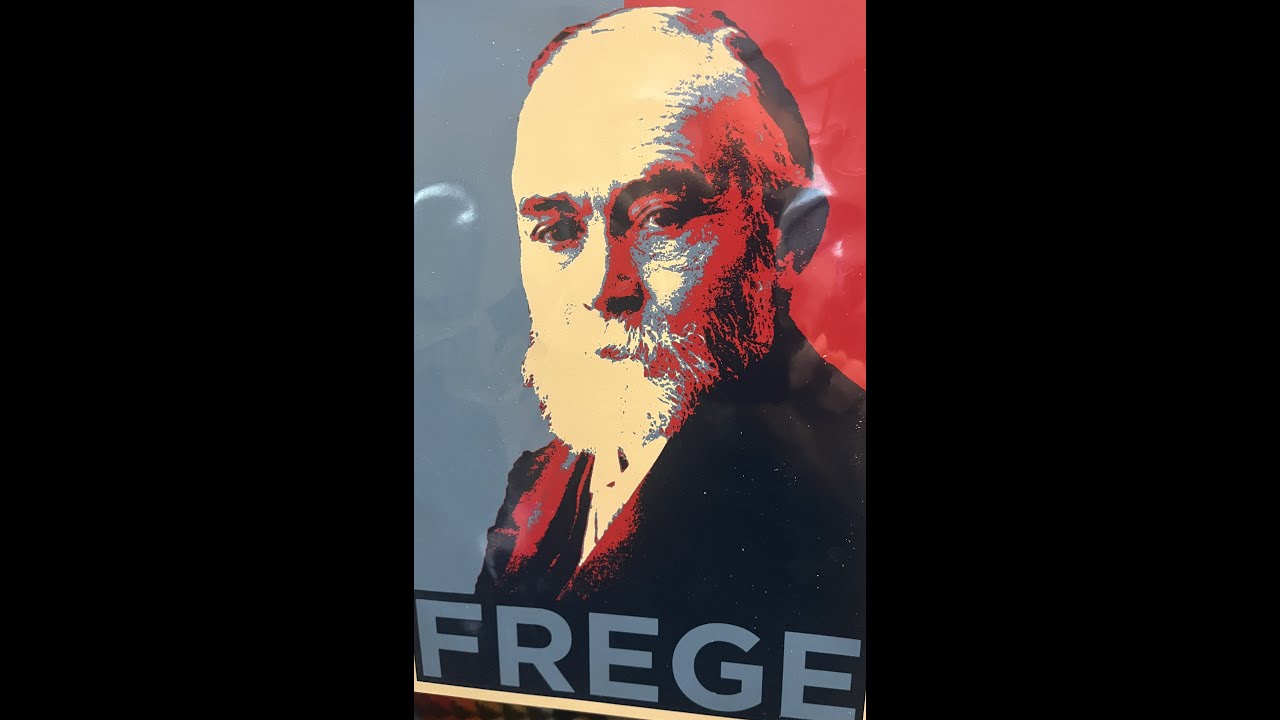
12. "Frege in Context" Brandom's 2025 Seminar Week 12: Conclusion. December 3, 2025.
Keywords
Summary
162 words
Critical Evaluation
Value of the Information & Strength of the Argument
The lecture provides a high-value synthesis of Frege’s philosophy, offering original insights into the connections between Frege, Kant, and pragmatism. Brandom’s argumentation is rigorous and well-supported, drawing on detailed textual analysis and contemporary scholarship. He effectively demonstrates the continuity of Frege’s thought with Kantian themes and highlights the pragmatic aspects of Frege’s semantics, which are often underappreciated. The discussion of Bolzano’s broader substitutional semantics and its contrast with Frege’s logical focus is particularly illuminating.
Scientific Rigor, Source Quality, Title Accuracy
The lecture demonstrates high scientific rigor, with careful attention to primary texts and scholarly interpretations. Brandom cites specific works and concepts, such as Frege’s ‘Begriffsschrift’ and ‘Grundgesetze’, and engages with contemporary philosophers like Danielle Macbeth and Jaakko Hintikka. The course materials are freely available online, providing transparency. The title accurately reflects the content, as it is a concluding lecture that places Frege in a broader philosophical context. No public comments were provided for analysis.
163 words
Title / Content Match
The title accurately reflects the content: it is the concluding session of Brandom's 2025 seminar on Frege, placing Frege in historical and contemporary context.
Quality & Reliability
9/10
The lecture is delivered by a leading philosopher, Robert Brandom, in a university seminar setting. It is based on his extensive scholarship and the course materials are freely available. The content is well-structured and demonstrates deep expertise, though it is an interpretive lecture rather than a peer-reviewed publication.
Key Moments
Markers derived by PSI from the transcript: the creator did not define chapters.
- Introduction: Brandom outlines the plan to rehearse major themes and place Frege between Kant and Sellars.
- Discussion of Frege's functional-substitutional methodology and its roots in Bolzano.
- Kant's lessons from Euclid: the importance of construction and synthesis in generating new knowledge.
- The concept of ampliativity and the role of functional decomposition in Frege's semantics.
- Comparison with Bolzano's more general substitutional semantics and the distinction between logical and non-logical vocabulary.
- Frege's introduction of the 'third realm' of senses and his Kantian commitment to the priority of representings.
- Brandom argues that Frege has a richer pragmatics than is often recognized, focusing on assertion and judgment.
- The role of identity claims as inter-substitution licenses and the grasp of senses via inferential roles.
- Connections to contemporary pragmatism and the relevance of Frege's thought to current debates.
- Conclusion: Brandom summarizes the course and points toward future directions, including Sellars.
Cited Sources
- Course Website — Official course materials for Brandom's seminar, including readings and notes.
- Course Website (Alternative) — Alternative access to course materials for the Frege seminar.
Concurring Sources
- Stanford Encyclopedia of Philosophy: Gottlob Frege — Provides scholarly overview of Frege's philosophy, consistent with Brandom's interpretations.
- Stanford Encyclopedia of Philosophy: Bernard Bolzano — Offers details on Bolzano's semantics, supporting the comparison made in the lecture.
Dissenting Sources
- No discordant sources identified — The lecture is a scholarly interpretation; no directly contradicting sources were mentioned or found.
Contribution & Novelties
This lecture provides a novel synthesis of Frege’s philosophy, emphasizing the pragmatic dimension of his semantics and its continuity with Kantian themes. Brandom’s interpretation of Frege’s functional-substitutional methodology as a form of ‘computational pragmatics’ offers a fresh perspective. The discussion of Bolzano’s broader substitutional semantics and its contrast with Frege’s logical focus is particularly insightful.
Pour aller plus loin :
- Gottlob Frege — Stanford Encyclopedia of Philosophy entry on Frege, providing comprehensive background.
- Wilfrid Sellars — Stanford Encyclopedia of Philosophy entry on Sellars, relevant to Brandom’s concluding remarks.
- Immanuel Kant — Stanford Encyclopedia of Philosophy entry on Kant, for the Kantian background.
- Bernard Bolzano — Stanford Encyclopedia of Philosophy entry on Bolzano, for his substitutional semantics.
116 words
Radar Profile
The radar profile shows high scores across all dimensions, indicating a lecture that is information-dense, technically rigorous, and highly reliable. The balance between quantity and quality of information is excellent, with a strong emphasis on technical depth and scholarly rigor.