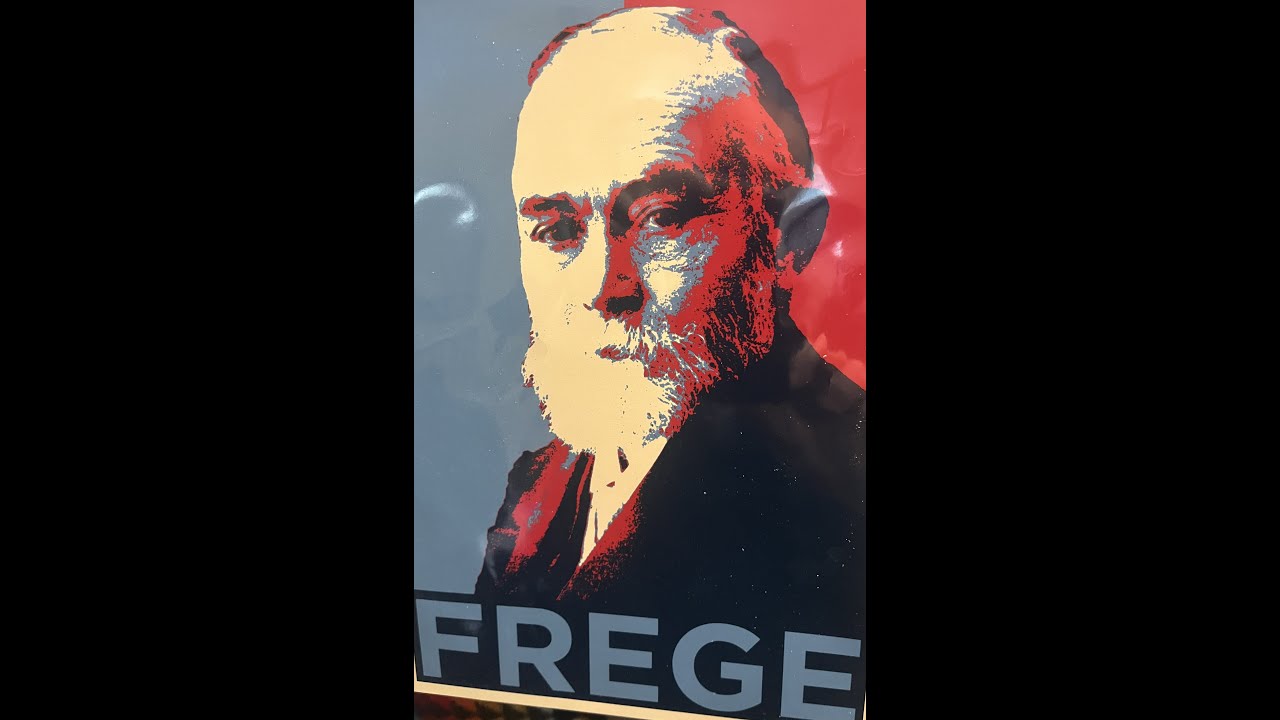
10. "Frege in Context" Brandom's 2025 Seminar Week 10: Late Essays, November 12, 2025
Keywords
Summary
138 words
Critical Evaluation
Value of the Information & Strength of the Argument
The video offers a high-value, original interpretation of Frege’s late philosophy, connecting it to contemporary debates in inferentialism and philosophy of language. Brandom’s argumentation is rigorous and systematic, building on previous sessions and providing a clear conceptual framework. He carefully distinguishes between different notions of content and extensionality, and he critically examines the limitations of his own computational model. The discussion is dense but well-structured, making it valuable for advanced students and researchers in philosophy.
Scientific Rigor, Source Quality, Title Accuracy
The video demonstrates high scientific rigor, with careful textual analysis and logical argumentation. Brandom references Frege’s works and engages with secondary literature (e.g., Dummett, Tugendhat, Quine). The course website provides access to materials, but no specific external sources are cited in the video itself. The title accurately reflects the content, which is a focused seminar on Frege’s late essays. The video is a single expert’s interpretation, so it should be considered as such, but it is well-argued and grounded in the philosophical tradition.
173 words
Title / Content Match
The title accurately reflects the content: a seminar on Frege's late essays, specifically focusing on sense and reference, and their relation to inference and content.
Quality & Reliability
8/10
The video is a seminar by a leading philosopher, Robert Brandom, presenting his original interpretation of Frege's late essays. The argumentation is rigorous, drawing on detailed textual analysis and formal logical concepts. However, it is a single expert's perspective, not peer-reviewed, and the video format limits verifiability.
Key Moments
Markers derived by PSI from the transcript: the creator did not define chapters.
- Introduction: recap of previous sessions on sense and reference, and the plan for today's discussion.
- Discussion of the two substitutional hierarchies: reference (salva veritate) and sense (salva consequentia).
- Introduction of the computational model of sense: senses as collections of modes of presentation that compute the reference.
- Discussion of the problem of multi-premise inferences: how can a conclusion follow from a set of premises but not from any individual premise?
- Examination of Frege's logical apparatus (conditional, negation) as a partial solution to the problem of multi-premise inferences.
- Discussion of the relationship between sense and reference, and the notion of extensionality.
- Conclusion: summary of the main points and implications for understanding Frege's late philosophy.
Cited Sources
- Course Website: Frege in Context — Course materials and handouts for the seminar.
- Course Website: Space of Reasons — Alternative access to course materials.
Concurring Sources
- Frege: Philosophy of Language — Michael Dummett's influential work on Frege, which Brandom engages with.
Dissenting Sources
- Alternative interpretations of Frege's sense — Some scholars may disagree with Brandom's computational model of sense, offering alternative readings of Frege's notion of Sinn.
Contribution & Novelties
Brandom’s seminar offers a novel interpretation of Frege’s late essays, proposing a computational model of sense that connects modes of presentation to inferential roles. This provides a systematic framework for understanding the relationship between sense and reference, and raises a significant challenge regarding multi-premise inferences. The discussion is original and contributes to contemporary debates in philosophy of language and inferentialism.
Pour aller plus loin :
- Gottlob Frege — Overview of Frege’s life and work.
- Sense and reference — Frege’s distinction between Sinn and Bedeutung.
- Inferentialism — Philosophical theory that meaning is determined by inferential roles.
- Robert Brandom — Philosopher known for his work on inferentialism and philosophy of language.
109 words
Radar Profile
The radar profile shows high scores in quantity and quality of information, and technical level, reflecting the dense and rigorous philosophical content. The reliability score is also high, but slightly lower due to the single-expert perspective and lack of external verification.