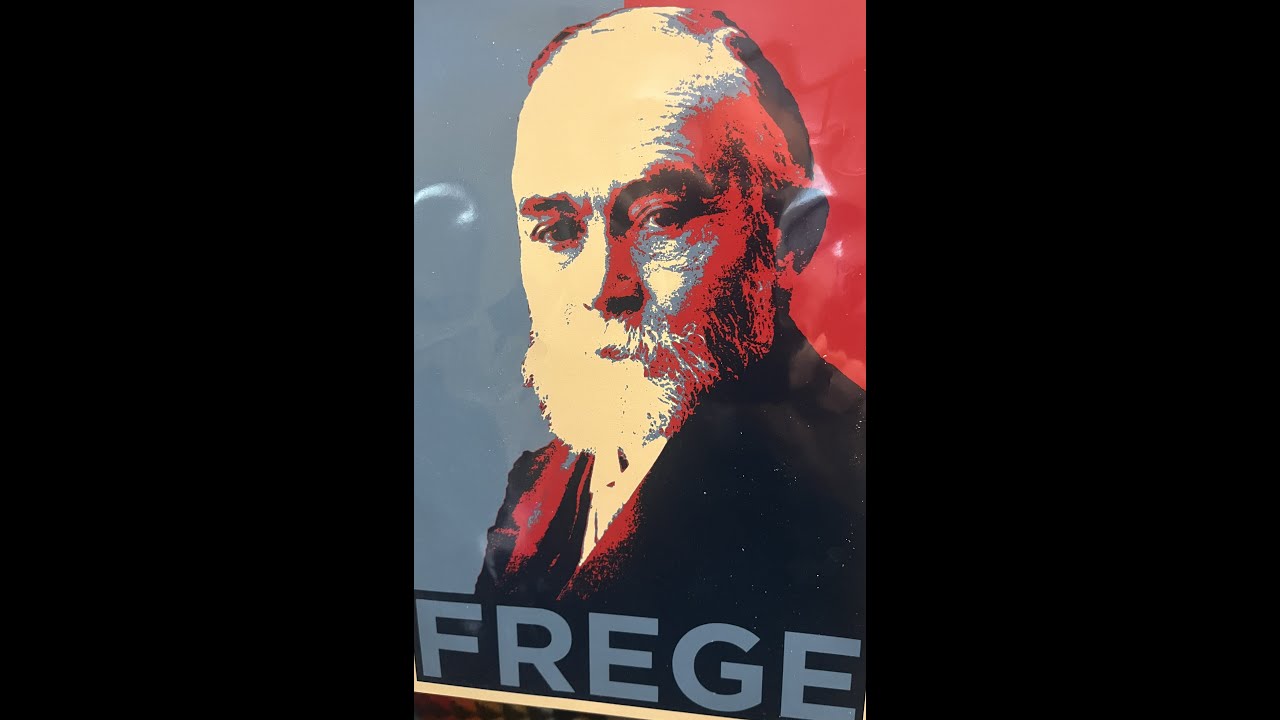
8. "Frege in Context" Brandom's 2025 Seminar Week 8: Varieties of Conceptual Novelty, Oct. 29, 2025
Keywords
Summary
154 words
Critical Evaluation
Value of the Information & Strength of the Argument
The lecture offers a deep and nuanced analysis of conceptual novelty, drawing on historical sources and contemporary debates. Brandom’s argumentation is rigorous, systematically building from Bolzano to Frege and contrasting with Kant. He provides concrete examples (e.g., water-bird, ancestral) to illustrate abstract points. The value lies in its synthesis of historical and systematic perspectives, offering a fresh interpretation of Frege’s significance. The argument is well-supported, though it assumes familiarity with the philosophical background.
Scientific Rigor, Source Quality, Title Accuracy
Brandom demonstrates scholarly rigor by engaging with primary texts (Frege, Bolzano, Kant) and secondary literature. He cites specific passages and concepts, and the course materials are available online. The title accurately reflects the content, focusing on Frege’s context and varieties of conceptual novelty. The lecture is a single perspective, but it is well-argued and grounded in textual evidence.
146 words
Title / Content Match
The title accurately reflects the content: the seminar focuses on Frege's context and varieties of conceptual novelty, as announced.
Quality & Reliability
8/10
The lecture is delivered by a leading philosopher (Robert Brandom) in a graduate seminar, drawing on primary sources (Frege, Bolzano, Kant) and contemporary debates. The reasoning is rigorous and well-structured, though it is a single perspective and not peer-reviewed.
Key Moments
Markers derived by PSI from the transcript: the creator did not define chapters.
- Introduction: no reading, context for Frege, Bolzano recap.
- Discussion of Bolzano's ontology and triadic consequence.
- Bolzano's argument about the totality of propositions and diagonalization.
- Frege's critique of Kantian concepts as lists; fruitful definitions.
- Boolean combinations and their productivity; examples like Koko the gorilla.
- Limits of Boolean combinations; need for complex predicates and functional analysis.
- Frege's logical notation enables complex predicates; example of self-admiration.
- Two-phase process: composition and decomposition; quantification yields new claims.
- Discussion of conditionals and force-content distinction; non-human primates.
- Conclusion: Frege's contribution to conceptual novelty and logical expressivism.
Cited Sources
- Course website — Course materials for Brandom's seminar.
- Course materials on spaceofreasons — Additional course materials and readings.
Concurring Sources
- Stanford Encyclopedia of Philosophy: Frege — Provides background on Frege's logic and philosophy, consistent with Brandom's presentation.
Contribution & Novelties
The lecture provides a novel synthesis of Frege’s and Bolzano’s ideas, emphasizing the role of substitution and functional analysis in generating conceptual novelty. It clarifies the distinction between Boolean and Fregean novelty, and highlights the importance of complex predicates and quantification. The discussion of the force-content distinction and its relation to conditionals offers a fresh perspective on logical expressivism.
Pour aller plus loin :
- Gottlob Frege — Stanford Encyclopedia of Philosophy entry on Frege, covering his logic and philosophy.
- Bernard Bolzano — SEP entry on Bolzano, including his theory of propositions and consequence.
- Logical Expressivism — SEP entry on expressivism, relevant to Brandom’s project.
104 words
Radar Profile
The radar profile shows high scores in quantity, quality, and technical level, indicating a dense and rigorous lecture. The slightly lower reliability score reflects the single-perspective nature of a seminar, but overall the content is highly informative and well-argued.