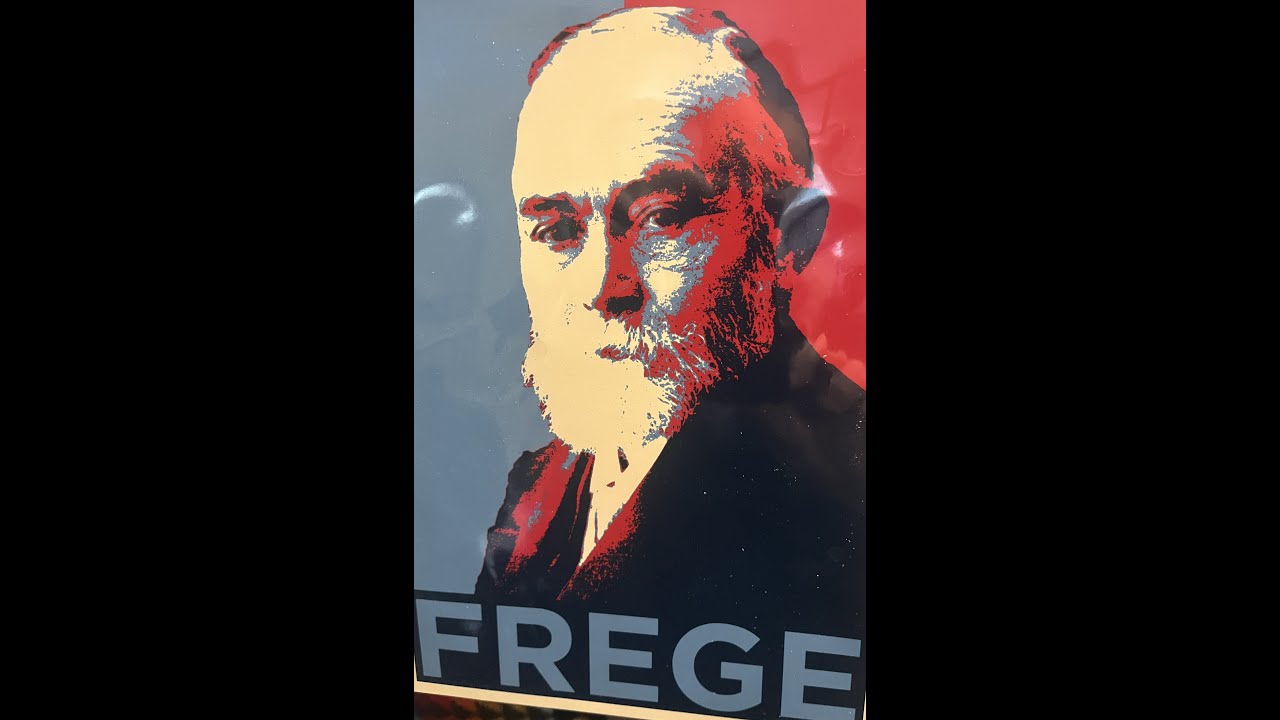
Frege in Context: Brandom's 2025 Seminar Week 1: Introduction
Keywords
Summary
161 words
Critical Evaluation
Value of the Information & Strength of the Argument
The lecture provides a rich and insightful overview of Frege’s philosophical significance, connecting his work to Kant and later philosophy. Brandom’s argumentation is clear and well-structured, drawing on his deep expertise. He effectively explains complex ideas like the force-content distinction and the context principle, and his use of examples (e.g., the Wittgenstein anecdote) makes the material accessible. The value lies in the synthesis of historical context and philosophical analysis, offering a compelling framework for understanding Frege’s contributions.
Scientific Rigor, Source Quality, Title Accuracy
Brandom demonstrates scholarly rigor by referencing primary texts and key secondary literature. He explicitly recommends Danielle Macbeth’s books and mentions Geach’s article ‘Ascriptivism’. He also points to course materials available online. The title accurately reflects the content: it is an introductory session that contextualizes Frege’s work. The lecture is part of a university seminar, which lends it academic credibility.
151 words
Title / Content Match
The title accurately reflects the content: the first session of a seminar on Frege, focusing on contextualizing his work.
Quality & Reliability
8/10
The lecture is delivered by a renowned philosopher (Robert Brandom) and is part of a graduate seminar. It provides a scholarly introduction to Frege's philosophy, situating it in historical context. The content is well-structured and based on extensive knowledge, but it is a lecture, not a peer-reviewed publication, and some claims are interpretive.
Key Moments
Markers derived by PSI from the transcript: the creator did not define chapters.
- Introduction: course structure and three contexts for understanding Frege.
- First context: Kant's revolution and the normative turn.
- Second context: recent Frege scholarship, especially Danielle Macbeth.
- Third context: Bolzano as an alternative path from Kant.
- Key Fregean ideas: force-content distinction and context principle.
- The Frege point and Geach's ascriptivism.
Cited Sources
- Course website — Course materials and syllabus.
- Space of Reasons course page — Alternative access to course materials.
Concurring Sources
- Frege's Philosophy of Language — Michael Dummett's influential book, mentioned in the lecture.
Contribution & Novelties
This lecture offers a fresh perspective on Frege by emphasizing his continuity with Kant and his role in the ‘depsychologization’ of logic. Brandom’s emphasis on Bolzano as a ‘path not taken’ is a distinctive contribution, as is his recommendation of Macbeth’s work. The lecture provides a valuable framework for reading Frege’s primary texts.
Pour aller plus loin :
- Gottlob Frege — Overview of Frege’s life and work.
- Immanuel Kant — Background on Kant’s philosophy.
- Bernard Bolzano — Information on Bolzano, often overlooked.
- Context principle — Explanation of Frege’s context principle.
- Force-content distinction — Overview of this key distinction.
98 words
Radar Profile
The radar profile shows high scores across all dimensions, indicating a lecture that is rich in information, technically deep, and highly reliable. The lowest score is 'niveau_technique' at 8, still high, reflecting the advanced nature of the content.