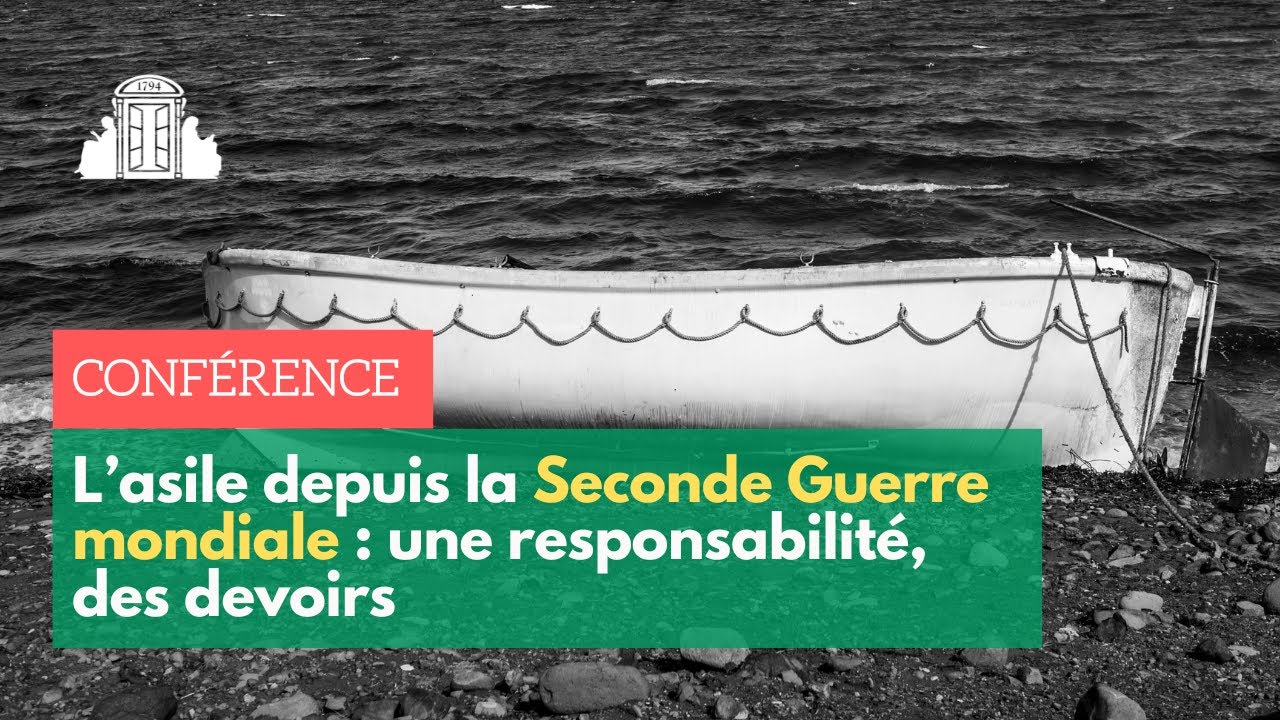
🌍 L’asile depuis la Seconde Guerre mondiale : une responsabilité, des devoirs | ENS-PSL
Keywords
Summary
137 words
Critical Evaluation
The conference provides a valuable and insightful analysis of asylum and refugee protection, grounded in both field research and historical context. Leïla Vignal’s expertise as a geographer specializing in the Middle East is evident, and she effectively combines empirical observations with legal and historical frameworks. The discussion of Syrian refugees in Lebanon is particularly compelling, as it illustrates the gap between international principles and local realities. Vignal highlights the legal precarity of refugees, the role of UNHCR, and the impact of Lebanon’s non-signatory status to the Geneva Convention. The historical overview of asylum law is well-structured, tracing key milestones from the Nansen passport to the 1951 Convention, and she correctly emphasizes the Western-centric nature of the current system while acknowledging other traditions. The argumentation is solid, though the talk is more descriptive than critical, and it could benefit from a deeper exploration of the political and economic factors driving asylum policies. The sources cited are primarily institutional (ENS, LinkedIn, YouTube), but the content itself references legal instruments and academic concepts. Overall, the conference is a reliable and informative resource for understanding asylum and refugee issues, though it is not without limitations in its scope and depth.
196 words
Title / Content Match
The title accurately reflects the content, which focuses on asylum since WWII and the responsibilities and duties involved.
Quality & Reliability
8/10
The speaker is a professor of geography at ENS-PSL with expertise on the Middle East and refugees. The content is based on field research and historical analysis, with references to legal frameworks and conventions. The presentation is well-structured and grounded in academic knowledge.
Key Moments
Markers derived by PSI from the transcript: the creator did not define chapters.
- Introduction and presentation of Leïla Vignal and the conference theme.
- Vignal introduces her fieldwork on Syrian refugees in the Bekaa Valley, Lebanon.
- Discussion of the complex relations between Syrian refugees and Lebanese hosts, including economic interdependence and social distancing.
- Explanation of the legal statuses of Syrian refugees in Lebanon, including temporary protection and registration with UNHCR.
- Historical overview of asylum law, starting with the post-WWI era and the Nansen passport.
- Discussion of the 1951 Geneva Convention and its principles, and the distinction between blameworthy and miserable exile.
- Conclusion on the need for a collective responsibility and a solidary future.
Cited Sources
- École normale supérieure - PSL — Institution hosting the conference and speaker's affiliation.
- ENS-PSL LinkedIn — Institutional page for the school.
- ENS-PSL YouTube Channel — Channel where the video is published.
Concurring Sources
- UNHCR - Syria Refugee Response — Data and reports on Syrian refugees, consistent with the talk's figures.
Contribution & Novelties
The talk provides a unique field-based perspective on Syrian refugees in Lebanon, highlighting the legal precarity and the gap between international law and local implementation. It also offers a historical overview of asylum law, emphasizing the shift from discretionary state-based asylum to collective responsibility.
Pour aller plus loin :
- 1951 Refugee Convention — Key legal instrument discussed.
- Nansen passport — Historical document for stateless refugees.
- UNHCR — Agency responsible for refugee protection.
72 words
Radar Profile
The radar profile shows high scores in information quantity, quality, and reliability, with a slightly lower technical level, indicating a well-balanced and accessible presentation.