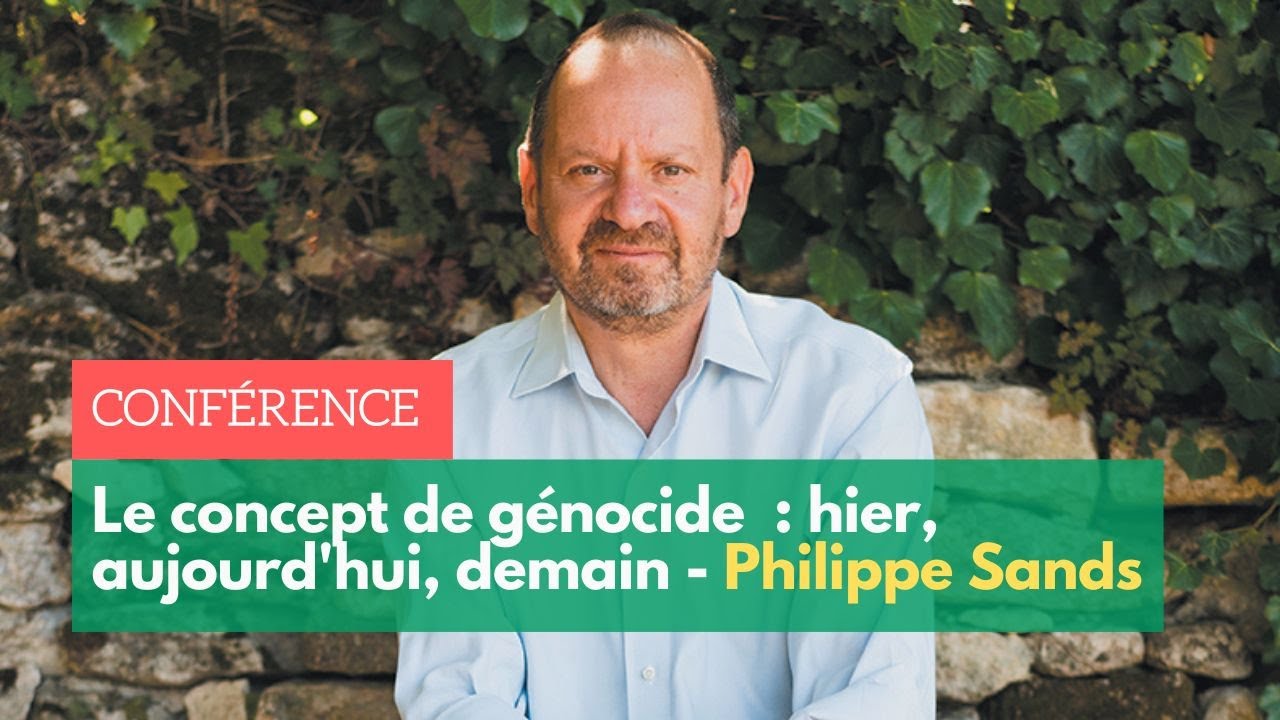
Philippe Sands : Le concept de génocide : hier, aujourd'hui, demain | ENS-PSL
Keywords
Summary
136 words
Critical Evaluation
The lecture provides a comprehensive and authoritative analysis of the concept of genocide, drawing on Philippe Sands’ extensive experience as an international lawyer and scholar. The argumentation is rigorous, with a clear historical narrative that connects the origins of the term to contemporary legal challenges. Sands effectively highlights the tension between the legal definition of genocide and its public perception, and he raises important questions about the potential unintended consequences of the law. The discussion is well-structured, moving from the historical context to current applications and future implications. The sources cited, including Sands’ own works and legal cases, are credible and relevant. The lecture is particularly valuable for its insights into the legal intricacies and the ethical dilemmas surrounding genocide. The title accurately reflects the content, and the presentation is accessible while maintaining a high level of technical detail. Overall, this is an excellent contribution to the understanding of genocide in international law.
153 words
Title / Content Match
The title accurately reflects the content, which traces the concept of genocide from its origins to its current and future implications.
Quality & Reliability
9/10
High reliability due to the speaker's expertise as a renowned international law professor and practitioner, and the institutional setting (ENS-PSL). The lecture is based on historical and legal analysis, with references to his own works and legal cases.
Key Moments
Markers derived by PSI from the transcript: the creator did not define chapters.
- Introduction by Frédéric Worms, welcoming attendees and introducing the Pierre Hassner lecture series.
- Perrine Simon-Nahum introduces Philippe Sands, highlighting his career and works.
- Sands begins his lecture, discussing the origins of the term 'genocide' and Raphael Lemkin.
- Exploration of the legal definition of genocide and its evolution over time.
- Discussion on the gap between public understanding and legal meaning of genocide.
- Analysis of the unintended consequences of the genocide concept, including identity politics.
- Examination of why genocide is considered the 'crime of crimes'.
- Discussion on future developments in international jurisprudence, including ICJ cases.
- Q&A session begins, with questions from the audience.
- Concluding remarks and thanks.
Cited Sources
- ENS-PSL official website — Institutional context of the lecture.
- Conference announcement — Details about the lecture series and this specific event.
- ENS-PSL LinkedIn — Social media presence of the institution.
- ENS-PSL YouTube channel — Channel hosting the video.
Concurring Sources
- Genocide Convention — Legal definition of genocide as referenced in the lecture.
- Raphael Lemkin — Historical background on the originator of the term.
Contribution & Novelties
This lecture offers a unique perspective on the concept of genocide, combining historical analysis with contemporary legal practice. Sands’ personal connection to the subject, through his family history and legal work, adds depth to the discussion. He challenges conventional assumptions and raises critical questions about the law’s role in preventing or exacerbating group conflicts.
Pour aller plus loin :
- Raphael Lemkin — Key figure in the creation of the term ‘genocide’.
- Genocide Convention — The 1948 UN treaty defining genocide.
- International Court of Justice — Court where genocide cases are heard.
91 words
Radar Profile
The radar profile shows high scores across all dimensions, indicating a well-rounded and authoritative lecture. The strongest aspects are the quality and reliability of information, reflecting Sands' expertise and the institutional setting. The technical level is appropriate for an academic audience, and the quantity of information is substantial.