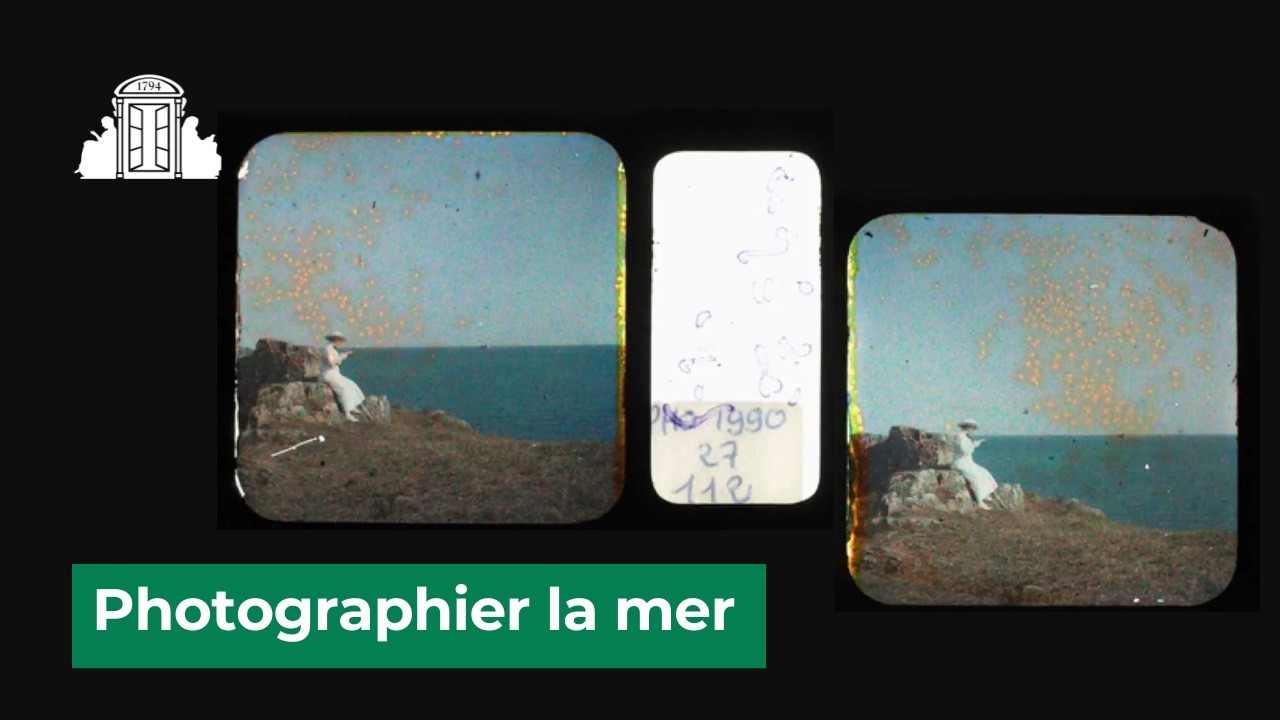
Photographier la mer | ENS-PSL
Keywords
Summary
151 words
Critical Evaluation
The conference provides a rich and nuanced analysis of the photographic representation of the sea in the 19th century. De Font-Réaulx demonstrates deep expertise in art history, weaving together technical, aesthetic, and cultural threads. The argument is well-structured, moving from the technical challenges of early photography to the conceptual implications of capturing the sea. She effectively uses specific examples, such as Gustave Le Gray’s seascapes, to illustrate her points. The discussion of ‘virtuosity’ and ‘impotence’ is particularly insightful, capturing the paradoxical nature of the photographic endeavor. The talk is grounded in solid historical research, though it does not provide explicit citations during the lecture. The sources cited in the description are institutional and relevant, but the lack of direct references to specific artworks or publications may limit the viewer’s ability to verify claims. The title accurately reflects the content, and the talk is accessible to a general audience while still offering depth for specialists. Overall, this is a high-quality presentation that contributes to the understanding of photography’s role in shaping perceptions of the sea and climate.
176 words
Title / Content Match
The title accurately reflects the content, which focuses on the challenges and techniques of photographing the sea, particularly in the 19th century.
Quality & Reliability
8/10
The speaker is a recognized art historian, and the talk is part of an academic seminar at ENS-PSL. The content is well-structured, historically grounded, and references specific artworks and photographers. However, the video description lacks detailed citations, and the talk is an expert opinion rather than a peer-reviewed study.
Key Moments
Markers derived by PSI from the transcript: the creator did not define chapters.
- Introduction to the seminar and the topic of photographing the sea.
- Discussion of early photographic techniques and their limitations.
- Analysis of Gustave Le Gray's seascapes and his innovative methods.
- Exploration of the concept of 'impotence' in representing the sea.
- Conclusion on the cultural and scientific implications of sea photography.
Cited Sources
- Savoirs ENS — Platform hosting the video and related academic content.
- Perception du climat seminar page — Seminar page for the 2024-2025 theme on climates, oceans, and seas.
- ENS-PSL official website — Institutional website of the École normale supérieure - PSL.
Concurring Sources
- Savoirs ENS — Institutional platform for academic videos, consistent with the seminar's academic nature.
External References
Contribution & Novelties
This conference offers a fresh perspective on the intersection of art history and climate perception, highlighting how 19th-century photography shaped cultural understandings of the sea. It underscores the technical and conceptual challenges that remain relevant today.
Pour aller plus loin :
- Gustave Le Gray — Key photographer discussed; his seascapes are central to the talk.
- History of photography — Provides context for early photographic techniques.
- Sublime (philosophy) — Relevant to the aesthetic challenges of representing the sea.
77 words
Radar Profile
The radar profile shows high scores in information quantity, quality, and reliability, with a slightly lower technical level, reflecting the accessible yet rigorous nature of the talk.