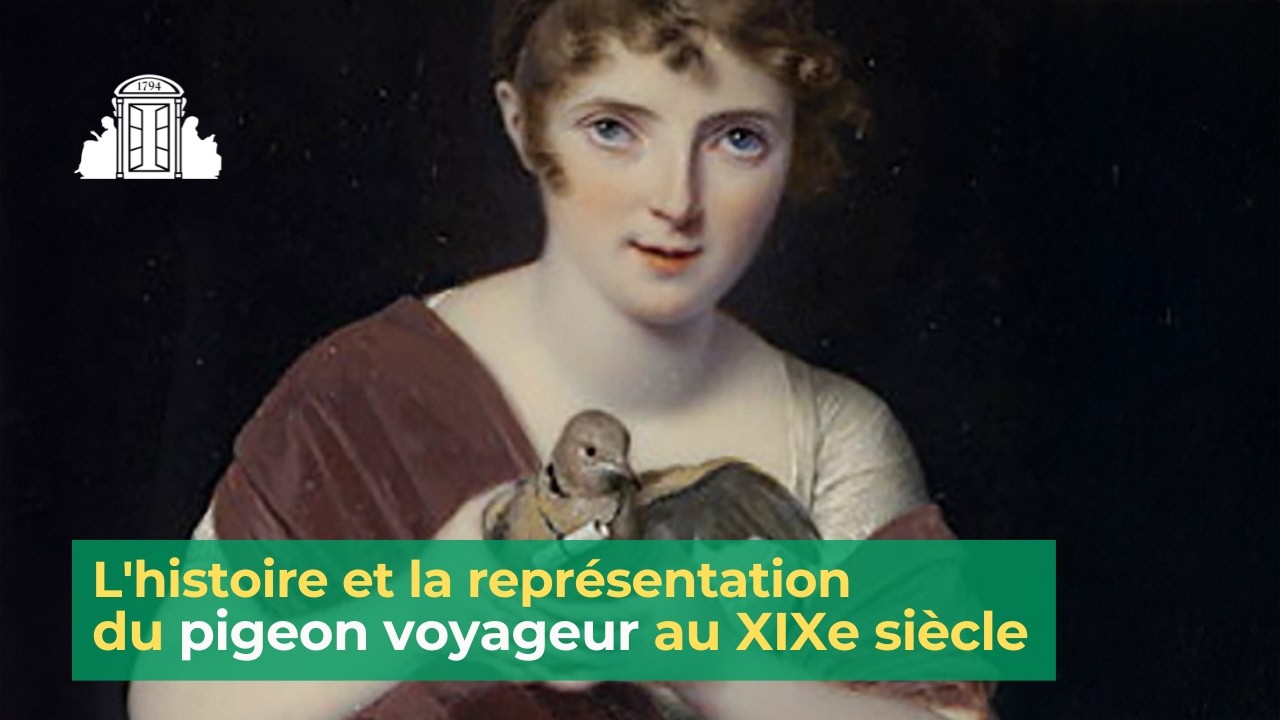
L'histoire et la représentation du pigeon voyageur au XIXe siècle | ENS-PSL
Keywords
Summary
171 words
Critical Evaluation
Value of the Information & Strength of the Argument
The lecture provides valuable insights into the intersection of art history, animal studies, and media history. Hornstein’s argument is well-supported by archival research and close reading of artworks. She effectively demonstrates how the representation of carrier pigeons in art reveals cultural attitudes towards communication, class, and technology. The discussion of Boucher’s paintings and the Diderot-Grimm debate is particularly compelling, showing how art can illuminate social and technological changes. The argumentation is solid, though some points could be further developed, such as the broader implications of pigeon photography for media history.
Scientific Rigor, Source Quality, Title Accuracy
The lecture demonstrates high scientific rigor, with references to primary sources, art historical scholarship, and contemporary debates. Hornstein cites specific artworks, archival documents, and scholarly works, such as Colin Jerolmack’s ‘The Global Pigeon’. The sources are appropriate and well-integrated. The title accurately reflects the content, focusing on the history and representation of carrier pigeons in the 19th century. The lecture is well-structured and the argumentation is coherent. The only minor issue is that some historical claims could be more precisely sourced, but overall the quality is high.
192 words
Title / Content Match
The title accurately reflects the content, which focuses on the history and visual representation of carrier pigeons in the long 19th century.
Quality & Reliability
8/10
Lecture by a professor of art history, based on archival research and art historical analysis, with references to primary sources and scholarly debates. The content is well-structured and grounded in academic methodology, though some claims (e.g., homing mechanisms) are simplified.
Key Moments
Markers derived by PSI from the transcript: the creator did not define chapters.
- Introduction and thanks to organizers
- Explanation of pigeon biology and domestication
- History of carrier pigeons in Mesopotamia and Islamic world
- Challenges of finding visual representations of carrier pigeons
- Discussion of a painting of a champion pigeon
- Early aerial photographs taken by pigeons
- Introduction to François Boucher's pastoral paintings with pigeons
- Diderot's praise and Grimm's critique of Boucher's pigeon paintings
- Context of the 'petite poste' and commissionaires
- Conclusion on the importance of animal agency in media history
Cited Sources
- Savoirs ENS — Plateforme de l'ENS pour les conférences et cours.
- ENS-PSL official website — Site officiel de l'École normale supérieure.
Concurring Sources
- The Global Pigeon by Colin Jerolmack — Mentioned in the lecture as a sociological study of human-pigeon interactions.
External References
Contribution & Novelties
This lecture offers a novel perspective on the history of media by centering on the role of carrier pigeons, an often-overlooked animal in art history and media studies. Hornstein’s approach combines visual analysis with material history, arguing that pigeons were active participants in the circulation of information, challenging anthropocentric narratives of technological progress. The discussion of Boucher’s paintings and the Diderot-Grimm debate provides a fresh interpretation of 18th-century art in relation to communication practices.
Pour aller plus loin :
- Animal Studies — Interdisciplinary field examining human-animal relations.
- History of the postal system — Context for the development of postal networks.
- François Boucher — Artist discussed in the lecture.
108 words
Radar Profile
The radar profile shows high scores in information quantity, quality, technical level, and reliability, indicating a well-researched and informative lecture. The balance across dimensions suggests a comprehensive treatment of the subject.