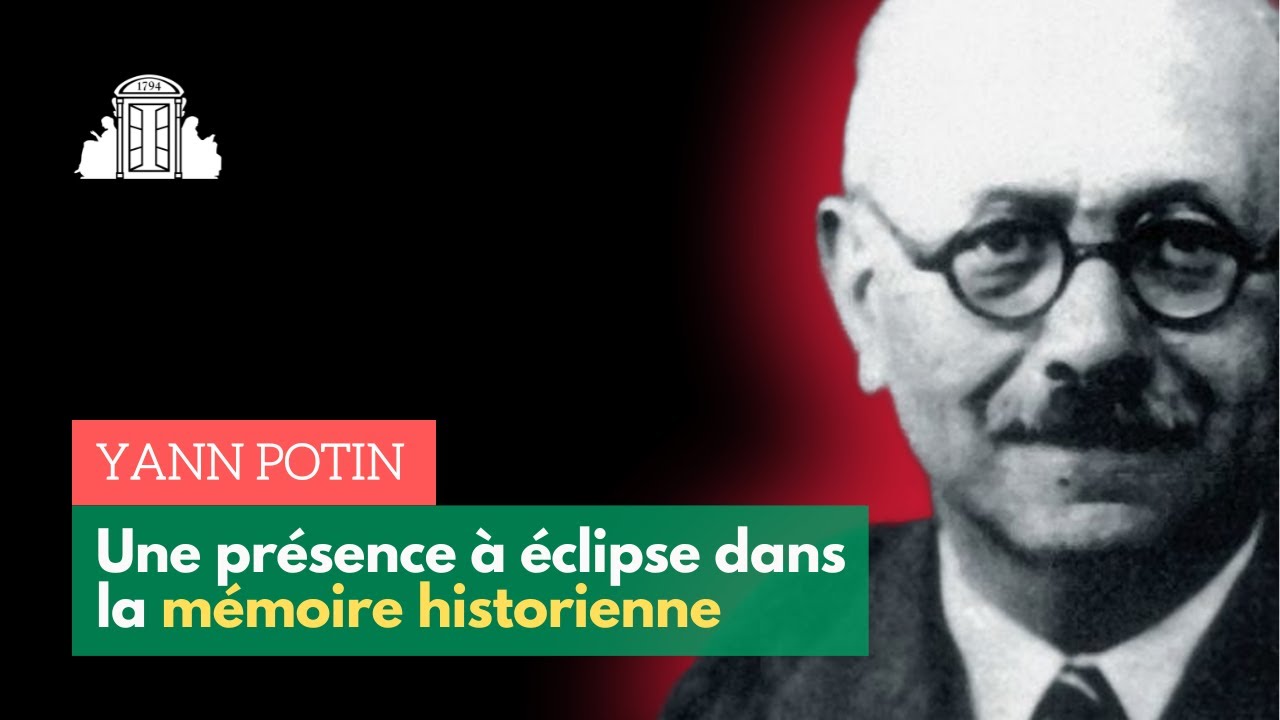
Une présence à éclipse dans la mémoire historienne | ENS-PSL
Keywords
Summary
165 words
Critical Evaluation
Yann Potin’s presentation offers a nuanced and well-researched analysis of Marc Bloch’s fluctuating presence in French historical memory. The speaker, a professional historian and archivist, brings a wealth of expertise to the topic, and his use of quantitative data (sales percentages, publication counts) adds a concrete dimension to the discussion. The argument is structured logically: he first presents the data, then interprets it, and finally contextualizes it within the broader institutional and intellectual history of the Annales School. The notion of ‘éclipse’ is thoughtfully developed, avoiding simplistic conclusions and acknowledging the complexity of memory and reception. However, the talk is primarily an expert opinion rather than a systematic study; while Potin references sources like Olivier Dumoulin’s book and the GFK data, he does not provide detailed citations within the video itself, which limits the ability to verify his claims. The reliance on sales data and a curated list of monographs is a valid approach, but it could be critiqued for not fully capturing the diversity of Bloch’s influence. The discussion of the institutional legacy, particularly the role of the Marc Bloch Association and the 6th section, is insightful and adds depth. The title accurately reflects the content, and the presentation is well-suited for an academic audience. Overall, the talk is rigorous and thought-provoking, though it would benefit from more explicit references to sources and a more systematic methodology.
228 words
Title / Content Match
The title accurately reflects the content, which examines the fluctuating presence of Marc Bloch in historical memory.
Quality & Reliability
8/10
The speaker is a professional historian and archivist, providing a well-structured analysis based on bibliographic data and archival sources. The presentation is nuanced and acknowledges limitations, but lacks detailed citations in the video itself.
Key Moments
Markers derived by PSI from the transcript: the creator did not define chapters.
- Introduction of Yann Potin and the topic of Marc Bloch's presence in historical memory.
- Presentation of sales data showing the dominance of Bloch's contemporary works.
- Discussion of the list of 52 monographs and the posthumous works.
- Analysis of the institutional legacy, including the Marc Bloch Association and the 6th section.
- Exploration of the role of Lucien Febvre and Ernest Labrousse in shaping Bloch's posthumous reputation.
- Discussion of the publication history of Bloch's works and the impact of posthumous volumes.
- Conclusion on the 'eclipsed presence' of Bloch's medievalist scholarship.
Cited Sources
- Savoirs ENS — Platform hosting the video and related academic content.
- ENS-PSL official website — Institutional website of the École normale supérieure - PSL.
- ENS-PSL LinkedIn — LinkedIn page of the institution.
- ENS-PSL YouTube channel — Official YouTube channel of the institution.
Concurring Sources
- Olivier Dumoulin, 'Marc Bloch' — Referenced in the talk as a key biographical and historiographical study.
Contribution & Novelties
The talk provides a fresh perspective on Marc Bloch’s reception by introducing the concept of ‘presence à éclipse’ and using quantitative sales data to illustrate the dominance of his contemporary works. It also highlights the institutional mechanisms that shaped his posthumous reputation, such as the Marc Bloch Association and the 6th section of the EPHE.
Pour aller plus loin :
- Marc Bloch - Wikipedia — Provides a comprehensive overview of Bloch’s life and works.
- Annales School - Wikipedia — Contextualizes the intellectual movement Bloch co-founded.
- Lucien Febvre - Wikipedia — Key figure in the Annales School and Bloch’s collaborator.
99 words
Radar Profile
The radar profile shows high scores in information quantity, quality, and reliability, with a slightly lower technical level, reflecting the accessible yet rigorous nature of the talk.