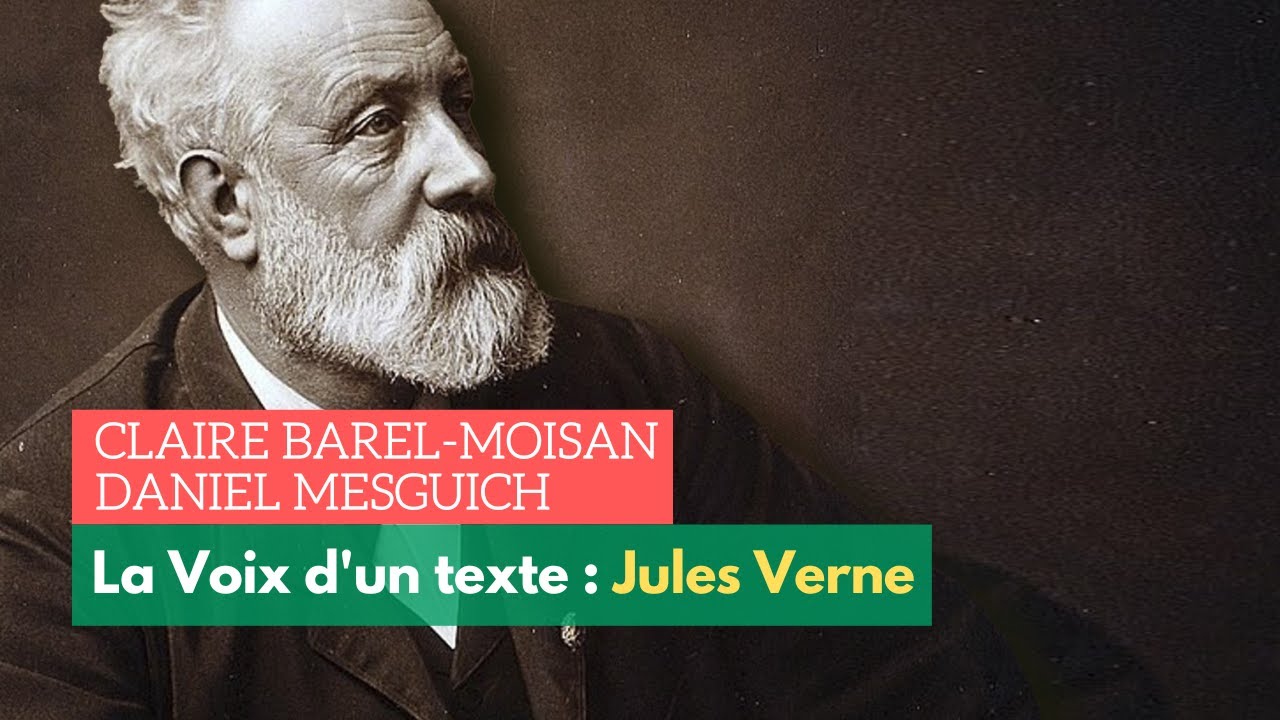
La Voix d'un texte : Jules Verne, élargir l'aventure aux dimensions du monde
Keywords
Summary
160 words
Critical Evaluation
The video offers a rich and nuanced analysis of Jules Verne’s literary techniques and thematic concerns. The combination of readings by Daniel Mesguich and scholarly commentary by Claire Barel-Moisan provides a dynamic and engaging presentation. The selection of passages effectively illustrates Verne’s ability to blend scientific detail with poetic imagination, as seen in the underwater walk from ‘Vingt mille lieues sous les mers’. The discussion of ‘Les Cinq cents millions de la Bégum’ is particularly insightful, highlighting Verne’s engagement with utopian and dystopian visions, and his response to contemporary social and scientific debates, such as the hygiene movement and Pasteur’s discoveries. The speakers demonstrate a deep familiarity with Verne’s oeuvre and its historical context, offering interpretations that are both accessible and intellectually rigorous. However, the video is primarily a lecture and does not engage with critical debates or alternative interpretations in a systematic way. The sources cited are limited to institutional links, and no specific academic references are provided. The adéquation between title and content is strong, as the session indeed explores how Verne expanded the adventure genre to encompass global and scientific dimensions. The overall quality is high, but the lack of explicit citations and the conversational format slightly reduce its scholarly rigor. The video would be valuable for students and enthusiasts of Verne, offering a thoughtful introduction to his major works and themes.
225 words
Title / Content Match
The title accurately reflects the content: the session focuses on Jules Verne's expansion of adventure to global dimensions, with readings and commentary.
Quality & Reliability
8/10
The video features two recognized experts in literature and theater, providing a scholarly analysis of Jules Verne's works. The discussion is grounded in literary history and textual evidence, with references to specific novels and historical context. The institutional setting (ENS-PSL) adds credibility. However, the format is a lecture/discussion rather than a peer-reviewed study, and no external sources are cited beyond the institutional links.
Key Moments
Markers derived by PSI from the transcript: the creator did not define chapters.
- Introduction and first reading from 'De la Terre à la Lune' about the Gun Club.
- Commentary on the satirical tone and scientific references in the passage.
- Reading from 'Vingt mille lieues sous les mers' describing the underwater walk.
- Analysis of the poetic and scientific aspects of the underwater description.
- Discussion of 'Les Cinq cents millions de la Bégum' and its political dimensions.
- Reading from 'Les Cinq cents millions de la Bégum' describing Franceville.
- Commentary on the utopian city and its historical context.
- Discussion of the influence of hygiene movements and bacteriology on Verne's work.
- Further analysis of the contrast between Franceville and Stahlstadt.
- Conclusion and final remarks.
Cited Sources
- Savoirs ENS — Platform hosting the video and other academic content.
- ENS-PSL official website — Institutional website of the École normale supérieure.
- ENS-PSL LinkedIn — Institutional LinkedIn page.
- ENS-PSL YouTube channel — Official YouTube channel of ENS-PSL.
Concurring Sources
- Jules Verne on Wikipedia — General information about Verne's works and themes.
- Voyages extraordinaires on Wikipedia — Details on the series and its characteristics.
Contribution & Novelties
The video provides a fresh perspective on Jules Verne’s works by combining dramatic readings with scholarly analysis, highlighting the interplay between scientific knowledge and literary imagination. It emphasizes Verne’s role in expanding the adventure genre to global and scientific dimensions, and his engagement with contemporary social and political issues. The discussion of ‘Les Cinq cents millions de la Bégum’ offers insights into Verne’s utopian and dystopian visions, linking them to historical movements such as hygiene and bacteriology.
Pour aller plus loin :
- Jules Verne on Wikipedia — Overview of Verne’s life and works.
- Voyages extraordinaires on Wikipedia — Information about the series.
- Utopian literature on Wikipedia — Context for the utopian/dystopian themes discussed.
113 words
Radar Profile
The radar profile shows high scores in quality of information and reliability, reflecting the expertise of the speakers and the institutional backing. The quantity of information is moderate, as the session focuses on selected passages rather than a comprehensive overview. The technical level is moderate, accessible to a general audience but with scholarly depth.